DUBAI: The UAE’s love affair with the car is well documented, so are the dangers, but the government has recently been introducing a series of tough new laws and penalties to turn this around.
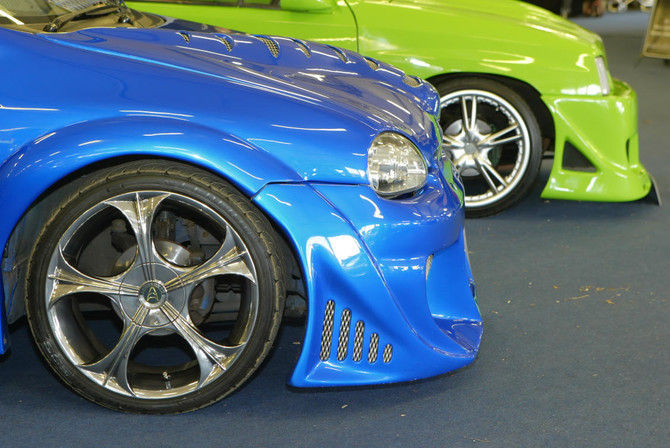
The latest is a set of new rules restricting the modification of cars, especially the vehicle’s performance, UAE daily The National has reported.
Under cabinet decision 45 of 2016 new limits on how much motorists can alter the engine, exhaust system and transmission, have been introduced – as well as other areas.
Failure to comply with the new laws will carry a jail term as well as a possible minimum 30,000 dirham ($8,170) fine. Any items that do not comply with the new standards will be confiscated.
It is the first time such restrictions have been made official, previously there were no limits legislated.
And the law extends to the country’s workshops and people with existing modified vehicles, which will now have to apply for a special certificate from Emirates Authority for Standardization and Metrology, the report added.
Motorcycles, trailers, caravans and tractors are excluded from the new rules.
However other changes impacted include certain braking systems, bull bars, the vehicle chassis and suspension.
“The whole thing needs to be balanced… Quality of work is sometimes not dispensed, and fuel not safe and you end up with a catastrophe, especially if someone doesn’t know what they are doing,” Al Tareq Al-Ameri CEO at Yas Marina Circuit explained to the newspaper.
“The whole activity of modifying vehicles has been happening for years but there were no regulations for the type of equipment or technical work that happens… This needs to be regulated and it has been under discussion in the community for years.”
In order to get a modification license, motorists will need to have their altered vehicles examined by the vehicle inspection modification center, which was launched at Yas Marina Circuit.

UAE’s love affair with souped up cars now restricted under new laws
Cambodia takes back looted historic artifacts handled by British art dealer
- The objects were returned under a 2020 agreement between the Ministry of Culture and Fine Arts and the family of the late Douglas Latchford, a British art collector and dealer who allegedly had the items smuggled out of Cambodia
PHNOM PENH, Cambodia: Cambodian officials on Friday received more than six dozen historic artifacts described as part of the country’s cultural heritage that had been looted during decades of war and instability.
At a ceremony attended by Deputy Prime Minister Hun Many, the 74 items were unveiled at the National Museum in Phnom Penh after their repatriation from the United Kingdom.
The objects were returned under a 2020 agreement between the Ministry of Culture and Fine Arts and the family of the late Douglas Latchford, a British art collector and dealer who allegedly had the items smuggled out of Cambodia.
“This substantial restitution represents one of the most important returns of Khmer cultural heritage in recent years, following major repatriations in 2021 and 2023 from the same collection,” the Culture Ministry said in a statement. “It marks a significant step forward in Cambodia’s continued efforts to recover, preserve, and restore its ancestral legacy for future generations.”
The artifacts were described as dating from the pre-Angkorian period through the height of the Angkor Empire, including “monumental sandstone sculptures, refined bronze works, and significant ritual objects.” The Angkor Empire, which extended from the ninth to the 15th century, is best known for the Angkor Wat archaeological site, the nation’s biggest tourist attraction.
Latchford was a prominent antiquities dealer who allegedly orchestrated an operation to sell looted Cambodian sculptures on the international market.
From 1970 to the 1980s, during Cambodia’s civil wars and the communist Khmer Rouge ‘s brutal reign, organized looting networks sent artifacts to Latchford, who then sold them to Western collectors, dealers, and institutions. These pieces were often physically damaged, having been pried off temple walls or other structures by the looters.
Latchford was indicted in a New York federal court in 2019 on charges including wire fraud and conspiracy. He died in 2020, aged 88, before he could be extradited to face charges.
Cambodia, like neighboring Thailand, has benefited from a trend in recent decades involving the repatriation of art and archaeological treasures. These include ancient Asian artworks as well as pieces lost or stolen during turmoil in places such as Syria, Iraq and Nazi-occupied Europe. New York’s Metropolitan Museum of Art is one of the prominent institutions that has been returning illegally smuggled art, including to Cambodia.
“The ancient artifacts created and preserved by our ancestors are now being returned to Cambodia, bringing warmth and joy, following the country’s return to peace,” said Hun Many, who is the younger brother of Prime Minister Hun Manet.