WASHINGTON: US President Donald Trump has yet to announce a plan for Afghanistan, and delays in unveiling his strategy point to deep rifts in the White House on how to handle America’s longest war.
Such is the uncertainty about what to do — send thousands more troops into a nearly 16-year conflict, or take the opposite tack and pull out — that Trump has reportedly even suggested firing the general in charge of the war effort.
“We aren’t winning ... we are losing,” Trump complained to top officials while upbraiding his military advisers at a White House meeting last month, NBC News reported, citing senior officials.
Trump’s generals have called the Afghan conflict a “stalemate,” and even after years of intensive help from the US and other NATO nations, Afghanistan’s security forces still are struggling to hold back an emboldened Taliban.
In an early move to address the situation, Trump gave his Pentagon chief, Jim Mattis, broad powers to set troop numbers in Afghanistan and elsewhere. But several months later the level remains stuck at about 8,400 US and about 5,000 NATO troops.
Mattis wants to wait until the White House has come up with a coherent strategy for not just Afghanistan but the broader region, notably Pakistan and how it deals with terror groups, before he commits to any adjustments.
Mattis told lawmakers on June 13 he would present a detailed Afghanistan plan by mid-July — but that timeframe came and went with no announcements.
“This is hard work and so you got to get it right. And that’s all there is to it. So, we’re working to get it right,” Mattis told Pentagon reporters on July 21.
According to NBC, Trump a day earlier had told Mattis and General Joe Dunford, who is Chairman of the Joint Chiefs of Staff, they should replace Gen. John Nicholson, who heads up US and NATO forces in Afghanistan.
The White House declined to comment, and Pentagon spokeswoman Dana White said only: “Secretary Mattis has confidence in General Nicholson’s leadership.”
Several lawmakers spoke in Nicholson’s defense Thursday and two weeks have passed since the meeting, with the general still in position.
Meanwhile the situation in Afghanistan is as deadly as ever, with more than 2,500 Afghan police and troops killed in from Jan. 1 to May 8.
US forces — who are supposed to be in a non-combat role — are still dying too, with nine killed in action so far this year, including two in Kandahar on Wednesday. The tally for 2017 is now the same as for all of 2016.
In signs of broader divisions in the White House, Trump’s National Security Adviser Gen. H. R. McMaster — who is helping lead the push for a new Afghanistan plan — on Wednesday fired Ezra Cohen-Watnick, his senior intelligence director.
That comes on the heels of the departure of a contentious top Middle East adviser, Derek Harvey, who left in July. And chief strategist Steve Bannon was himself ousted from his seat on the National Security Council, which decides issues of war and peace.
According to the New York Times, Bannon and Trump’s son-in-law Jared Kushner have pushed an idea to let private contractors conduct security work in Afghanistan instead of American soldiers.
Pentagon officials have said Mattis is weighing sending just shy of 4,000 troops to Afghanistan to operate in a non-combat role assisting local forces.
Military Times on Wednesday cited an Afghan government official as saying that Eric Prince, who was the former head of a controversial private military firm once known as Blackwater, had even offered to supply a private air force.
Senior Republican Sen. John McCain, a longtime critic of the Obama administration’s war fighting policies, this week expressed exasperation over Trump’s lack of Afghanistan policy.
McCain said if a new plan had not been fleshed out by September, he would offer his own one — based on the “advice of some our best military leaders” — that he’ would tack onto a massive military spending bill.
“There still is no strategy for success in Afghanistan,” McCain said, though he provided no details on what his might be.
When Trump visited the Pentagon last month, a reporter asked him whether he would be sending more troops to Afghanistan.
“We’ll see,” he said, before changing the subject.


![]()
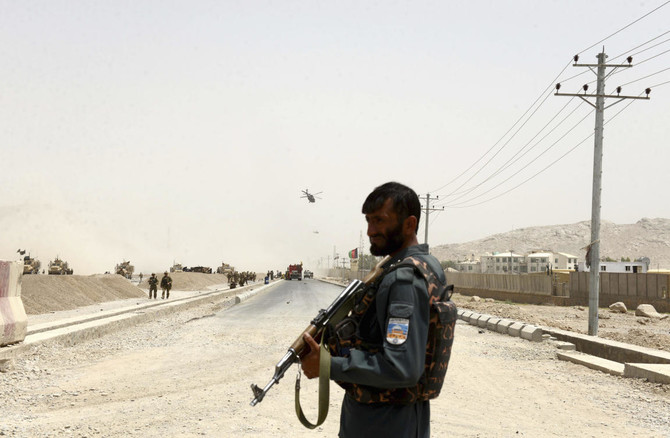
Delay in Afghanistan policy points to White House rift
Delay in Afghanistan policy points to White House rift
Latest updates





© 2026 SAUDI RESEARCH & PUBLISHING COMPANY, All Rights Reserved And subject to Terms of Use Agreement.