RIYADH: On instructions from Crown Prince Mohammed bin Salman, deputy premier and interior minister, the Kingdom donated $33 million to UNICEF to combat cholera in Yemen.
Some 332,000 have been affected by this deadly disease in Yemen, according to the latest figures from the World Health Organization (WHO).
In June, the crown prince pledged to donate $66.7 million to UNICEF and the WHO to prevent the spread of cholera in Yemen.
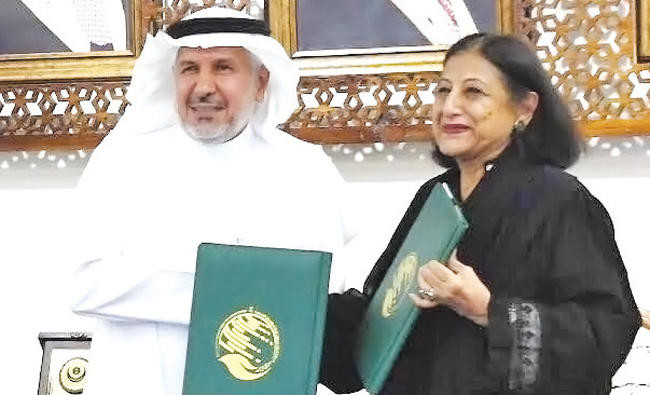
On Sunday, the King Salman Humanitarian Aid and Relief Center (KSRelief) signed a deal with UNICEF to offer $33 million to fulfill the pledge.
The agreement was signed by Abdullah Al-Rabeeah, KSRelief supervisor general, and Shahida Azfar, UNICEF’s Gulf representative based in Riyadh.
Speaking after the ceremony, Al-Rabeeah said the contribution was from the crown prince to fight the disease and ease the suffering of those affected in Yemen.
The remaining $33.7 million will be donated to the WHO in due course, he added. This “is in addition to the projects amounting to $8.2 million recently signed with the WHO and KSRelief,” he said.
KSRelief said it has provided 550 tons of medicine, medical supplies, and intravenous and oral solutions, as well as implemented health and sanitation projects. Azfar thanked the crown prince and KSRelief for their cooperation to help Yemenis.
According to the latest statistics, 1,817 people have died of cholera in less than three months.
There have been 363,000 cases reported in 21 of Yemen’s 22 governorates since April 27.
A cholera outbreak will probably have infected more than 300,000 people by September, the UN said.
Cholera is a highly contagious bacterial infection spread via contaminated food or water.
Although it is easily treatable, doing so in conflict-torn Yemen has proved particularly difficult.
UN reports indicate that almost 19 million people — more than two-thirds of Yemen’s total population — are in need of humanitarian assistance, and that 14.5 million people lack access to clean water and sanitation.


![]()
Saudi Arabia donates $33m to UNICEF to combat cholera in Yemen
Saudi Arabia donates $33m to UNICEF to combat cholera in Yemen


Latest updates


Recommended


© 2026 SAUDI RESEARCH & PUBLISHING COMPANY, All Rights Reserved And subject to Terms of Use Agreement.