MANILA: The Philippines has registered the fastest-growing HIV/AIDS epidemic in the Asia-Pacific in the past six years with a 140-percent increase in the number of new infections, the health ministry and the United Nations said on Tuesday.
At the end of 2016, there were 10,500 Filipinos infected with the human immunodeficiency virus (HIV) up from 4,300 in 2010, Health Minister Paulyn Ubial told a news conference, citing data from UNAIDS.
Ubial encouraged voluntary HIV-testing and use of condoms to help fight the problem, which in May 2017 alone saw 1,098 new cases of HIV infections in the Philippines, the highest recorded number of cases since 1984 when infections were first reported.
The country can still end the public health threat by 2030 if the government can re-direct its focus on the people and locations most at risk, said Eamonn Murphy, UNAIDS regional support team director for Asia-Pacific.
He said 83 percent of new HIV cases occurred among males who have sex with males and transgender women who have sex with males.
Genesis Samonte, head of the health ministry’s public health surveillance department, said men who have sex with men were most at risk.
“We’re not talking about those that are openly gay,” Samonte told a news conference. “Any male who has sex with another male for whatever reason, is at risk.”
Two out of three new HIV infections were among 15 to 24 year-old men, who she said have insufficient awareness of HIV, its symptoms and treatment.
Most of the men had their first sexual encounter at 16 years old and only get tested for HIV eight years later, she said.


Philippines has highest HIV infection growth rate in Asia-Pacific — UN

Philippines has highest HIV infection growth rate in Asia-Pacific — UN


Chef serves up a taste of Spain at Ithra Cultural Days in Saudi Arabia
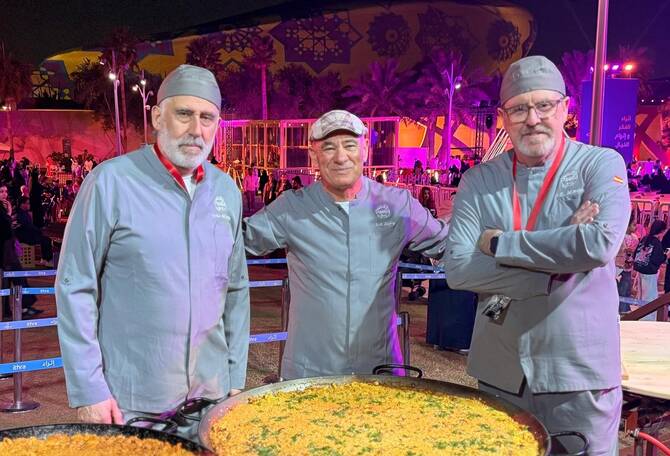
DHAHRAN: Among the attractions of the Ithra Cultural Days: Spain at the King Abdulaziz Center for World Culture (Ithra), visitors can try a tantalizing selection of Spanish foods — none more renowned than its famous paella.
Arab News spoke with chef Jose Zafra at the event, which runs until Jan. 31, who flew in from Spain to offer a taste of his homeland to the people of Saudi Arabia.
A “master rice cook, paella researcher and promoter,” according to his business card, his logo is even designed around the recognizable cooking pan and the phrase “Pasion por la paella,” or “Passion for paella.”
“That's why the pan is round because people get around and eat all together — to share culture and passion and life,” Zafra told Arab News as foodies lined up behind him, eager to try a plateful.

“It’s not just a food. It’s a link, a connection. Paella is the symbol of unity and sharing. And people now are going to try it — authentic Spanish paella in Saudi Arabia.”
The word “paella” comes from the Latin “patella,” meaning pan.
In Spanish, it refers both to the rice dish itself and the pan in which it is cooked.
Paella was introduced to Spain during Moorish rule. It originated in Valencia, on the country’s eastern coast, as a rural peasant dish that was cooked by farm workers over open fires using local ingredients. Over time, the dish’s popularity spread and other versions evolved, for example featuring seafood and meat.
It is different to Saudi Arabia’s kabsa, a communal dish which similarly uses rice and meat. Kabsa is cooked in a deep pot to ensure the rice stays soft and aromatic from the meaty broth, whereas paella uses a wide, shallow pan to fully absorb flavors evenly, often creating a prized crispy layer at the bottom.
Visitors to Ithra’s Culture Days can enjoy the flavors of Spain made with a sprinkling of local love — true to the origins of the dish.
Find the scoops of Spanish joy near the food truck area and try chicken paella, seafood paella —or both! You will see the signs offering a plate, at SR35 ($9) for chicken and SR40 for seafood, or let your nose lead you there.
Zafra concluded: “The chicken is from here, the seafood is from here — and the passion, well, that is from Spain.”


