JEDDAH: Maj. Gen. Sulaiman bin Abdul Aziz Al-Yahya, the director of the General Directorate of Passports, inspected the pilgrimage halls at King Abdul Aziz International Airport in Jeddah.
Al-Yahya was accompanied by the deputy commander of the Passport Authority for Hajj Affairs, Maj. Khalid bin Fahd Al-Jaid, and other officials.
Al-Yahya said that “the passport department at Jeddah airport is supported by qualified human cadres and advanced technical equipment to facilitate entry procedures for the pilgrims.”
At the end of the tour, the director general urged all employees to exert the utmost efforts and to ensure accuracy in the implementation of procedures that serve pilgrims.
Prince Abdullah bin Bandar bin Abdul Aziz, the deputy minister of Makkah region, on Sunday inspected the Hajj terminal complex at Jeddah airport, during which he was briefed on preparations and services provided for this season’s pilgrims.
Pilgrims will benefit from 13 projects undertaken by the Development Authority of Makkah and the holy sites (MMDA), and the Ministry of Hajj and Umrah.
These projects include pedestrian bridges, toilets, train gates and many others, and will accommodate pilgrims from all over the world.
According to Okaz newspaper, the holy sites are witnessing great efforts being exerted to complete a number of projects, especially since only 38 days are left before the arrival of pilgrims to the sprawling tent city of Mina.
Trial train trips have been operated on a daily basis over the past months, to make sure of the trains’ security, safety and readiness.
The Malaysian company operating the Mashaer Railway network is now offering temporary jobs for young Saudis. Saudis willing to work for a period of 8 days during the Hajj season this year can now apply.
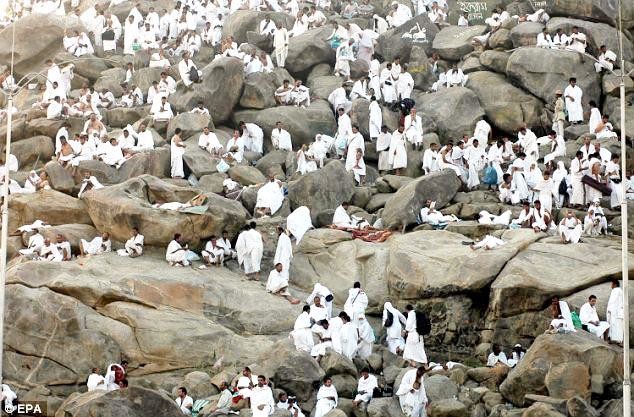
The MMDA has achieved 60 percent of a project aiming to separate pedestrians climbing Jabal Al-Rahmah Mountain from the Iranian pilgrims’ camps in Arafat. The MMDA and the workers on site are in a race against time, as they want pilgrims to benefit from this project during this year’s Hajj season.


Passport Department ready to facilitate pilgrims’ entry
Passport Department ready to facilitate pilgrims’ entry

Saudi Arabia’s KAUST named FIFA’s first research institute in MENA
- The recognition highlights KAUST’s commitment to integrating sports, academic research and industry through advanced, high-level initiatives grounded in rigorous scientific methodologies, contributing to the advancement of football studies
RIYADH: FIFA has designated the King Abdullah University of Science and Technology as its first research institute in the Middle East and Asia to support the development of innovative football research, the Saudi Press Agency reported on Tuesday.
The recognition highlights KAUST’s commitment to integrating sports, academic research and industry through advanced, high-level initiatives grounded in rigorous scientific methodologies, contributing to the advancement of football studies.
KAUST President Prof. Sir Edward Byrne said that the university’s selection as the fifth FIFA Research Institute in the world — and the first in the region — marks a significant achievement, reflecting Saudi Arabia’s growing presence in international football.
The accreditation aligns with national efforts to invest in research and development and promote the knowledge economy, supporting Saudi Vision 2030’s goals of building an advanced sports system based on innovation and sustainability.
The collaboration’s first project focuses on developing advanced AI algorithms to analyze historical FIFA World Cup broadcast footage, transforming decades of match videos into structured, searchable data, according to the KAUST website.
This work opens new opportunities to apply state-of-the-art computer vision techniques and deepen understanding of how football has evolved over time.
The second project uses player and ball tracking data from the FIFA World Cup 2022 in Qatar and the FIFA Women’s World Cup 2023 in Australia and New Zealand to compile comprehensive datasets capturing in-game dynamics.
These datasets provide deeper insights into human movement, playing techniques and performance dynamics through AI-driven analysis.


