TEHRAN: A defiant Iran vowed on Saturday to press ahead with its missile program and condemned new US sanctions, as tensions rise after the West hardened its tone against the Islamic republic.
In the latest incident on the ground, Iran’s Revolutionary Guards said the US Navy had approached their patrol vessels in the Gulf and fired flares.
“At 4 p.m. (1130 GMT) on Friday, the supercarrier USS Nimitz and its accompanying warship, while being monitored by the Guards’ frigates, flew a helicopter near the Resalat oil and gas platform and approached the force’s ships,” the paramilitary force said.
“The Americans in a provocative and unprofessional move, sent a warning message to the frigates and fired flares,” it said. The Guards “ignored the unconventional move by the US ships and continued their mission.”
Three days earlier, a US Navy patrol ship fired warning shots at a Guards boat in the Gulf as it closed in on the American vessel, according to US officials.
The Guards denied approaching the US ship in Tuesday’s incident and said it was the American vessel that had been at fault.
There have been a string of close encounters between US ships and Iranian vessels in the Gulf in recent months.
On the political battlefield, Iranian foreign ministry spokesman Bahram Ghasemi told state broadcaster IRIB that Tehran condemned new US sanctions against its missile program, which President Donald Trump is set to sign into law, and vowed to press on.
“We will continue with full power our missile program,” he said. “We consider the action by the US as hostile, reprehensible and unacceptable, and it’s ultimately an effort to weaken the nuclear deal.”
Ghasemi was referring to a 2015 agreement between Iran and US-led world powers that lifted some sanctions on Tehran in return for curbs on the country’s nuclear program.
“The military and missile fields... are our domestic policies and others have no right to intervene or comment on them,” the spokesman said.
The sanctions bill, which also targets Russia and North Korea, was passed by the US Senate on Thursday, two days after being approved by the House of Representatives.
Separately on Friday, Washington imposed new sanctions targeting Iran’s missile program, one day after Tehran tested a satellite-launch rocket.
Iranian state television broadcast footage of the takeoff from the Imam Khomeini space center in Semnan province in the east of the country.
The launch vehicle was capable of propelling a satellite weighing 550 pounds (250 kilogrammes) into orbit at an altitude of 300 miles (500 kilometers), it said.
Western governments suspect Iran of trying to develop the technology for longer-range missiles with conventional or nuclear payloads, a charge denied by Tehran, which insists its space program has purely peaceful aims.
In a joint statement, Britain, France, Germany and the US condemned Tehran’s “provocative” and “destabilising” action, saying the test was in violation of UN Security Council Resolution 2231 that endorsed the nuclear deal.
“We call on Iran not to conduct any further ballistic missile launches and related activities,” they said.
Resolution 2231 called on Iran not to test ballistic missiles capable of carrying a nuclear warhead and an arms embargo has remained in place.
The United States has had no diplomatic ties with the Iran since 1980, and Trump has halted the direct contacts initiated by his predecessor Barack Obama.
Tensions have mounted between Washington and Tehran since Trump took office six months ago vowing to be the best friend of Israel.
At UN headquarters in New York on Friday, US envoy Nikki Haley expressed mistrust of Iran.
“Iran’s widespread support for terrorists tells us we can’t trust them. Iran’s breaking its obligation on missile testing tells us we can’t trust them. Yesterday’s launch proves that yet again,” she said.
Despite his electoral promise to tear apart what he once called “the worst deal ever,” Trump has so far respected the nuclear agreement.
The joint US-European statement said that Iran’s latest test features technology related to “ballistic missiles designed to be capable of delivering nuclear weapons.”
Iran insists it has “proven its compliance with the nuclear deal” as repeatedly confirmed by the International Atomic Energy Agency.


Iran rules out halt to missile tests as tension with US rises
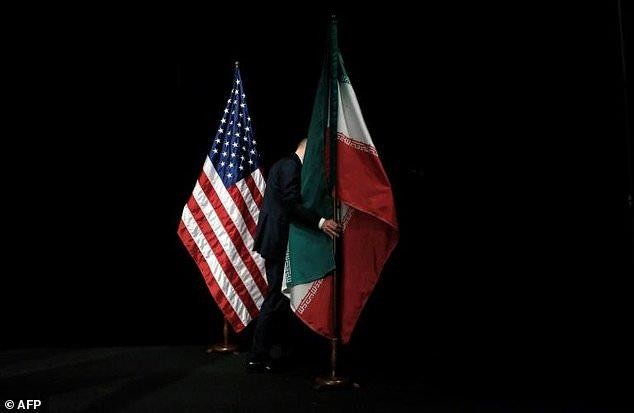
Iran rules out halt to missile tests as tension with US rises

EU parliament approves 90-bn-euro loan for Ukraine amid US cuts
- awmakers voted by 458 to 140 in favor of the loan, intended to cover two-thirds of Ukraine’s financial needs for 2026 and 2027
The EU parliament on Wednesday approved a 90-billion-euro loan for Ukraine, providing a financial lifeline to cash-strapped Kyiv four years into Russia’s invasion.
Lawmakers voted by 458 to 140 in favor of the loan, intended to cover two-thirds of Ukraine’s financial needs for 2026 and 2027 and backed by the EU’s common budget — after plans to tap frozen Russian central bank assets fell by the wayside.
Military aid to Ukraine hit its lowest level in 2025 as the US pulled funding, leaving Europe almost alone in footing the bill and averting a complete collapse, the Kiel Institute said Wednesday.
Kyiv's allies allocated 36 billion euros ($42.9 billion) in military aid in 2025, down 14 percent from 41.1 billion euros the previous year, according to Kiel, which tracks military, financial and humanitarian assistance pledged and delivered to Ukraine since Russia's full-scale invasion.
Military aid in 2025 was even lower than in 2022, despite the invasion not taking place until February 24 that year.
US aid came to a complete halt with President Donald Trump's return to the White House in early 2025.
Washington provided roughly half of all military assistance between 2022 and 2024.
European countries have thus made a significant effort to plug the gap, increasing their collective allocation by 67 percent in 2025 compared with the 2022-2024 average.
Without that effort, the US cuts could have been even more damaging, the institute argued.
However, the think tank points to "growing disparities" among European contributors, with Northern and Western European countries accounting for around 95 percent of military aid.
The institute calculated that Northern European countries (Denmark, Estonia, Finland, Iceland, Latvia, Lithuania, Norway, and Sweden) provided 33 percent of European military aid in 2025, despite accounting for only eight percent of the combined GDP of European donor countries.
Southern Europe, which accounts for 19 percent of the combined GDP of European donors, contributed just three percent.
To help fill the gap left by the United States, NATO launched the PURL programme, under which European donors purchased US weapons for Ukraine, worth 3.7 billion euros in 2025.
Kiel called the initiative a "notable development", which had enabled the acquisition of Patriot air-defense batteries and HIMARS multiple-launch rocket systems.
European allies are also increasingly placing orders with Ukraine's own defence industry, following a trend started by Denmark in 2024.
War-torn Ukraine's defence production capacity has "grown by a factor of 35" since 2022, according to Kiel, but Kyiv lacks the funds to procure enough weapons to keep its factories working at full capacity.
Orders from 11 European donor countries helped bridge that gap last year.
In the second half of 2025, 22 percent of weapons purchases for Ukraine were procured domestically, a record high.


