

Al-Ula, Diriyah Gate to become major tourist attractions

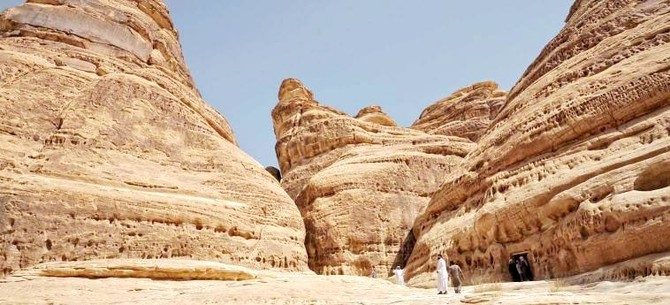
The layered rock formations of Mount Athlib to the northeast of Mada’en Saleh.
Short Url
Updated 19 December 2019
Follow

Al-Ula, Diriyah Gate to become major tourist attractions

JEDDAH: King Salman has decreed the establishment of commissions to develop two of Saudi Arabia’s most important archaeological and historical sites, Al-Ula and Diriyah Gate.

The rebirth of AlUla
Hegra, ancient city of the Nabataeans in Saudi Arabia’s historic AlUla Valley, is emerging from the mists of time to take its rightful place as one of the wonders of the world

Enter


keywords


The boards of both commissions will be headed by Crown Prince Mohammed bin Salman.
The two areas’ historical, cultural and architectural significance is expected to make them major tourist attractions as the Saudi hospitality and tourism industry matures to welcome local and international travelers.
The orders to establish the Royal Commission for Al-Ula Province and the Diriyah Gate Renovation Commission are in line with Vision 2030, which seeks to develop tourism in the Kingdom to attract more than 1 million visitors annually.
Al-Ula town was founded in the 6th century and serves as the gateway to the Kingdom’s first UNESCO World Heritage Site, Mada’en Saleh, which was built more than 2,000 years ago by the Nabataeans, who also built Petra in Jordan.
Diriyah was the first capital of the Saudi royal dynasty from 1744 to 1818, and is an excellent example of the Najdi architecture of that period.

The rebirth of AlUla
Hegra, ancient city of the Nabataeans in Saudi Arabia’s historic AlUla Valley, is emerging from the mists of time to take its rightful place as one of the wonders of the world

Enter


keywords


Riyadh summit advances care for blood disorders

Updated 8 sec ago
Follow

Riyadh summit advances care for blood disorders

RIYADH: The Ministry of Health recently concluded the fourth Inherited Blood Disorders Summit in Riyadh, the Saudi Press Agency reported on Sunday.

Held under the patronage of Health Minister Fahad AlJalajel, the summit was part of efforts to advance healthcare, strengthen research, and support policies on hereditary blood disorders nationwide.

The three-day event aimed to develop national care models, enhance knowledge exchange, support innovation in gene therapy and precision medicine, and improve patients’ quality of life.

During the sessions, the ministry stressed the need to unify national efforts and establish an integrated care model linking diagnosis, treatment, and follow-up.

The summit also highlighted the importance of prevention and early detection, while reducing complications through national care pathways and best practices.

The ministry continues to strengthen the Kingdom’s role as a scientific and regulatory hub, uniting experts and partners to support research and medical innovation.