DUBAI: London seems to be as popular as ever with visitors from the Arabian Gulf this year, with regional airlines reporting the usual summer surge in visitors to the UK capital.
Some observers had predicted a fall-off in the annual flights to London and other UK tourist destinations in the wake of the recent terrorist attacks in the city, and political uncertainty after the vote to leave the EU and the recent general election.
But travel analysts say that has not happened, and that the weaker value of the British pound could actually encourage more Gulf tourists this year, though they warn it is early in the season and patterns could change as the summer progresses.
Three big airlines that fly Arab tourists to the British capital said demand for seats to London was as good as usual.
A source at Dubai-based Emirates, the biggest carrier in the region, said: “We have not seen any fall off at all. The demand is still there and our planes are pretty full, not just to London but the whole of the UK.”
Etihad Airways also reported “robust” traffic between Abu Dhabi and London, and highlighted the feeder traffic that is coming from Saudi Arabia. “There has been no slowdown, all the planes are pretty full at the level we’d expect (at) this time of year.” Saudia, also known as Saudi Arabian Airlines, also said traffic was “normal” to London.
Fazal Bahardeen, chief executive of CrescentRating, an organization that studies global travel trends by the world’s 1.8 billion Muslims, said: “The UK, especially London, has always been a popular destination for Muslim travelers. The recent incidents may only have a short-term impact, and a weaker pound will definitely interest the tourist as well.”
That is part of an overall surging trend in Muslim visitors to the UK, according to CrescentRating. “From a Muslim-friendly destination perspective, the UK ranks pretty high on the global Muslim travel index,” Bahardeen said.
So far this year, the UK was third in the table of favored destinations to non-Islamic countries, and No. 20 overall, Bahardeen added.
There was also some evidence international travelers, including Muslims, were deciding to spend time in the UK rather than in the US, where the travel restrictions introduced by President Donald Trump have hit the tourism sector and the country’s global image.
ForwardKeys, an organization that analyzes travel data, said that as of the end of May, international bookings were 18 percent ahead for the UK but 3.5 percent down for the US. More than half of tourists to Britain travel to London.
The organization noted there had been a slight drop in British bookings after the recent terrorist attacks there, but these were marginal and could be explained by other factors, like the disruption to international travel following the ban on laptops and the closure of airspace in the wake of the actions against Qatar, which took place during a prime holiday-booking period.
London & Partners, an organization that promotes the city, said the long-term figures for visitors from the Arabian Gulf region showed a rising trend, with visitors from the United Arab Emirates (UAE), in particular, showing a clear affection for the British capital. In the five years between 2011 and 2016, Emirati visitor numbers increased 57 percent, with 185,000 visits last year, the highest number from the Gulf region.
Visits to London by other Gulf citizens grew at a faster rate, however. Visitors from Saudi Arabia increased by 62 percent over the same period, with 109,000 visits in 2016, while Kuwaitis showed a 73 percent rise in numbers traveling to London, at 91,000.
Individual Arab travelers said they would not be deterred by security threats in the British capital. Lubna Qassim, a lawyer from the UAE who was preparing to fly to the UK for her annual vacation, said: “London is a special place, and Arabs react differently. Economic and political disruption does not affect us in the same way as other people.”
However, the tense situation in the Arabian Gulf was clearly on the minds of some in the London luxury hotel business, in which Middle East investors are particularly active. Requests for comment to two big London hotels were declined on the grounds of the “sensitivity” of the situation in the Gulf over the actions taken against Qatar.
And Bentley, the luxury car business, which has a big clientele from the Middle East at its Mayfair dealership, also declined to comment on what it called London’s “problems.”
Visitors from the Gulf are also expected to spend as much as usual while in London. Michel Roux, who runs the two-Michelin-starred restaurant Le Gavroche in Mayfair, which has been a traditional dining venue for Gulf visitors, said: “Business is as good as ever though Brexit was a shock. We still have a good clientele from the Gulf though not as good as in the halcyon days of $100 oil.”


![]()
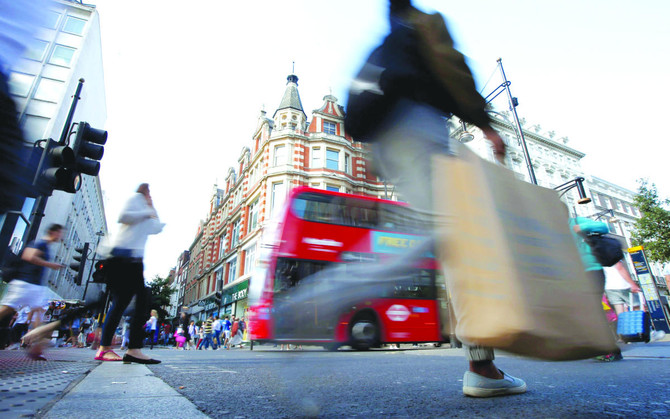
Summer in London still a hot choice for Gulf visitors
Summer in London still a hot choice for Gulf visitors
Latest updates





© 2026 SAUDI RESEARCH & PUBLISHING COMPANY, All Rights Reserved And subject to Terms of Use Agreement.