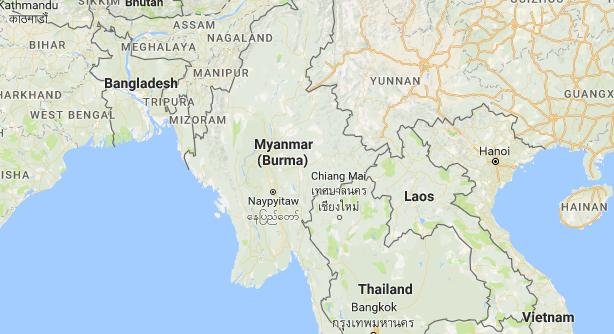
MYANMAR: A local employee with an international aid group in Myanmar’s conflict-torn Rakhine State was stabbed to death by “terrorists,” the government said Saturday, the latest in a spate of grisly killings blamed on Rohingya militants.
Northern Rakhine has been gripped by crisis ever since the military launched a brutal crackdown on Rohingya Muslims in response to a militant uprising in October 2016.
More than 75,000 Rohingya fled the army campaign, which UN investigators say was so ruthless it may amount to a crime against humanity.
While the region has stabilized in recent months the government has documented at least 60 cases of civilian murders or abductions since October, with an uptick recent weeks.
Most killings have targeted local leaders or other suspected collaborators with the state.
On Saturday the government said a local aid worker in northern Rakhine was dragged out of his home on 29 June and hacked to death by “about 10 terrorists wearing black masks and holding hatchets and knives.”
The victim, 34-year-old Nu Islam, worked for Community and Family Services International (CFSI), a humanitarian group based in Philippines.
The organization was working on child protection and education services in northern Rakhine, according to the statement from the office of de facto leader Aung San Suu Kyi.
In recent weeks a Twitter account that claims to represent the militants, known as the Arakan Rohingya Salvation Army (ARSA), denied responsibility for the killings and accused Myanmar authorities of trying to discredit their movement.
The ARSA says it is fighting for the political rights of the Rohingya, a stateless Muslim minority, who have endured years of discrimination and persecution in Buddhist-majority Myanmar.
Richard Horsey, an independent analyst based in Myanmar, said it was not “100 percent clear” who was behind the killings but that they appear to play to the advantage of the insurgents.
“What is clear is that across northern Rakhine state there is a systematic effort underway to take out Muslims who are in some way connected to or perceived to be connected to authorities,” he told AFP.
The crisis in Rakhine has heaped global pressure on Suu Kyi, who has disappointed rights groups by defending the army’s crackdown on the Rohingya.
Her government has also rejected a UN probe of the alleged atrocities carried out by soldiers, vowing this week to deny visas to the fact-finding team.


![]()
Myanmar aid worker murdered in latest Rakhine killing
Myanmar aid worker murdered in latest Rakhine killing
Latest updates


Recommended


© 2026 SAUDI RESEARCH & PUBLISHING COMPANY, All Rights Reserved And subject to Terms of Use Agreement.