VATICAN CITY: Cardinal George Pell, one of Pope Francis’ top advisers, took a leave of absence as the Vatican’s financial czar on Thursday to fight multiple criminal charges in his native Australia that allege he committed sexual assault years ago.
Pell appeared before reporters in the Vatican press office to forcefully deny the accusations, denounce what he called a “relentless character assassination” in the media and announce he would return to Australia to clear his name.
“I repeat that I am innocent of these charges. They are false. The whole idea of sexual abuse is abhorrent to me,” Pell said.
The Vatican said the leave takes effect immediately and that Pell will not participate in any public liturgical event while it is in place. Pell said he intends to eventually return to Rome to resume his work as prefect of the Vatican’s economy ministry.
Pell, 76, is the highest-ranking Vatican official ever to be charged in the church’s long-running sexual abuse scandal, and the developments pose a major and immediate new obstacle for Francis as he works to reform the Vatican.
Victoria state Police Deputy Commissioner Shane Patton announced the charges Thursday, saying police had summonsed Pell to appear in court to face multiple counts of “historical sexual assault offenses,” meaning offenses that generally occurred some time ago. Patton said there are multiple complainants against Pell, but gave no other details on the allegations against the cardinal.
Pell was ordered to appear in Melbourne Magistrates Court on July 18.
Vatican spokesman Greg Burke said the Holy See had learned with “regret” of the charges and that the work of Pell’s office would continue in his absence, albeit only its “ordinary” affairs.
In a statement he read to reporters while sitting beside Pell, Burke said the Vatican respected Australia’s justice system but recalled that the cardinal had “openly and repeatedly condemned as immoral and intolerable” acts of sexual abuse against minors.
He noted that Pell had cooperated with Australia’s Royal Commission investigation into sex abuse and that as a bishop in Australia, he worked to protect children and compensate victims.
The charges were announced on a major Catholic feast day, when many of the world’s cardinals were already in Rome for a ceremony Wednesday to elevate five new cardinals. As Pell spoke to reporters, preparations were underway in St. Peter’s Square for a huge Mass that Pell had been expected to jointly celebrate, but he stood down after the charges were announced.
For years, Pell has faced allegations that he mishandled cases of clergy abuse when he was archbishop of Melbourne and, later, Sydney. But more recently, Pell himself became the focus of a clergy sex abuse investigation, with Victoria detectives flying to the Vatican last year to interview the cardinal. It is unclear what allegations the charges announced Thursday relate to, but two men, now in their 40s, have said previously that Pell touched them inappropriately at a swimming pool in the late 1970s, when Pell was a senior priest in Melbourne.
Patton told reporters in Melbourne that none of the allegations against Pell has been tested in any court, adding: “Cardinal Pell, like any other defendant, has a right to due process.”
The charges are a new and serious blow to Pope Francis, who has already suffered several credibility setbacks in his promised “zero tolerance” policy about sex abuse.


![]()
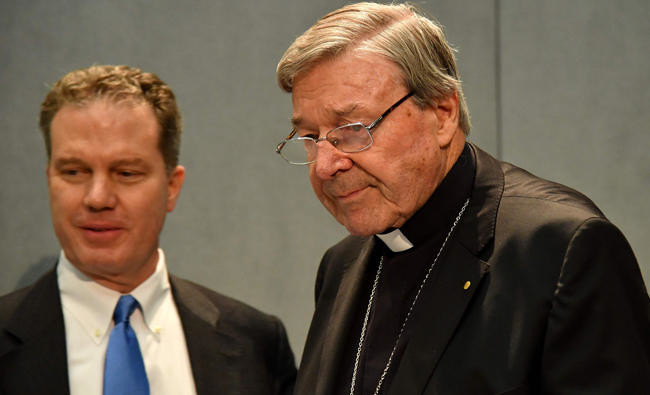
Cardinal takes leave from Vatican after sex assault charges
Cardinal takes leave from Vatican after sex assault charges
Latest updates


© 2026 SAUDI RESEARCH & PUBLISHING COMPANY, All Rights Reserved And subject to Terms of Use Agreement.