


JEDDAH: A prominent Saudi businessman took the Internet by storm after photos of him with pop star Rihanna surfaced on social media and went viral Wednesday.
The Saudi “prince charming” was identified as billionaire Hassan Jameel, deputy president and vice chairman of Abdul Latif Jameel (ALJ) Co. Many British tabloids has referred to him as Rihanna’s “new boyfriend.”
This is yet to be confirmed by the superstar or the Saudi businessman. A comment has been requested from ALJ's PR team.
The alleged couple seemed to be thoroughly enjoying their time in a swimming pool inside their Spanish villa unaware of the chaos that swept social media, as fans were eagerly trying to hunt down the mysterious Arab man’s identity.
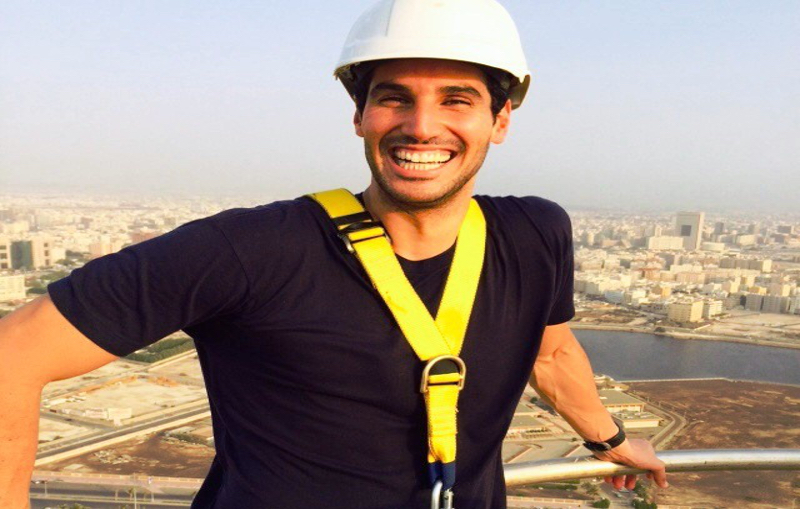
His business life
The 35-year-old businessman belongs to a wealthy Saudi family renowned locally and even globally for its longstanding relationship with Japanese automaker Toyota. For decades, the Jameels owned the streets in Saudi Arabia with the exclusive dealership rights of Toyota and Lexus; they also provided maintenance and after-sale service which made their business a case study to be shared worldwide.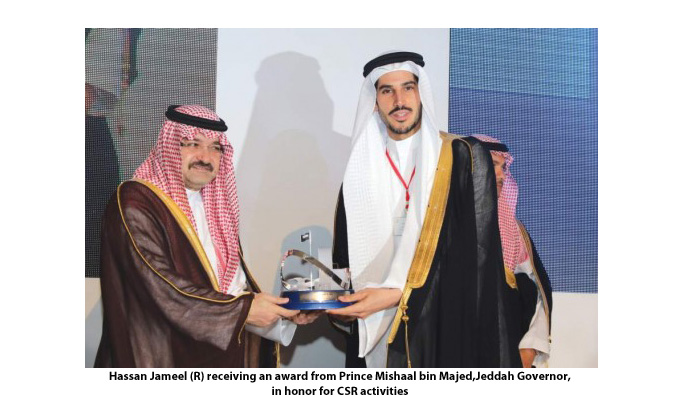
Hassan Jameel, the family’s newest public face, has previously been linked with supermodel Naomi Campbell, with the two spotted together at British Summer Time Festival in London’s Hyde Park in July 2016. However, few people know if the two were just friends or were romantically involved.
For her part, Rihanna’s leaked pictures became the most talked-about topic on social media since her breakup with the Canadian rapper Drake whom she has been dating on and off since 2009.
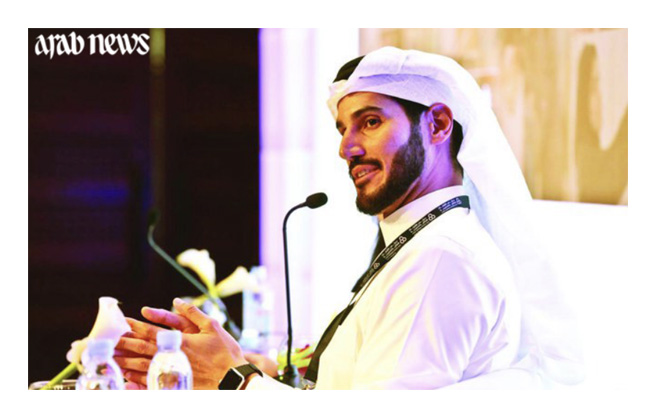
ALJ: the road to success
Started in 1945, ALJ is now considered a global giant, and the family has a net worth of $1.5 billion.
In 1955, ALJ became the authorized dealer for Toyota in Saudi Arabia.
From the beginning, ALJ recognized the importance of personal transportation to Saudis. Even before paved roads, Abdul Latif Jameel saw how the 4x4 SUVs would benefit his customers, allowing them to move and navigate the terrain of his country. So, the first order of 4x4 vehicles was the beginning of a long journey with Toyota Motor Corp.
In 1955, ALJ became the authorized dealer for Toyota in Saudi Arabia and this close relationship continues to this day. This year, ALJ celebrates 62 years of success with Toyota.
Since its establishment in 2003, Community Jameel — the CSR arm of ALJ — has shined in several areas of development: combating unemployment through creating job opportunities, encouraging and promoting arts and culture in the region and worldwide.
Community Jameel has also sought to support research and studies in the fight against poverty through its global poverty alleviation program as well as its dedicated education and training initiative that supports students beyond the classroom walls, which ultimately enables positive change in society.
Community Jameel partners with global institutions — including the US-based Massachusetts Institute of Technology (MIT) and the Victoria and Albert museum (V&A) in London — through which it focuses on water and food security and social care.
The organization’s geographic reach extends further than the Middle East region.
ALJ is also the official sponsor of the Saudi professional league, making it the biggest sponsor in the history of sport in Saudi Arabia. It aims to interact with the fans continuously in and out of stadiums throughout the football season.


