

Hero imam saves Finsbury Park attacker from angry crowd

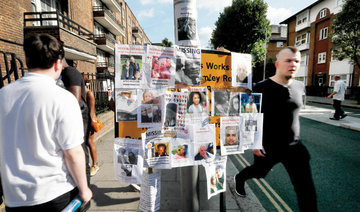
Police officers walk behind cordon tape at the scene of an attack where a man drove a van at Muslim worshippers outside a mosque in Finsbury Park in North London, Britain, June 19, 2017. (Photo: Reuters/Hannah McKay)
Updated 19 June 2017
Follow

Hero imam saves Finsbury Park attacker from angry crowd

LONDON: An imam has been praised after he saved the Finsbury Park attack suspect from being beaten when crowds pulled him from the van he used to kill one and injure many more.

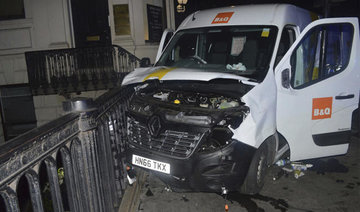
The incident happened when a van was driven at high speed into pedestrians near a mosque where Muslims had been praying, killing at least one person and injuring 10.

Witnesses said they saw people at the scene grab the man, pulling him from the van and started hitting him. But imam Mohammed Mahmoud stepped up and told the angry crowd to stop and to restrain the suspect until police arrived instead.

One witness, who went by the name Abdul, told The Independent: “People gather on that part of the street during Ramadan to chat and socialize so it was premeditated. He knew what he was doing.

“He waited until people had come out then drove at the people on the right then swerved to hit people on the left. Someone was lying under his van shouting ‘Help me’.
“He tried to run away but we brought him down. He would’ve died because so many people were punching him but the imam came out and said, ‘No more punching, let’s keep him down until the police come.’
Now imam Mahmoud has been praised for his actions. Tewfik Kacimi, chief executive of the nearby Muslim Welfare House, thanked the imam, saying his “bravery and courage helped calm the immediate situation after the incident and prevented further injuries and potential loss of life.”
Witness Hamza Nimane, told BBC Radio 4’s Today program that worshippers from the mosque had managed to capture the attacker before police arrived.
“They’re the ones that grabbed him and managed to hold him down… There were at least 300 people in the mosque praying, and everyone was panicking, everyone was screaming.”
Describing the scene, he said there were people lying in the street, several with blood on their heads. Nimane said some of the people looked dead.
Police arrested the man soon after. Witnesses described him as white, with tattoos, while police later confirmed they had arrested a 48-year-old on suspicion of attempted murder, they added they were not looking for anyone else.
Metropolitan Police deputy assistant commissioner Neil Basu confirmed that the incident was being treated as a “terrorist attack.” He then thanked worshippers who restrained the attacker.

Australia Day protesters demand Indigenous rights

Updated 7 sec ago
Follow

Australia Day protesters demand Indigenous rights

SYDNEY: Thousands of people rallied in cities across Australia demanding justice and rights for Indigenous peoples on Monday, a national holiday marking the 1788 arrival of a British fleet in Sydney Harbor.
Crowds took to the streets in Sydney, Melbourne, Canberra, Perth and other cities on Australia Day, many with banners proclaiming: “Always was, always will be Aboriginal land.”
In Sydney, police allowed the protests to go ahead despite new curbs introduced after gunmen opened fire on a Jewish Hanukkah festival on Bondi Beach on December 14, killing 15 people.
Millions of Australians celebrate the annual holiday with beers and backyard barbecues or a day by the sea, and this year a broad heatwave was forecast to push the temperature in South Australian capital Adelaide to 45C.
Shark sightings forced people out of the water at several beaches in and around Sydney, however, after a string of shark attacks in the region this month — including one that led to the death of a 12-year-old boy.
Many activists describe the January 26, 1788, British landing as “Invasion Day,” a moment that ushered in a period of oppression, lost lands, massacres and Indigenous children being removed from their families.
Aboriginal and Torres Strait Islander peoples make up about four percent of the population.
They still have a life expectancy eight years shorter than other Australians, higher rates of incarceration and deaths in custody, steeper youth unemployment and poorer education.

- Anti-immigration protests -

“Let’s celebrate on another day, because everyone loves this country and everyone wants to celebrate. But we don’t celebrate on a mourning day,” Indigenous man Kody Bardy, 44, told AFP in Sydney.
Another Indigenous protester in Sydney, 23-year-old Reeyah Dinah Lotoanie, called for people to recognize that a genocide happened in Australia.
“Ships still came to Sydney and decided to kill so many of our people,” she said.
Separately, thousands of people joined anti-immigration “March for Australia” protests in several cities, with police in Melbourne mobilizing to keep the two demonstrations apart.
In Sydney, “March for Australia” protesters chanted, “Send them back.” Some carried banners reading: “Stop importing terrorists” or “One flag, one country, one people.”
“There’s nowhere for people to live now, the hospitals are full, the roads are full, you’ve got people living on the streets,” said one demonstrator, 66-year-old Rick Conners.
Several also held aloft placards calling for the release of high-profile neo-Nazi Joel Davis, who is in custody after being arrested in November on allegations of threatening a federal lawmaker.
“There will be no tolerance for violence or hate speech on Sydney streets,” New South Wales Premier Chris Minns told reporters.
“We live in a beautiful, multicultural community with people from around the world, but we will not tolerate a situation where on Australia’s national day, it’s being pulled down by divisive language, hate speech or racism,” he said.
“Police are ready and willing to engage with people that breach those rules.”