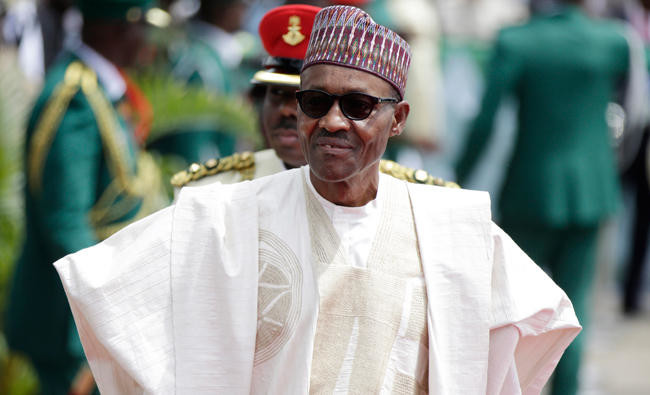
LAGOS, Nigeria: Nigeria, West Africa’s economic and military powerhouse, is adrift as President Muhammadu Buhari has been in London for medical treatment for a month as of Wednesday, worrying many that his undisclosed health problems have left Africa’s most populous country without strong direction.
The president’s prolonged absence has created “a vacuum,” said Dapo Alaba Sobowale, the head of a small IT company in Lagos’ sprawling Computer Village, where small shops and vendors line the streets selling mobile phones and computer gadgets.
“A lot of people are relying on him,” Sobowale said. He said he isn’t bothered about who, exactly, is sitting in office. “I’m bothered about the person being there making the right choices,” he said.
Buhari, 74, went on medical leave to the United Kingdom on May 7 for unspecified health problems. He had already been in London for nearly seven weeks earlier this year for treatment. He looked thin and frail when he returned to Nigeria, where he later missed three consecutive weekly Cabinet meetings. On his return, he said he’d never been as sick in his life.
Government officials and Buhari’s family have sought to reassure Nigerians who have expressed their worry about his absence on social media under hashtags like #WhereIsBuhari and #MissingPresident.
On Tuesday, Aisha Buhari, the president’s wife, said her husband is “recuperating fast” after she returned to Nigeria from visiting him in London. “He thanks Nigerians for their constant prayers for his health & steadfastness in the face of challenges,” she tweeted.
Buhari’s long absences this year have raised questions over whether the former military leader from northern Nigeria will be able to complete his four-year term that is up in 2019 and kicked off speculation over who might succeed him.
This is especially important in Nigeria because an unwritten agreement maintains the presidency should alternate between the Muslim-majority north and Christian-dominated south. Nigeria’s 170 million people are almost evenly divided between Christians and Muslims.
Buhari was elected in 2015 after defeating incumbent Goodluck Jonathan, a southerner, on campaign promises to battle corruption and crack down on Boko Haram extremists in the nation’s northeast. Buhari’s administration, which marked two years in office on May 29, has a mixed track record of fulfilling those promises, analysts say.
Although the military has dislodged Boko Haram from areas where it had declared a caliphate, Nigeria’s homegrown Islamic extremists continue to carry out suicide bombings and attacks. A rail-thin Buhari welcomed 82 Chibok schoolgirls who were released by Boko Haram in May after three years in captivity and then he flew to London that night.
This is not the first time Nigeria has experienced an ailing, absent president. In 2010 President Umaru Yar’Adua died after being out of the country for medical treatment for several months.
Vice President Yemi Osinbajo, now acting president, is credited for bringing some momentum back to the government by easing tensions in the insecure, oil-producing Niger Delta and pledging to tackle an economy battered by the fall in global oil prices.
“There was an element of fatigue when it came to Buhari,” said Malte Liewerscheidt, senior Africa analyst for risk management firm Verisk Maplecroft. “He wasn’t acting on the big macroeconomic issues.”
However, if Osinbajo, who comes from Lagos in the south, were to take over for Buhari and stand for election in 2019, the move could be seen by northerners as threatening the power-sharing balance and potentially prompt unwelcome political unrest, observers say.
Buhari’s absence has highlighted the sense that his government is unable to get this powerful oil-producing nation back on track, critics say.
“It looks like we are rudderless,” said Dr. Jay Osi Samuels of the Alliance for New Nigeria, a group of professionals registering as a new political party. “Right now it seems like (politicians) have lost the idea of how to move the country forward.”
In Computer Village, mobile phone shop owner Williams Akah and a few customers said the majority of people in Lagos are struggling with Nigeria’s recent economic downturn, especially when it comes to finding decent work in this megacity.
Akah doesn’t know exactly what’s wrong with Buhari, but he said he’s keeping track of what happens to him: “I’m worried about him — he’s the Number One citizen.”


![]()
Nigeria adrift as leader in London for month of treatment
Nigeria adrift as leader in London for month of treatment
Latest updates


© 2026 SAUDI RESEARCH & PUBLISHING COMPANY, All Rights Reserved And subject to Terms of Use Agreement.