UAE: An outspoken Emirati ruling family member on Wednesday raised the prospect of Qatar’s leadership changing amid a growing diplomatic crisis between it and other Arab nations attempting to isolate the energy-rich travel hub from the rest of the world.
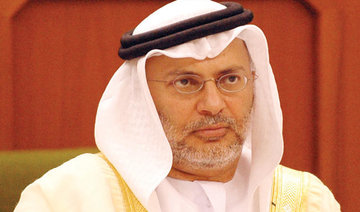
Sultan Sooud Al Qassemi’s comments in an interview with The Associated Press came as Emirati officials also announced those offering support to Qatar online could face years in prison and fines for offering sympathy to the country, suggesting the crisis will only intensify.
“Qataris are questioning whether this is going to end up in seeing a change in leadership itself in Qatar,” Al Qassemi told the AP in his office in Sharjah, near Dubai. “So it is a very serious issue. Again, this is Qataris speaking to international media wondering whether this is possible at all.”
He added: “Doha now is completely isolated. Doha now needs to take serious steps very rapidly to placate not only their neighbors but also their allies around the world.”
Bahrain, Egypt and the United Arab Emirates were among those who joined Saudi Arabia on Monday in cutting diplomatic ties with Qatar. They alleged Qatar funds terror groups and has a worryingly close relationship with Iran, a nation with which it shares its vast offshore natural gas field.
Qatar long has denied funding extremists, and its foreign minister has struck a defiant tone in interviews, even after worried residents emptied grocery stores in its capital of Doha. Qatar relies heavily on food imports, especially those coming over its only land border with Saudi Arabia. The Arab countries have blocked Qatari vessels from entering their airspace, as well as using their seaports as Saudi Arabia has closed off its land border.
Among others joining them are Yemen’s internationally backed government, which has lost the capital and large portions of the war-torn country. The Maldives and one of conflict-ridden Libya’s competing governments also have joined them in cutting ties to Doha.
Late Tuesday night, the Jordanian government announced it was reducing its level of diplomatic representation in Qatar and canceling the local registration for Al-Jazeera TV. And on Wednesday, the African nation of Mauritania joined them.
Soccer’s world governing body FIFA has said it remains in regular contact with Qatar, which will host the 2022 World Cup. Qatar just finished one of the stadiums for the tournament, though others have yet to be built.
The Gulf countries have ordered their citizens out of Qatar and gave Qataris abroad 14 days to return home. The countries also said they would eject Qatar’s diplomats.
Qatar Airways, one of the region’s major long-haul carriers, has suspended all flights to Saudi Arabia, the United Arab Emirates, Egypt and Bahrain until further notice. It has increasingly been sending flights over Iran and Turkey to avoid Saudi and Egyptian airspace.
Al Qassemi, who previously wrote a column describing steps Qatar would need to take, said that the crisis will only escalate if Doha doesn’t back down. He said Qatar needed to shut down or limit its Al-Jazeera news network, as well as stop funding extremist groups and others.
His comments took on further strength as the UAE’s Justice Ministry warned social media users that they can face three to 15 years in prison time and fines starting from 500,000 dirhams ($136,000) for offering sympathy for Qatar. The ministry quoted UAE Attorney General Hamad Saif Al-Shamsi on social media making the warning, saying it came over Qatar’s “hostile and reckless policy.”
While liberal compared to much of the Middle East, the UAE has tough cybercrime and slander laws under which people can be arrested, imprisoned and deported for taking photographs without the consent of those shown.
Al Qassemi also warned Qatar should not rely on hosting some 10,000 American troops at its Al-Udeid Air Base as protection against the Arab nations lined up against it. US President Donald Trump made a series of tweets Tuesday calling into question his commitment to the peninsular nation after earlier telling Qatar’s ruling emir that “we’ve been friends now for a long time.”
“The Qataris should not count on that base as being a guarantee of sort of American protection when it comes to conflict with Saudi Arabia,” Al Qassemi said. “I think the Americans would choose to side with Saudi Arabia over any other country in the region.”


![]()

UAE ruling family member: Qatar now questioning its leaders
UAE ruling family member: Qatar now questioning its leaders

Latest updates



© 2026 SAUDI RESEARCH & PUBLISHING COMPANY, All Rights Reserved And subject to Terms of Use Agreement.