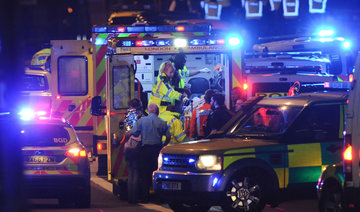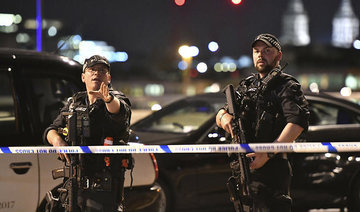
LONDON: Arab Gulf countries and Turkey are condemning the attack in London that left six people dead and more than 40 others injured.
The United Arab Emirates, Qatar, Bahrain, Oman and Kuwait issued separate statements condemning such attacks and expressing their support for the British government.
The Saudi Embassy in the UK called on their citizens in London to exercise caution in crowded areas and follow police instructions.
In Turkey, the foreign ministry has expressed its “deep sadness.” The ministry says that as “Turkey and the Turkish people, who have been subjected to similar attacks many times, we understand and share the pain of the people of the United Kingdom.”
The ministry emphasized Turkey’s readiness to support the UK in its fight against extremism
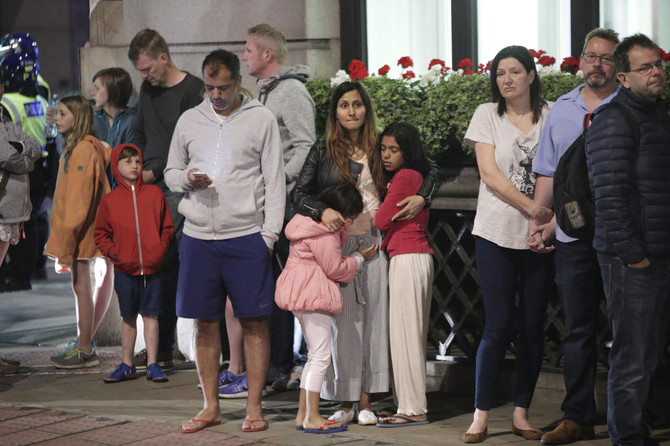
The attack in London Bridge, a busy area filled with hotels and restaurants, has left many visitors and tourists stranded after police cordoned off a large area near the crime scene. Many spent the night in improvised sleeping spaces, from the floors of hotel bars or restaurants to chairs of conference rooms.
British media are reporting an armed police operation taking place in east London. Scotland Yard declined to comment about the reports of the raid, or say whether the operation was linked to Saturday’s attacks in London Bridge.
Footage from Sky News and social media show a police cordon around an apartment building in Barking, a suburb in east London.
Authorities have said officers shot dead all three attackers in Saturday night’s attack, which left seven people dead, but that the investigation is continuing.
Spain’s Foreign Ministry says that one Spaniard is among the dozens wounded in the London attack.
A ministry spokeswoman has told The Associated Press that the Spanish man has been taken to a hospital where he is being treated for wounds described as not serious. The spokeswoman spoke anonymously in line with ministry policy.
Spain’s King Felipe VI and Prime Minister Mariano Rajoy have expressed their condolences for the victims of the attacks.
The Spanish Royal Family wrote on Twitter: “The British people will overcome this barbarism and senselessness. We are united today in pain and in our tireless defense of freedom.”
Spanish Prime Minister Mariano Rajoy wrote in Spanish on his Twitter account: “I am following with great concern the attacks in London, sad news. Our solidarity and support for the British people and authorities.”
Philippine President Rodrigo Duterte has expressed his sympathies to the victims of the London attacks, even as his troops struggled to end a deadly siege of a southern city by Daesh group-aligned local militants.
Duterte’s spokesman Ernesto Abella says “acts such as these touched not only the people of London, they also touched all peace-loving people in the global community.”
Indonesia, the world’s most populous Muslim nation, also condemned the attacks and reaffirmed its support and solidarity with Britain in its efforts to combat “radicalism and terrorism.”
Indonesia too has been battling Muslim militants groups that have staged attacks across the sprawling archipelago, including in the capital Jakarta.
India’s Prime Minister Narendra Modi has condemned the attacks in London, saying they caused shock and anguish.
He says in a brief statement after returning from Europe that his thoughts are with the families of the deceased and offered prayers for the injured.
No party has yet claimed responsibility for the attack.
– With input from AP