ANKARA: A Turkish court formally arrested two opposition newspaper employees late on Friday, the state-run Anadolu news agency and the newspaper said, as part of a media crackdown that has alarmed rights groups and Turkey’s Western allies.
Last week, Turkey issued arrest warrants for the owner and three employees of the Sozcu newspaper, accusing them of committing crimes on behalf of the network of US-based Muslim cleric Fethullah Gulen, blamed by Ankara for masterminding last July’s failed coup. Gulen denies the charge.
The two employees arrested were Mediha Olgun, Sozcu’s Internet editor, and Gokmen Ulu, its correspondent for the Aegean province of Izmir, said Anadolu and the paper, which is fiercely critical of President Recep Tayyip Erdogan and his AK Party.
Since the failed coup, Turkish authorities have shut more than 130 media outlets and a press union says more than 150 journalists have been jailed, raising concerns about media freedom in a country that aspires to join the EU.
The arrests of Sozcu’s staff came days after a court jailed the online editor of another opposition newspaper, Cumhuriyet, pending trial, on a charge of spreading terrorist propaganda.
About a dozen journalists from Cumhuriyet, long a pillar of Turkey’s old secularist establishment, are already in jail facing sentences of up to 43 years, accused of supporting Gulen’s network.
The two jailed Sozcu journalists face charges including “knowingly aiding and abetting the FETO terrorist organization without being part of its hierarchical structure,” and “aiding the assassination attempt of the president,” Anadolu and the newspaper said.
The Turkish authorities call Gulen’s network, which it labels a terrorist organization, the “Gulenist Terror Organization (FETO).”
Sozcu’s financial director, Yonca Yucekaleli, was freed late on Friday. The paper’s owner, who is abroad and whose house was searched last week, was charged with having “extensive ties” with firms shut down after coup investigations, Anadolu said.
Anadolu said a story and photographs in the paper revealing where Erdogan was spending his vacation a day before the coup, and a crossword puzzle with the president’s name hidden in it, were specifically checked as part of the investigation.
Besides the media crackdown, Turkey has also suspended or dismissed more than 150,000 judges, teachers, police and civil servants and has arrested nearly 50,000 others suspected of links to the Gulen movement.
While Turkish officials say the purges are necessary due to the gravity of the coup attempt which killed 240 people, critics in Turkey and abroad say Erdogan is using the coup as a pretext to muzzle dissent and purge opponents.


![]()
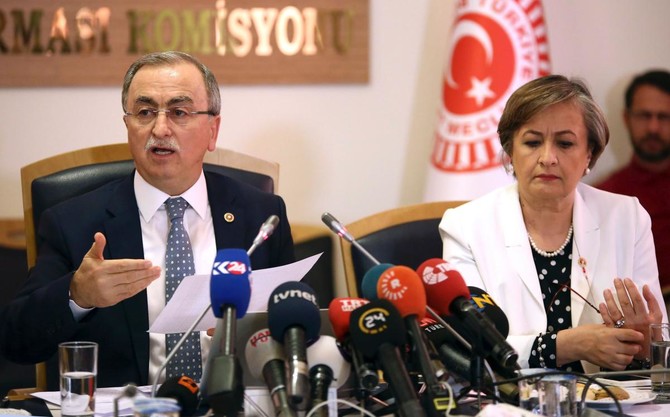
Turkey arrests newspaper staff over suspected coup links
Turkey arrests newspaper staff over suspected coup links
Latest updates


© 2026 SAUDI RESEARCH & PUBLISHING COMPANY, All Rights Reserved And subject to Terms of Use Agreement.