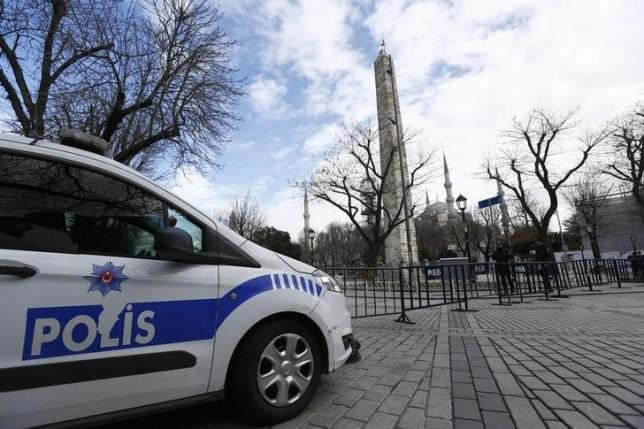
DUBAI: International accommodation sharing service Airbnb has apologized to two British travelers after a dawn raid on their rented apartment in Istanbul saw them face police interrogation.
The police officers reportedly entered the apartment – and left the tourists stranded afterwards – in a dispute over whether the US-based company had the right to let out the property.
Speaking to The Times on Tuesday, guest Tom Duggan, 36, from London, said: “We were pretty shaken by the whole experience… We woke to very loud banging on the door. Seven policemen briefly showed us their IDs and then took away our passports. They questioned us for over an hour about the purpose of our visit and to provide evidence that we were allowed to be in the apartment. We were really worried.
“They tried to contact the apartment owner but he wouldn’t answer their calls even though he’d been regularly in touch with us by text over the weekend. Eventually they explained that the owner was renting the apartment illegally and either that he wasn’t paying tax or hadn’t registered it. They made us sign a page-long document in Turkish, which they told us said how many days we’d booked it for and how much we paid, but we didn’t know for sure. Only then would they release our passports.
“The officers then gave us ten minutes to pack and leave before they sealed the apartment.”
When the pair returned to the UK, they were reportedly refused a full refund by Airbnb, however, The Times reported that the company eventually offered a full refund and apology.
A spokesman said: “We have apologized to the guests and are giving them our support. We have also suspended the host while we investigate further.”


‘Shaken’ UK tourists face dawn raid on Airbnb flat by Turkish police
‘Shaken’ UK tourists face dawn raid on Airbnb flat by Turkish police


Italian PM pledges to deepen cooperation with African states
- The plan, launched in 2024, aims to promote investment-led cooperation rather than traditional aid
ADDIS ABABA: Italy pledged to deepen cooperation with African countries at its second Italy-Africa summit, the first held on African soil, to review projects launched in critical sectors such as energy and infrastructure during Italy’s first phase of the Mattei Plan for Africa.
The plan, launched in 2024, aims to promote investment-led cooperation rather than traditional aid.
Italy’s Prime Minister Giorgia Meloni addressed dozens of African heads of state and governments in Ethiopia’s capital, Addis Ababa, and reiterated that a successful partnership would depend on Italy’s “ability to draw from African wisdom” and ensure lessons are learned.
“We want to build things together,” she told African heads of state. “We want to be more consistent with the needs of the countries involved.”
Ethiopian Prime Minister Abiy Ahmed said Italy had provided Africa with a gateway to Europe through these partnerships.
“This is a moment to move from dialogue to action,” he said.
“By combining Africa’s energetic and creative population with Europe’s experience, technology, and capital, we can build solutions that deliver prosperity to our continents and beyond.”
After the Italy-Africa summit concluded, African leaders remained in Addis Ababa for the annual African Union Summit.
Kenyan writer and political analyst Nanjala Nyabola said tangible results from such summits depend on preparations made by countries.
African governments often focus on “optics instead of actually making summits a meaningful engagement,” she said.
Instead of waiting for a list of demands, countries should “present the conclusions of an extended period of mapping the national needs” and engage in dialogue to determine how those needs can be met.
Since it was launched two years ago, the Mattei Plan has directly involved 14 African nations and has launched or advanced around 100 projects in crucial sectors, including energy and climate transition, agriculture and food security, physical and digital infrastructure, healthcare, water, culture and education, training, and the development of artificial intelligence, according to the Italian government.