GCC family businesses discuss long-term continuity and growth at FBCG Annual Summit

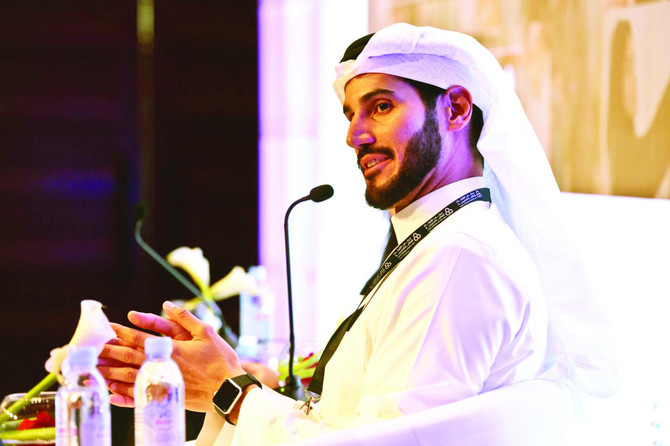
Hassan Jameel, deputy president and vice chairman of Abdul Latif Jameel.
Updated 24 April 2017
Follow

GCC family businesses discuss long-term continuity and growth at FBCG Annual Summit

Family Business Council — Gulf (FBCG), the regional association of Family Business Network International (FBNi), recently concluded its Annual Summit 2017 under the theme “Secrets to Family Business Continuity: Committed to Evolve Over Generations” held in Dubai.
The fourth edition of the summit brought together leading GCC family businesses experts and academicians to share experiences and effective approaches to address family business challenges.
Abdulaziz Al-Ghurair, chairman of FBCG, said: “We believe that each family business has its own secrets to success, but we also believe that families can inspire each another on ways to regenerate their own formula to success.”
He added: “By tailoring the summit agenda around real-world case studies and success stories, we aimed to provide families with practical insights that they can learn from and incorporate in order to better address the challenges of growth, business model evolution and generational transition.”
Prominent regional and international speakers took the stage at the summit presenting case studies and taking part in panel discussions. Two GCC family groups, Al-Mulla Group from Kuwait and SEDCO Holding Group from Saudi Arabia, shared their learnings and discussed how to professionalize and introduce corporate discipline in the family business. They focused on how to build effective boards to fit long-term generational time horizons.
The summit also witnessed the launch of a GCC case study on family business social impact. Community Jameel shared their approach in developing community projects tied to their business and centered on job creation. Hassan Jameel, deputy president and vice chairman of Abdul Latif Jameel, took part in a relevant panel session along sustainability experts to discuss effective ways of giving in the context of the family business.
International family speakers also took part in the summit. These include Hans-Jacob Bonnier of Bonnier Group, a sixth-generation family firm which is ranked among Scandinavia’s leading media conglomerates; and Meral Zaim Inci, from the leading Turkish Inci conglomerate. Both families belong to FBN exclusive community; and took part in the GCC summit to present their family governance development journey.
Every year, the FBCG summit attracts leading GCC family businesses in a private closed-door gathering. FBCG’s events are exclusive to family-business members and the format of the sessions is designed to encourage open and effective discussions among the participating members.


DeveGO25: Social Development Bank signs 51 agreements to support startups, productive families

Updated 25 December 2025
Follow

DeveGO25: Social Development Bank signs 51 agreements to support startups, productive families

The Social Development Bank has announced the signing of 51 agreements covering the establishment of financing portfolios, as well as local and international cooperation partnerships, on the sidelines of the Entrepreneurship and Modern Business Practices Forum, known as DeveGO25. This milestone reinforces the bank’s growing role in building an integrated entrepreneurial ecosystem and expanding its developmental impact through financial and nonfinancial solutions tailored to the needs of entrepreneurs, startups, micro and small enterprises, freelancers, and productive families, in line with the economic transformation of the Kingdom under Saudi Vision 2030.

The announcement was made during the second edition of the forum, which witnessed the signing of a package of specialized financing portfolios. Most notably, this included a joint financing portfolio with Arab National Bank valued at SR100 million ($26.6 million) to support entrepreneurs’ projects, alongside a financing portfolio with the Council of Foundations, valued at SR50 million to enhance the sustainability of nonprofit organizations.

The SDB also signed a number of corporate social responsibility financing portfolios with Al-Ghuwairi Charity Foundation to support community initiatives, as well as with ACWA Power to help entrepreneurs and innovators in the energy sector, in addition to Fakeeh Care Group to support startups in the healthcare sector.

Furthermore, financing portfolios were signed to support freelancers and entrepreneurs in partnership with Naylah Finance, Al-Yusr Leasing and Financing, Al-Jabr Financing, and J-B Financial Solutions. These financing portfolios reflect the bank’s accelerating direction toward diversifying support solutions and developing innovative financing channels capable of accommodating the needs of entrepreneurial segments across all regions of the Kingdom.

As part of its international partnerships, the bank strengthened its presence within global entrepreneurial networks through the signing of agreements with leading international entities. It partnered with Alibaba for a Saudi–Chinese initiative aimed at supporting the international market access of Saudi startups and productive families through specialized training and capacity-building programs, as well as linking them with potential clients and partners in China. In addition, SDB partnered with Incofin to cooperate on financing programs for small and emerging enterprises, while exchanging expertise in the areas of investments, joint funds, sustainable finance, and financing guarantees. Furthermore, the SDB entered a partnership with Riversands to exchange knowledge and expertise in investment programs and nonfinancial services dedicated to entrepreneurs, small enterprises, and co-working spaces. 

In support of entrepreneurs and small enterprises, the bank signed cooperation agreements with the Royal Commission for Jubail and Yanbu, Qassim Chamber, Al-Qurayyat Chamber, and Riyadh Chamber, to finance startups and small enterprises, enhancing beneficiary capabilities through training and capacity-building programs, and creating more than 500 sustainable jobs for citizens. These efforts contribute to strengthening the role of such enterprises in the national economy. In addition, a tripartite agreement was signed with the Sports Investment Forum and the Council of Saudi Chambers to support enterprises and strengthen the investment ecosystem in the sports sector.

In the area of supporting productive families and freelancers, the SDB signed agreements with a range of entities, including the King Salman Charity Housing Association, the Heritage Commission, the Hail Region Development Authority, the Saudi Geological Survey, and Last Mile Information Technology (Thrive), to implement programs and initiatives aimed at supporting productive families and encouraging self-employment.

The agreements also included innovative partnerships with digital platforms such as The Chefs, Cloud Chefs, and HungerStation, to provide innovative digital sales channels that contribute to strengthening freelance work and, in turn, the local economy. In addition, the SDB collaborated with Hala Payments and STC Bank to launch financing cards for freelancers. 

As part of efforts to enhance market access, the bank signed eight agreements with the Ministry of Islamic Affairs, Riyadh Municipality, King Salman Social Center, Zain Telecom, the Small and Medium Enterprises Bank, Ministry of Interior Clubs, Saudi Railways Company and NADEC, aimed at establishing permanent sales outlets within their premises. This initiative contributes to creating sustainable marketing channels that enhance the ability of productive families to increase their income and transition their projects into more structured and resilient business models.

The agreements also included strategic partnerships with government entities and national institutions serving diverse objectives. A cooperation agreement with the Authority for the Care of Persons with Disabilities will empower beneficiaries through the “Kanaf” financing product and specialized training programs, while a collaboration with the Ministry of Municipalities and Housing (Developmental Housing Agency) will enable nonprofit organizations to manage productive families’ portfolios. Partnerships with Albilad Bank and NEO Digital Banking will promote a culture of savings.

The forum also witnessed a significant expansion of the SDB’s “education product,” through the signing of agreements with national universities and institutes to enable students to continue their education with the help of accessible financing solutions. These agreements included Northern Border University, Effat University, King Abdulaziz University, Qassim University, Imam Muhammad ibn Saud Islamic University, Institute of Public Administration, University of Business and Technology, Arab Open University, Resal Company, Saa’i Endowment Foundation, and Gulf Training Company.