MOSUL: On the western side of Mosul, much of the fighting against Daesh militants takes place between houses so close that they almost touch. Snipers fire from roofs and through holes blasted into outer walls.
Seen through these holes, this part of Iraq’s second-largest city is a landscape of half-collapsed buildings, burned-out cars and rubbish-strewn streets. Helicopters hover and barricades of sandbags block the streets.
This front line near the old city is where police officer Mayser Suleyman Karim marked his 33rd birthday with the rest of his unit.
The extremists who took over the city in 2014 were driven out of eastern Mosul by Iraq’s elite counterterrorism force in January. Much of the fighting in the city’s western districts, however, has been done by the heavily militarized federal police force.
During a momentary pause in the battle, Mayser recalled that he had joined the force in the aftermath of the mosque bombing in Samarra on Feb. 22, 2006. That is when suspected Al-Qaeda militants blew up the Al-Askari shrine, starting a wave of sectarian violence in which thousands died.
“It has been a long time now — 10 years. No, 11 years actually. I’m tired,” Mayser said apologetically.
“For how long can you keep doing this?” he asked. “Your joints start to hurt, movement is difficult, cannot run. ... It’s not about being scared, I’m just getting tired. My body is getting tired.”
Part of the police unit’s work in western Mosul involves manning checkpoints and interacting with civilians, some of whom remain in the area despite the fighting.
Many police are instinctively wary: They come from distant parts of Iraq, know little of Mosul and suspect that militants or their supporters might have blended into the population. Security forces have been hit by suicide attacks from the militants.
Mayser said he wanted to quit his job but did not have any options at the moment.
“It’s good that I’m not married. But there are guys here who are married and have kids. Their situation is more difficult than mine,” he added.
The police unit sometimes harasses militants by firing mortars at them over the buildings. That is one reason the city has been wrecked so badly.
According to a terrain analysis done by the UN, there is about 2½ times more destruction in western Mosul than in the eastern half, and the extremists have not been fully driven out of the west yet.
Government artillery units also pour vast amounts of fire into the parts of the city under Daesh control. Airstrikes target snipers, sometimes bringing down several buildings in the hunt for a single militant.
It is hard to be sure how many civilians have been killed or wounded since the battle for western Mosul began nearly two months ago.
The UN said at least 300 people have been killed, while the Nineveh provincial health department reckons that the real number could be closer to 1,000. At least 1,600 cases of trauma have been admitted to Iraqi and Kurdish hospitals since Feb. 18.
After a day’s work, the police unit returned to its base, and the men collapsed onto broken chairs and sofas.
Mayser said the brutality of the war — seeing friends get killed or wounded — had made him stronger. But it has also made him less sensitive to suffering.
“Now I’m ignoring everything that happens, no matter how small or big. Your mother or your father getting ill, things like that, I’ve seen worse than this,” he said.
Meanwhile, the six-month-old operation has forced around half a million people to flee their homes, the UN said.
“The sheer volume of civilians still fleeing Mosul city is staggering,” Lise Grande, the UN’s humanitarian coordinator in Iraq, said in a statement.
“Our worst case scenario when the fighting started was that up to one million civilians may flee Mosul. Already, more than 493,000 people have left, leaving almost everything behind,” she said.


Patrolling western Mosul a weary grind for Iraqi police
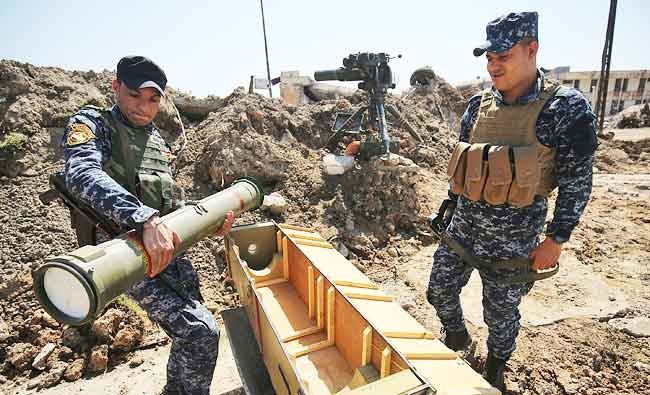
Patrolling western Mosul a weary grind for Iraqi police

Gaza’s Rafah border crossing has reopened but few people get through
- Restrictions negotiated by Israeli, Egyptian, Palestinian and international officials meant that only 50 people would be allowed to return to Gaza each day
- Amid confusion around the reopening, the Rafah crossing was closed Friday and Saturday
KHAN YOUNIS, Gaza Strip: When the Rafah border crossing between Gaza and Egypt finally reopened this week, Palestinian officials heralded it as a “window of hope” after two years of war as a fragile ceasefire deal moves forward.
But that hope has been sidetracked by disagreements over who should be allowed through, hourslong delays and Palestinian travelers’ reports of being handcuffed and interrogated by Israeli soldiers.
Far fewer people than expected have crossed in both directions. Restrictions negotiated by Israeli, Egyptian, Palestinian and international officials meant that only 50 people would be allowed to return to Gaza each day and 50 medical patients — along with two companions for each — would be allowed to leave.
But over the first four days of operations, just 36 Palestinians requiring medical care were allowed to leave for Egypt, plus 62 companions, according to United Nations data. Palestinian officials say nearly 20,000 people in Gaza are seeking to leave for medical care that they say is not available in the war-shattered territory.
Amid confusion around the reopening, the Rafah crossing was closed Friday and Saturday.
Hours of questioning
The Rafah crossing is a lifeline for Gaza, providing the only link to the outside world not controlled by Israel. Israel seized it in May 2024, though traffic through the crossing was heavily restricted even before that.
Several women who managed to return to Gaza after its reopening recounted to The Associated Press harsh treatment by Israeli authorities and an Israeli-backed Palestinian armed group, Abu Shabab. A European Union mission and Palestinian officials run the border crossing, and Israel has its screening facility some distance away.
Rana Al-Louh, anxious to return two years after fleeing to Egypt with her wounded sister, said Israeli screeners asked multiple times why she wanted to go back to Gaza during questioning that lasted more than six hours. She said she was blindfolded and handcuffed, an allegation made by others.
“I told them I returned to Palestine because my husband and kids are there,” Al-Louh said. Interrogators told her Gaza belonged to Israel and that “the war would return, that Hamas won’t give up its weapons. I told him I didn’t care, I wanted to return.”
Asked about such reports, Israel’s military replied that “no incidents of inappropriate conduct, mistreatment, apprehensions or confiscation of property by the Israeli security establishment are known.”
The Shin Bet intelligence agency and COGAT, the Israeli military body that handles Palestinian civilian affairs and coordinates the crossings, did not respond to questions about the allegations.
The long questioning Wednesday delayed the return to Gaza of Al-Louh and others until nearly 2 a.m. Thursday.
Later that day, UN human rights officials noted a “consistent pattern of ill-treatment, abuse and humiliation by Israeli military forces.”
“After two years of utter devastation, being able to return to their families and what remains of their homes in safety and dignity is the bare minimum,” Ajith Sunghay, the agency’s human rights chief for the occupied Palestinian territories, said in a statement.
Numbers below targets
Officials who negotiated the Rafah reopening were clear that the early days of operation would be a pilot. If successful, the number of people crossing could increase.
Challenges quickly emerged. On the first day, Monday, Israeli officials said 71 patients and companions were approved to leave Gaza, with 46 Palestinians approved to enter. Inside Gaza, however, organizers with the World Health Organization were able to arrange transportation for only 12 people that day, so other patients stayed behind, according to a person briefed on the operations who spoke on condition of anonymity because they were not authorized to speak to the media.
Israeli officials insisted that no Palestinians would be allowed to enter Gaza until all the departures were complete. Then they said that since only 12 people had left Gaza, only 12 could enter, leaving the rest to wait on the Egyptian side of the border overnight, according to the person briefed on the operations.
Crossings picked up on the second day, when 40 people were allowed to leave Gaza and 40 to enter. But delays mounted as many returning travelers had more luggage than set out in the agreement reached by negotiators and items that were forbidden, including cigarettes and water and other liquids like perfume. Each traveler is allowed to carry one mobile phone and a small amount of money if they submit a declaration 24 hours ahead of travel.
Each time a Palestinian was admitted to Egypt, Israeli authorities allowed one more into Gaza, drawing out the process.
The problems continued Wednesday and Thursday, with the numbers allowed to cross declining. The bus carrying Wednesday’s returnees from the crossing did not reach its drop-off location in Gaza until 1:40 a.m. Thursday.
Still, some Palestinians said they were grateful to have made the journey.
As Siham Omran’s return to Gaza stretched into early Thursday, she steadied herself with thoughts of her children and husband, whom she had not seen for 20 months. She said she was exhausted, and stunned by Gaza’s devastation.
“This is a journey of suffering. Being away from home is difficult,” she said. “Thank God we have returned to our country, our homes, and our homeland.”
Now she shares a tent with 15 family members, using her blouse for a pillow.


