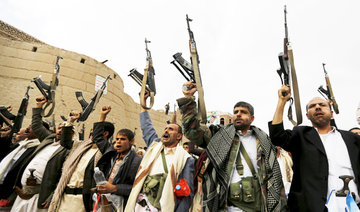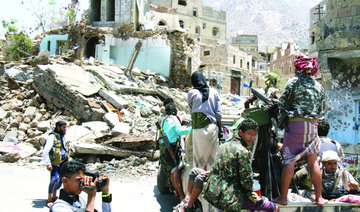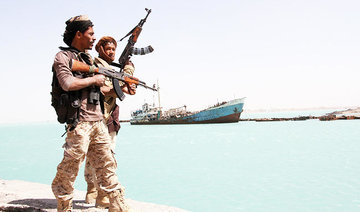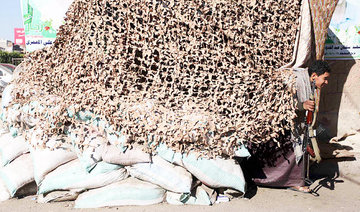
PARIS/ADEN: Yemen’s Deputy Human Rights Minister Mohammed Askar has called on the international community to include Houthi militias and forces loyal to ousted President Ali Abdullah Saleh on the list of terrorist groups.
Askar also called for the immediate implementation of UN resolutions on Yemen, in particular resolution 2216.
“The coup has led to a serious and unprecedented deterioration of the humanitarian situation,” he said, adding that targeting civilians and extrajudicial killings are flagrant violations of international humanitarian law.
He urged international organizations to work professionally, accurately and clearly to hold accountable perpetrators of human rights violations in Yemen, and to take necessary measures to deter them.
These organizations’ soft approach toward militia abuses “encourages them to commit more violations and crimes, and doesn’t constitute any deterrent for those militias.”
Since the Houthi coup, almost 11,000 Yemenis have been killed by the militias, including 1,002 children and 649 women, and more than 27,000 people have been injured, Askar said.
Houthi mines have killed and injured more than 673 Yemenis, and cause causalities on a daily basis, he added.
Since the coup, the militias have kidnapped and arrested nearly 17,000 people. Individuals released from Houthi prisons are suffering from severe mental and physical health issues, he said.
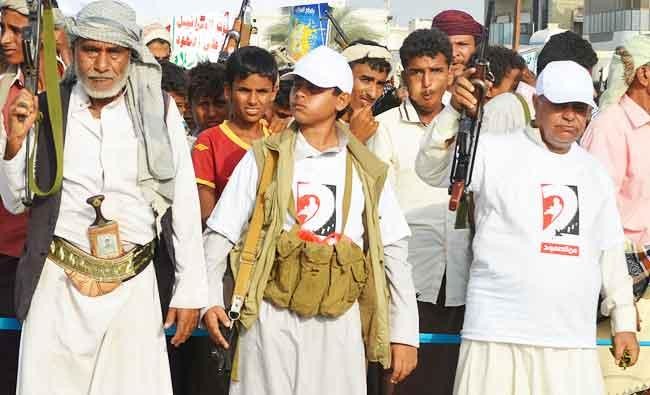
Houthi militias have recruited more than 1,000 children, and have forced women to fight for them, Askar added.
Meanwhile, Yemeni scholars and activists have condemned violations against mosques in Yemen by the Houthi and Saleh militias.
The scholars said the violations reflect the militias’ enmity toward the Islamic faith and the role played by mosques.
Scholar Abdul Raqib Al-Rasas said the militias target mosques in provinces under their control because mosques stand firmly against the Houthi project. He stressed “the need to show the position and sanctity of the mosque, and its role in promoting and educating people.”
Ahmed Al-Qahtani, a member of the Yemeni-American Alliance in New York, said the reason for the violation of mosques is to terrorize people.
“Their enmity to the imams of the mosques, the guardians of the Qur’an and people of knowledge is because they know that the imams of mosques and guardians of the Qur’an will not accept their sectarian project and will strongly challenge it,” Al-Qahtani said.
Sheikh Abdul Wahid Al-Rajhi said Houthi militias are a terrorist group characterized by ignorance and impudence. “They violate mosques to send a message to the enemies of the nation that ‘we are with you in beating Islam’,” he said.
“They blow up a mosque because it is the home of influence in society. Their faith does not respect or believe in mosques. They want Yemen to become an Iranian province.”
Arafat Hamran, chairman of the Yemeni human rights watchdog Rassd, said: “The Houthis want an ignorant society in order to implant their superstitious beliefs, so they kill worshipers and imams of mosques, scholars and guardians of the Qur’an.”
He added that Yemenis are a people of faith and wisdom, and “these actions are beyond our faith, morals and values. The militias don’t build a state but seek havoc.”
He urged Yemenis to be attentive to the danger of the Houthis because they are a tool of Iran, which destroys any country it intervenes in and divides its people into sects.