ISLAMABAD: Sapna Gobia is busy preparing for her wedding in Pakistan in a few weeks. In many ways, her wedding will follow traditions passed down through generations, with the bride and groom circling a sacred fire lit by their families.
But unlike the marriage of her parents, Gobia’s will be formalized by a government certificate under a new Hindu marriage law.
The 25-year-old will be one of millions of women from Pakistan’s Hindu minority who now have the right to a certificate establishing her marital status under the Hindu Marriage Act 2017 that was signed into law on March 19.
“We Hindu girls and married women have lived in the shadow of constant fear ... of being kidnapped, forced to abandon our faith and convert and re-married forcibly to someone not from our faith,” said Gobia, a graduate in English literature from a government college in the town of Dharaki in southern Pakistan.
She hopes the new marriage law will help prevent such incidents of kidnapping of Hindu minority women and their forced conversion to other faiths for bigamous, forced marriages.
“With our marriages now legally registered with government authority ... no one could be able to stop us and our husbands from proving our marital status,” Gobia told the Thomson Reuters Foundation.
“More importantly, bigamy has now been termed an unlawful and punishable crime in the new law — that is a big relief.”
After partition from India in 1947, and the creation of Pakistan as a separate state for Muslims, marriages of the Hindu minority were not officially recognized, leaving Hindu women without protection under the law.
Hindus in Pakistan are now estimated to number around 3 million out of a population estimated at nearly 190 million.
“Our married daughters and sisters have been kidnapped by local non-Hindu influentials and forced to convert to Islam,” said lawyer Arjun Das, chairman of Pakistan Council of Meghwar, a Hindu community, who campaigned for the marriage law.
“Then they have been gotten forcibly re-married off to their influential kidnappers ... without their victims’ consent.”
Kidnapped
Sixteen-year-old Anjali Kumari was kidnapped three years ago from her home in Dharaki in broad daylight — and was forcibly converted to Islam within a day.
“We had to take refuge in Karachi as we faced murder threats by the kidnappers with connections to a local political group when we raised our voices and took to the streets calling for release of our daughter,” Kumari’s father, Kundan Mal Meghwar, told the Thomson Reuters Foundation.
“She was forcibly converted and married off ... against her free will,” Mal Meghwar said.
A court in the port city of Karachi ruled in 2014 that Anjali should stay in a shelter in the city where her parents could visit her.
“But we were never allowed to meet our daughter, giving her the impression that we were no longer interested in saving her ... from her kidnapper,” he said. “She succumbed to the pressure and eventually went away with him.”
Protection
The historic Hindu Marriage Act aims to protect families — and the women and children of the Hindu community particularly, by recognizing their marriages in law, said Zahid Hamid, federal law and justice minister.
“Marriage registrars will be appointed by the government in different parts of the country as provided in the law,” he told the Thomson Reuters Foundation.
“The registrars will be authorized to register Hindu marriages under the act. Besides maintaining Hindu marriage records, they will also be authorized to issue legal marriage certificates.”
The minister said particular efforts had been made to address the issue of bigamy in Pakistan.
Representatives of the Pakistan Hindu Council and Pakistan Council of Meghwar have long struggled for a law to protect women from conversions to other faiths and forced marriages.
But Ramesh Kumar Vankwani, patron-in-chief of Pakistan Hindu Council, said the new law needed strong political will to ensure its implementation and campaigns in schools and the media to raise awareness of the legislation.
“It is the responsibility of the state to provide all sorts of protections to the country’s minority groups including (protecting) Hindus from all sorts of atrocities meted out to them and ensuring they enjoy the same rights as any other person in the country,” Vankwani said.
High court lawyer and minority rights activist, Nand Lal Lavha, said awareness among lawyers, magistrates and police was key to ensuring the new law brought justice for Hindu girls and women.


![]()
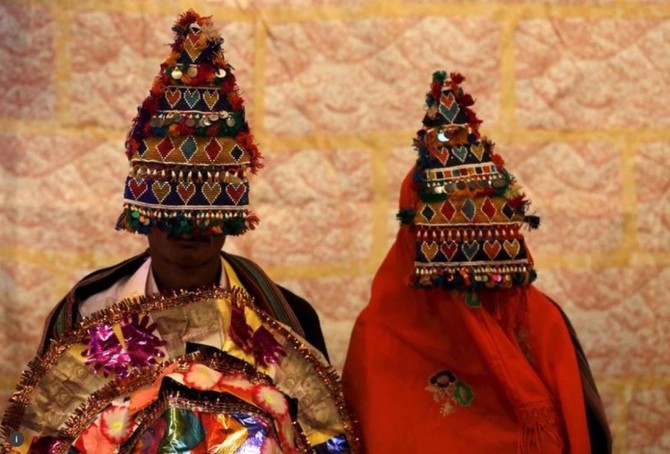
Kidnapping, forced marriage: Pakistan’s Hindu women hope for protection in new law
Kidnapping, forced marriage: Pakistan’s Hindu women hope for protection in new law
Latest updates


© 2026 SAUDI RESEARCH & PUBLISHING COMPANY, All Rights Reserved And subject to Terms of Use Agreement.