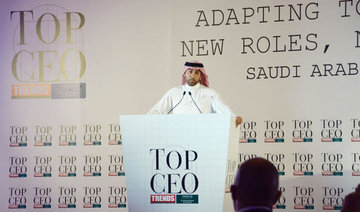
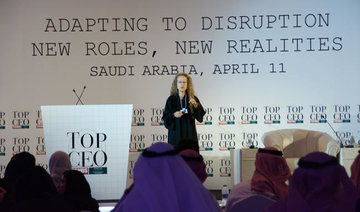
KING ABDULLAH ECONOMIC CITY: The growth of entrepreneurship in the Gulf region is held back by the fear of taking risks and possible failure, said panelists at the Top CEO Conference.
Encouraging small and medium-sized enterprises (SMEs), entrepreneurship and startups entails “a cultural shift” in a society that is not as accepting of failure compared to some other markets, said Iyad Malas, founding partner of the private equity firm Gateway Partners.
“That’s something (seen) culturally in our part of the world… we have an issue around saying ‘I’ve done something and failed’,” he said, adding that the greatest lessons are learned after failures.
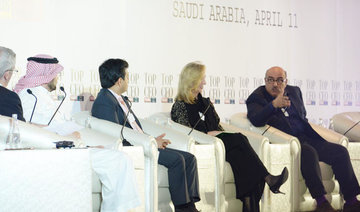
This obstacle extends to the wider Asian region, according to Lawrence Morgan, CEO of Nest Global. He is based in Hong Kong, where he said many parents do not permit their children to engage in entrepreneurial activities and would rather they hold more stable jobs.
“The biggest impediment for people starting their business in Asia is parents’ permission. What parents would say is that ‘I spend all this money on your education for you to then go and be a failure… you’re going to become a lawyer or a banker (which is) what I envisioned for you’,” Morgan said at a panel discussion on the so-called “broken job machine.”
Boosting SMEs falls under the goals of the Saudi Vision 2030 as it is considered a major agent of economic growth that creates jobs and supports innovation.
SMEs comprise nearly 25 percent of the Saudi labor force, according to a report published by Jeddah Chamber of Commerce and Industry (JCCI) in April 2016. Out of the 25 percent, only 10 percent are Saudi nationals.
The wider range of SMEs is represented by the middle class, which Amr Khashoggi, vice president of human resources and group affairs at Zahid Group, described as “the backbone” of the economy. “Without the middle class you lose the backbone of any economy. SMEs are provider of jobs,” he said.
Introducing business education at a younger age in schools was addressed as one of the main drivers of SMEs and start-ups. On-the-job training and collaboration between businesses is also required to sharpen entrepreneurship skills.
Khashoggi said there was a lack of collaboration in the entrepreneurship space in Saudi Arabia. “I don’t think SME incubators that exist today are doing a very good job,” he said.
On the same note, business people that have been successful should reinvest locally in new entrepreneurs, Morgan suggested. “That will create a great cycle of investment that then can really try and foster a new economy,” he said.
According to the JCCI report, Saudi Arabia, which is the largest economy in the Gulf region, is home to almost 20 percent of the total SMES in the Middle East North Africa region.


![]()

How ‘fear of failure’ is holding back Gulf entrepreneurs
How ‘fear of failure’ is holding back Gulf entrepreneurs
Related

Latest updates


Recommended


© 2026 SAUDI RESEARCH & PUBLISHING COMPANY, All Rights Reserved And subject to Terms of Use Agreement.