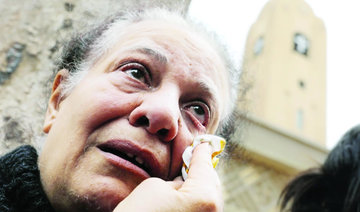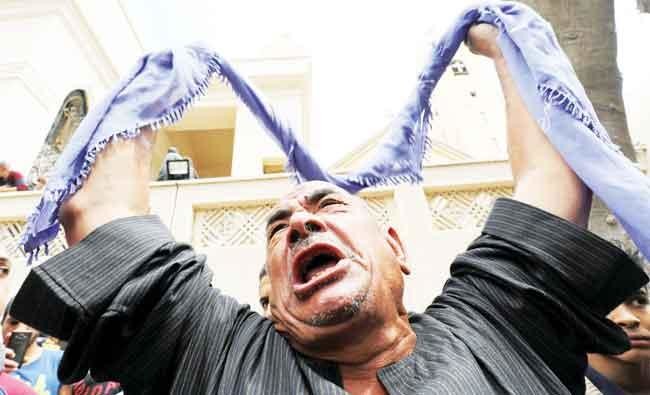
JEDDAH: Terrorist attacks targeting two Coptic Christian churches in Egypt, which killed at least 43 people and wounded as many as 100, have unified Arab and Western nations to further their efforts to defeat extremist violence.
Egyptian President Abdel Fattah El-Sisi announced a three-month state of emergency following twin church bombings.
King Salman on Sunday made a phone call to El-Sisi, expressing his condolences and sympathy to the Egyptian president, following the terrorist bombings.
During the phone call, the king expressed in the strongest words his denunciation and condemnation of the two sinful criminal terrorist acts and reiterated the Kingdom’s solidarity with Egypt and its people against whoever attempts to tamper with its security and stability.
Security and political analysts told Arab News that while the international community combines resources to fight terrorism, the strategy also makes their countries targets of retaliation. Yet it also strengthens their resolve to defeat groups like Daesh.
Bombs exploded at two Coptic churches in different cities in northern Egypt as worshippers were celebrating Palm Sunday in an attack claimed by Daesh. The claim was published by the militant group’s Aamaq news agency. It provided no further details.
The blasts came at the start of Holy Week leading up to Easter, and just weeks before Pope Francis was due to visit the Arab world’s most populous country, which has been beset by extremist violence against its minority Christians.
In the first attack, a bomb went off inside St. George’s Church in the Nile Delta city of Tanta, killing at least 27 people and wounding 78, officials said.
A few hours later, a suicide bomber rushed toward St. Mark’s Cathedral in the coastal city of Alexandria, the historic seat of Christendom in Egypt, killing at least 16 people and wounding 41, the Interior Ministry said.
Foreign, Arab and Muslim countries quickly condemned the terrorist attacks.
Saudi Arabia’s Foreign Ministry issued a condemnation in a statement issued in the aftermath of the attacks.
Extremists have claimed previous attacks against Egypt’s Coptic minority, and had recently vowed to step up violence against Christians, who they view as an ally of the West in a war against Islam.
Regional police chief Brig. Gen. Hossam Elddin Khalifa was fired over the incident, with Maj. Gen. Tarek Hassouna replacing him, the state-run newspaper Al-Ahram reported.
Pope Tawadros II had held Palm Sunday services at the cathedral, but his aides said he had escaped unharmed. The timing of the attack raised the question of whether the bomber had sought to assassinate the pope, leader of one of the world’s oldest Christian communities.
It is a serious security breech that calls on the Egyptian security institution to revise all its security measures, said Hani Nusseira, an expert in the affairs of Islamic groups. However, he said these attacks always have an opposite effect of what terrorists intended.
“The Egyptian society is known for their reliance,” he told Arab News on Sunday. “Every time a terrorist act takes place the people become more united and more supportive of any government measures to counter the terrorists.”
He added that despite authorities’ knowledge of being a target by the terrorist groups, they have yet to implement adequate security measures to ensure the public’s safety, especially during national or religious events.
Nusseira stressed that despite the attacks, the Egyptian case is not an exceptional one, but rather its fight against terrorist groups makes the country more subject to retaliatory acts.
Hamdan Al-Sheheri, a political analyst and international relations scholar, said the question is who is benefiting from these terrorist acts in the first place.
“This barbaric act is an attempt by terrorists to defragment the international focus, especially the US administration, which has started to see recently from the Syrian regime, back to fighting terrorism. This implies that the Syrian regime backed by the Iranians are trying to shift the pressure in a way that serves their agendas in the region,” Al-Sheheri told Arab News on Sunday.
The US administration in the wake of the recent chemical attack in Syria and the US missile strike against the Syrian regime could be a reason triggering these terrorist blast in Egypt, he said.
He said that it is also an attempt to put pressure on the Egyptian government not to support any international pressure on the Syrian regime and to keep their efforts focused on supporting a political settlement in Syria.
“Terrorism does not distinguish between countries or religions. The terrorists consider any successful breech of security in any targeted country a success to their agendas,” he said.
Over the past years, the Coptic community in Egypt has been subject to several terrorist attacks, he said.
“From the terrorist perspective, what is making them a target is their support to the current political system,” he said. “They are Egyptians, after all, and they are affected by whatever political development that takes place in Egypt, which gives them the right to take a political stance just like any other Egyptians.”
Nabil Haddad, founder and director of the Jordanian Interfaith Coexistence Research Center, said, “This cowardly act was committed at the hands of terrorist individuals who have nor regard to faith or humanity. Terrorism does not differentiate between religions and those cowardly groups are only tarnishing the image of Islam, which calls for tolerance and peaceful coexistence among different faiths.
“This will not deter us from living together in peace and harmony. On the contrary, it will make us more united and adamant to defeat terrorism."