JERUSALEM: The United States warned Friday that “unrestrained” building of settler homes could hinder peace, after Israel approved a new settlement in the occupied West Bank for the first time in a quarter century.
The Palestinians reacted angrily at what is widely seen as the most right-wing government in Israeli history presses ahead with settlement expansion in defiance of international concern.
US President Donald Trump’s administration refrained from criticizing the new settlement, which was approved by the Israeli security cabinet late Thursday, but warned that further expansion could undermine peace efforts.
“While the existence of settlements is not in itself an impediment to peace, further unrestrained settlement activity does not help advance peace,” a White House official said.
“Going forward... the Israeli government has made clear that Israel’s intent is to adopt a policy regarding settlement activity that takes President Trump’s concerns into consideration.”
A spokesman for UN chief Antonio Guterres expressed “disappointment and alarm” at the Israeli announcement.
EU foreign policy chief Federica Mogherini said the new settlement building threatens “to further undermine prospects for a viable two-state solution, which remains the only realistic way to fulfil the aspirations of both sides and achieve just and lasting peace.”
Senior Palestinian official Saeb Erekat said Israel “continues to destroy the prospects of peace.”
He also criticized the United Nations, European Union and United States for not doing enough to punish Israel for continuing to expand settlements in the West Bank.
“Peace is not going to be achieved by tolerating such crimes,” he said.
More than 400,000 Israelis live in existing settlements considered illegal under international law.
The new settlement will be constructed north of the former wildcat Jewish outpost known as Amona, which was razed in February in accordance with an Israeli High Court order.
Prime Minister Benjamin Netanyahu had promised to build a new settlement for its residents after their eviction.
“I promised to create a new community and we are going to respect that commitment and create it today,” he said ahead of Thursday’s security cabinet meeting.
Oded Revivi, chief foreign envoy for the umbrella body representing settlers, welcomed the decision.
“We will be monitoring the government very closely to see that these plans come to fruition, enabling a new era of building,” he said in a statement.
Agriculture minister Uri Ariel also welcomed the announcement, saying it would allow the “development of Judaea and Samaria,” using a term right-wing Israelis apply to the West Bank.
It will be the first entirely new settlement that an Israeli government has approved since 1991, the anti-settlement NGO Peace Now said.
In recent years, construction had focused instead on expanding existing settlements.
Peace Now said the new settlement’s location deep in the West Bank was “strategic for the fragmentation of the West Bank,” which Palestinians see as the bulk of their future state.
“Netanyahu is held captive by the settlers, and chooses his political survival over the interest of the state of Israel,” the NGO said, adding it was pushing Israelis and Palestinians closer to “apartheid.”
The international community regards all Israeli settlements in the occupied Palestinian territories as illegal and a major obstacle to Middle East peace.
Israel draws a distinction between those it sanctions and those it does not — so-called outposts.
The cabinet also invited tenders for nearly 2,000 new homes in existing settlements and discussed retroactively legalizing three outposts, Peace Now said.
Ronen Bergman, senior correspondent for Israel’s Yediot Aharonot newspaper, said Netanyahu, who has faced corruption allegations, has been dragged further right to keep his government together.
The far-right pro-settlement Jewish Home party, part of Netanyahu’s coalition, is often dictating the government’s agenda, he added.
“He has been shifted more and more to the right since being re-elected.
“(Netanyahu) is not calling the agenda, he is chasing the agenda,” Bergman told AFP.
The former US administration of Barack Obama was deeply opposed to Israel’s expansion of the settlements and in December withheld its veto from a UN Security Council resolution condemning the policy.
But since Trump took office in January, settler leaders have been emboldened by his far less critical stance and Israel has since announced more than 5,500 new homes in existing settlements.
Netanyahu has been in discussions with the Trump administration on how to move ahead with further construction.
Trump has pledged unstinting support for Israel but has also urged Netanyahu to “hold back on settlements for a little bit” while his administration looks for ways to restart Israeli-Palestinian talks.


![]()
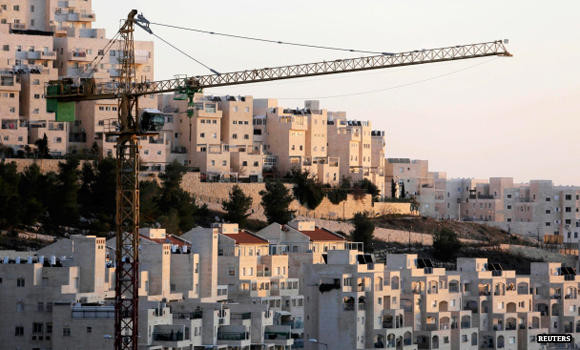
US warns Israel on ‘unrestrained’ settlement building
US warns Israel on ‘unrestrained’ settlement building
Latest updates


© 2026 SAUDI RESEARCH & PUBLISHING COMPANY, All Rights Reserved And subject to Terms of Use Agreement.