MANILA: Philippine media organizations have hit back at President Rodrigo Duterte for an expletive-laden speech that lashed out at a domestic newspaper and a television network, saying threats would not stop journalists from reporting the truth.
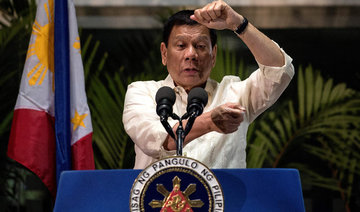
In two separate televised speeches on Thursday, Duterte unleashed a stream of profanity and threatened to use the government’s television station to hit back at dissenting media.
The populist leader singled out the Philippine Daily Inquirer newspaper for its coverage of his bloody war on drugs and a critic’s allegations that he had hidden millions of dollars of assets. He also hit out at media conglomerate ABS-CBN , but did not say why.
“Your incoherent and foul-mouthed rant against two of the country’s major media outfits ... was not only unwarranted, it was absolutely twisted,” the National Union of Journalists of the Philippines said in a statement.
The verbal attacks showed how little the president appreciated democracy and governance, the group added.
The president’s office has a rocky relationship with the media and frequently accuses the press of bias or of distorting remarks Duterte has made live on television.
Duterte enjoys huge support on social media and is fiercely defended by well-known bloggers with large followings on Facebook and have frequently targeted journalists.
He was angered by the Inquirer over a story that said his anti-drugs crackdown had primarily targeted poor Filipinos, a conclusion echoed by many rights groups.
More than 8,000 people, mostly drug users and small pushers, have been killed since Duterte took office at the end of June, about a third in police operations and many of the rest by unidentified gunmen.
“You know, the Inquirer yesterday, they are b******t, son of a b***h. They are garbage,” Duterte said on Thursday.
“Those journalists really have no shame. I tell you, they have no shame, including ABS-CBN.”
“If you say in your editorial ‘son of a b***h’ then I will hit back and say you, too, are a son of a b***h.”
In a statement, the Inquirer said it “takes exception to president Duterte’s remarks.” ABS-CBN, which covered the speeches live, has not commented.
Duterte’s outburst follows criticism by his office about the New York Times and its coverage of the drugs war, which included a short documentary film and an editorial calling for a United Nations investigation.
Presidential spokesman Ernesto Abella called the coverage a “demolition job” and part of a conspiracy to undermine the government. He described one article as a “well-paid hack job.”
In a television interview this week, the documentary producer said the Times had no agenda other than telling stories that it felt were important.


![]()

Philippine media groups cry foul over Duterte’s expletive-laden speech
Philippine media groups cry foul over Duterte’s expletive-laden speech


Latest updates


Recommended


© 2026 SAUDI RESEARCH & PUBLISHING COMPANY, All Rights Reserved And subject to Terms of Use Agreement.