Muslims complain they're frivolous bills meant to spread fears and sow suspicion of their religion in a nation divided.
But supporters of state proposals to prevent Islamic code from being used in American courts argue they aren't overtly anti-Muslim and are needed to safeguard constitutional rights for average Americans.
The bills, variations of which have been around for years, don't specifically seek to ban Islamic law, known as Sharia, even though some lawmakers concede that's their intent.
Instead, the proposals broadly call for banning the application of any foreign law, legal code or legal system that doesn't grant the same rights and privileges as the state or U.S. constitutions.
"I believe very strongly in the values of America to allow for religious freedom," said Connecticut state Rep. Robert Sampson, a Republican sponsor of a bill. "I just don't want our court system to start using what is religious law from other countries to make decisions. I'd like to preserve our way of life."
Muslim leaders say the bills are among a range of proposals and decisions at all levels of government that they're gearing up to fight this year, from President Donald Trump's travel ban to local planning and zoning rulings against mosque projects.
"These are thinly veiled attempts to alienate Muslims in America," said Hazem Bata, of The Islamic Society of North America, based in Indiana, where once such "anti-Sharia" bill has been introduced.
The bills have been introduced in at least 13 states, a number that will likely grow as the legislative year progresses, said Jonathan Griffin, of the National Conference of State Legislatures, who has been tracking the proposals. Anywhere from 15 to 30 states see the proposal introduced in a given year, he said. Ten states already have some version of them on the books since they started cropping up around 2010.
While many of this year's bills likely won't become law, they're gaining traction early in Montana and Arkansas, where the legislatures are poised to approve bills and send them to the governors this month.
Supporters point to a 2014 report by the Center for Security Policy, a conservative think tank whose critics deride as anti-Muslim, that cites nearly 150 cases in which it says Sharia played a role.
The cases, some of which date to the late 1970s, mostly involve divorce, child custody and other family law proceedings where either the plaintiff or defendants invoked Islamic laws and customs to make their case.
"Sharia should be very concerning to all of us," said state Rep. Heidi Sampson, a Maine Republican who has proposed legislation. "It is a way of life and a legal code which is designed to impinge on culture, family life, marriage, equality of the sexes — a whole host of areas."
Sampson and other lawmakers say a 2010 New Jersey case highlighted prominently in the report is particularly troubling.
A Muslim woman accused her husband of sexual abuse and sought a restraining order in 2009, but the judge denied the request after the husband argued, in part, that a wife must comply with her husband's sexual demands in Islamic custom. An appeals court ultimately overturned the ruling.
But Will Smiley, an editor at the Harvard Law School's SHARIAsource, an online collection of academic writings on Islamic law, is skeptical the bills proposed by lawmakers would have made a difference in the initial ruling.
"These new laws don't provide any new safeguards," Smiley said. "Courts can still make mistakes, like most observers agree that New Jersey court did."
Many of the other cases cited in the center's report don't appear to show evidence that U.S. courts based decisions on Sharia or other foreign codes, said Jay Wexler, a professor at Boston University's School of Law who specializes in separation of church and state issues.
"The facts of a case might require a court to consider in some way a foreign custom or law," he said. "But that does not mean that the court is applying foreign law."
Opponents maintain the bills as proposed don't serve any practical purpose.
"The U.S. legal code already states that American courts can only adhere to American laws," said John Robbins, executive director of the Massachusetts chapter of the Council on American-Islamic Relations. "It's a stupid solution to a nonexistent problem."
Supporters stress the proposals would impact all religious codes and foreign laws equally.
If parts of Jewish, Christian or other laws ran counter to fundamental constitutional rights, they too would not be applicable in U.S. courts, said Montana state Sen. Keith Regier, a Republican.
"They're saying it's hateful, and I have no idea where they're getting that from," he said of opponents. "Read the bill and tell me what is hateful or distasteful in there."


![]()
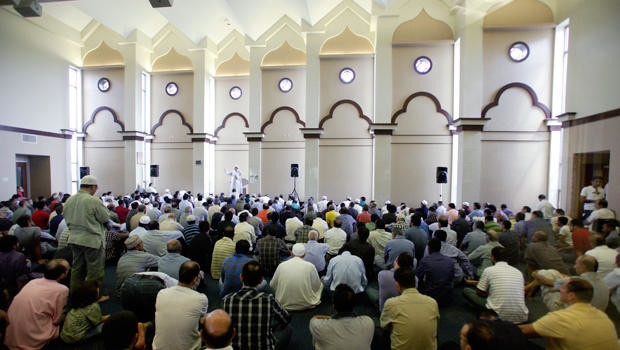
On Muslims' agenda: Fight US proposals to ban Sharia law
On Muslims' agenda: Fight US proposals to ban Sharia law


Latest updates


© 2026 SAUDI RESEARCH & PUBLISHING COMPANY, All Rights Reserved And subject to Terms of Use Agreement.