Brexit banks set to avoid lengthy euro zone entry test — sources

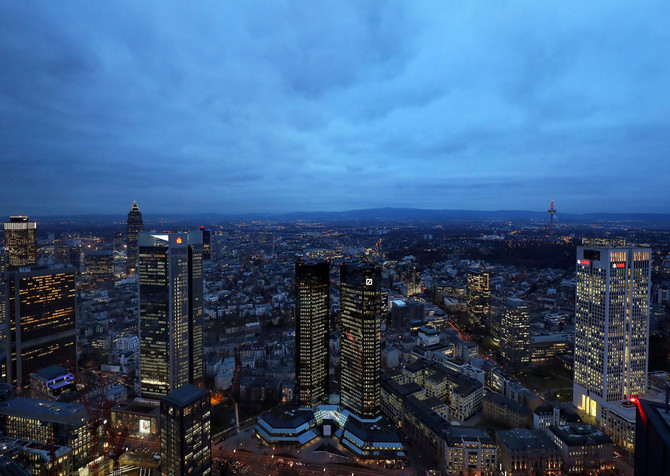
Frankfurt along with Paris are looking to reshape Europe's financial landscape after Brexit. (Reuters)
Updated 22 March 2017
Follow

Brexit banks set to avoid lengthy euro zone entry test — sources

FRANKFURT: Banks in London that relocate operations to the euro zone after Brexit are likely to be spared a lengthy entry test by regulators, making it easier for them to shift, according to two officials with knowledge of the matter.
The European Central Bank, the euro zone’s banking supervisor, has had many inquiries from British-based banks wanting to come under its watch, prompting it to look at fast-tracking license applications, according to the sources.
It is set to temporarily waive an examination of the financial models that big retail lenders and investment banks use to determine the risk of a default on a mortgage or derivative — as long as the banks meet the standards of British regulators, they said.
Any such decision by the ECB would be chiefly for practical rather than political reasons and would, said one of the people, aim to minimize disruption to European finance after Britain leaves the EU.
“Resources are limited. We would find a way of doing it (applications) quickly,” said the official, talking on condition of anonymity because of the sensitivity of the matter.
“The European financial system wants to continue to function.”
Such a waiver would nonetheless serve to speed up banks’ relocation plans and help reshape Europe’s financial landscape by expediting the process of Frankfurt, Paris, Luxembourg and Dublin winning business from London.
The ECB declined to comment.
British Prime Minister Theresa May will trigger divorce proceedings with the European Union on March 29, launching two years of negotiations that will help determine the future of Britain and Europe.
While the final terms for doing business with the EU from Britain are uncertain, May has made it clear that Britain will leave the single market which allows banks in London to sell their services across the bloc.
Finance executives say privately they expect Brexit to isolate London, currently Europe’s financial capital, and want to establish bases inside the EU from where they can access its market.
Dublin has received 80 such inquiries from financial institutions including banks, according to IDA Ireland, an agency that attracts foreign investment, while about 50 envoys from foreign banks met Germany’s watchdog earlier this year about a possible move.

Grace period
The final decision in granting a banking license in the euro zone is taken by the ECB, which looks at the strength of a bank’s capital as well as that of its management when it comes to granting approval.
But, according to the sources, it is set to waive the immediate examination of the financial models which contain the basic assumptions underpinning a bank’s business and are essential to understanding their riskiness — a process that can take more than a year.
The waiver would be based on the principle that the Bank of England’s checks are good enough. It would only be a temporary reprieve, however, to smooth the relocation process, and banks would eventually have to face testing of their models. The sources said the period of grace could last several months.
“It is reasonable to decide that there is an interim period where these models are accepted,” said the second official.
A decision by ECB officials on the waiver is expected in the coming months.
Leading financial firms in Britain warned for months before last June’s Brexit referendum that they would have to move some jobs if there was a leave vote, and have been working on plans for how they would do so for the past several months.
Senior European officials have also become increasingly nervous, privately warning of a “cliff-edge” departure of Britain from the bloc. The EU is heavily dependent on London for trillions of euros of finance and a massive pool of investors.
France and Germany are keen to establish alternatives to London, while smaller countries, such as Ireland and Luxembourg, are also vying for their share of the spoils.
Flexibility in terms of entry requirements could help a bank such as Goldman Sachs, which sources have said want to build up its business in Frankfurt.
The Wall Street firm’s European CEO said on Tuesday it will begin moving hundreds of people out of London as it prepares for Britain to leave the European Union.


First EU–Saudi roundtable on critical raw materials reflects shared policy commitment

Updated 16 January 2026
Follow

First EU–Saudi roundtable on critical raw materials reflects shared policy commitment

RIYADH: The EU–Saudi Arabia Business and Investment Dialogue on Advancing Critical Raw Materials Value Chains, held in Riyadh as part of the Future Minerals Forum, brought together senior policymakers, industry leaders, and investors to advance strategic cooperation across critical raw materials value chains.

Organized under a Team Europe approach by the EU–GCC Cooperation on Green Transition Project, in coordination with the EU Delegation to Saudi Arabia, the European Chamber of Commerce in the Kingdom and in close cooperation with FMF, the dialogue provided a high-level platform to explore European actions under the EU Critical Raw Materials Act and ResourceEU alongside the Kingdom’s aspirations for minerals, industrial, and investment priorities.

This is in line with Saudi Vision 2030 and broader regional ambitions across the GCC, MENA, and Africa.

ResourceEU is the EU’s new strategic action plan, launched in late 2025, to secure a reliable supply of critical raw materials like lithium, rare earths, and cobalt, reducing dependency on single suppliers, such as China, by boosting domestic extraction, processing, recycling, stockpiling, and strategic partnerships with resource-rich nations.

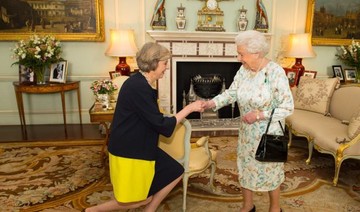
The first ever EU–Saudi roundtable on critical raw materials was opened by the bloc’s Ambassador to the Kingdom, Christophe Farnaud, together with Saudi Deputy Minister for Mining Development Turki Al-Babtain, turning policy alignment into concrete cooperation.

Farnaud underlined the central role of international cooperation in the implementation of the EU’s critical raw materials policy framework.

“As the European Union advances the implementation of its Critical Raw Materials policy, international cooperation is indispensable to building secure, diversified, and sustainable value chains. Saudi Arabia is a key partner in this effort. This dialogue reflects our shared commitment to translate policy alignment into concrete business and investment cooperation that supports the green and digital transitions,” said the ambassador.

Discussions focused on strengthening resilient, diversified, and responsible CRM supply chains that are essential to the green and digital transitions.

Participants explored concrete opportunities for EU–Saudi cooperation across the full value chain, including exploration, mining, and processing and refining, as well as recycling, downstream manufacturing, and the mobilization of private investment and sustainable finance, underpinned by high environmental, social, and governance standards.

From the Saudi side, the dialogue was framed as a key contribution to the Kingdom’s industrial transformation and long-term economic diversification agenda under Vision 2030, with a strong focus on responsible resource development and global market integration.

“Developing globally competitive mineral hubs and sustainable value chains is a central pillar of Saudi Vision 2030 and the Kingdom’s industrial transformation. Our engagement with the European Union through this dialogue to strengthen upstream and downstream integration, attract high-quality investment, and advance responsible mining and processing. Enhanced cooperation with the EU, capitalizing on the demand dynamics of the EU Critical Raw Materials Act, will be key to delivering long-term value for both sides,” said Al-Babtain.

Valere Moutarlier, deputy director-general for European industry decarbonization, and directorate-general for the internal market, industry, entrepreneurship and SMEs at European Commission, said the EU Critical Raw Materials Act and ResourceEU provided a clear framework to strengthen Europe’s resilience while deepening its cooperation with international partners.

“Cooperation with Saudi Arabia is essential to advancing secure, sustainable, and diversified critical raw materials value chains. Dialogues such as this play a key role in translating policy ambitions into concrete industrial and investment cooperation,” she added.