


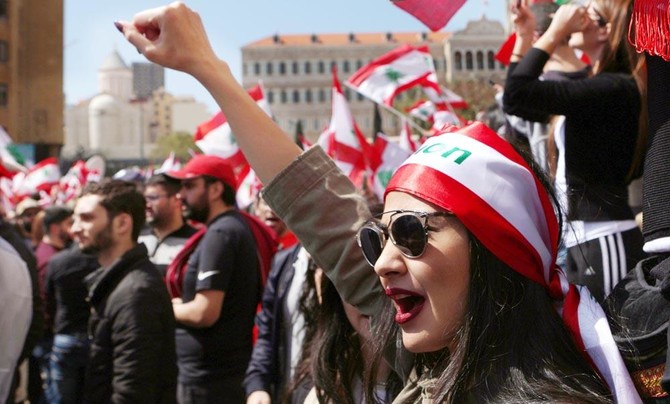


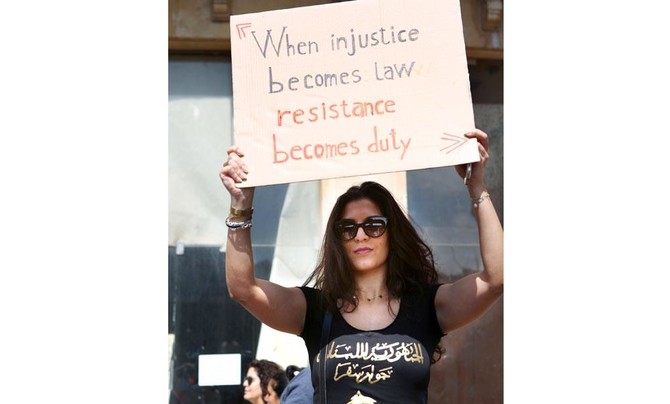
BEIRUT: Thousands of people jammed a downtown square chanting “enough is enough” and “no ability to take on more taxes” to protest against proposed tax hikes to cover salary increases for public servants and teachers.
Their message to pressure the government was supported by civil society groups and a range of political parties. They called on the government to levy taxes instead on specific sectors that have remain untouched to fund increased salaries.
In a surprise move, Prime Minister Saad Al-Hariri personally visited Riad Al-Solh Square in an attempt to quell protesters.
“We are here with you to be clear with you, and God willing you will see this government and president always on your side and on the side of the people and their needs,” Al-Hariri told the crowd of several thousand demonstrators.
“While there is certainly corruption in this country,” he said, “we will fight this corruption and I wanted to come to you to tell you that we will complete the journey together.”
But Al-Hariri’s sentiments were rejected by protesters, who instead called for the regime to step down. Some protesters threw empty water bottles and sticks his way. As guards attempted to protect Al-Hariri, he responded calmly, appearing unfazed, before departing on foot to the government headquarters.
Rida Saad, head of the union for manufacturers of shoes and leather goods in Lebanon, told Arab News that “our taking to the streets today was to speak out against the unfair taxes that target the poor and low income people.”
“In light of what happened today, I think the government and parliament will withdraw their decision to levy these taxes and perhaps the new salary scales,” he said. “The protests were a message from the people who has been struggling from poverty, hunger, unemployment, and lack of social insurance, and our next steps are to take to the street again next Wednesday and may even strike.”
He said all flags raised at the protest were representative of civilians, not parties. He noted the participation of parties was mainly to get involved before it became too late. The main group missing was the General Labor Union, he said.
Bilal Allaw, 20, said he took to the streets because the situation is no longer tolerable. He said he works 12 hours a day for a salary of $700 per month, and he left school to work and support his family. The taxes imposed today, he said, are “unacceptable” because it will make purchases unaffordable at his salary level. Meanwhile, children of parliamentarians and ministers are being educated for free at our expense.”
Allaw, a regular activist, said the protesters were only spraying water, not rocks, including on Al-Hariri, when he approached them at the square to speak. He said protesters could not understand his motives for coming.
“We refuse to be fooled by politicians, and perhaps the government must impose this salary scale, but it should not be funded by our pockets,” he said.
He said the public protests were called for by several parties including Al-Kataeb, the National Liberal Party, the Lebanese Communist Party and the Socialist Progressive Party They were also joined by the general public as the protests gained momentum on social media. People from southern suburbs of Beirut also participated in the protest.
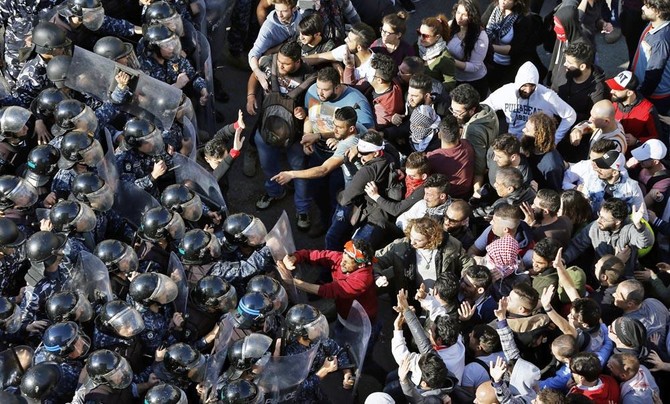
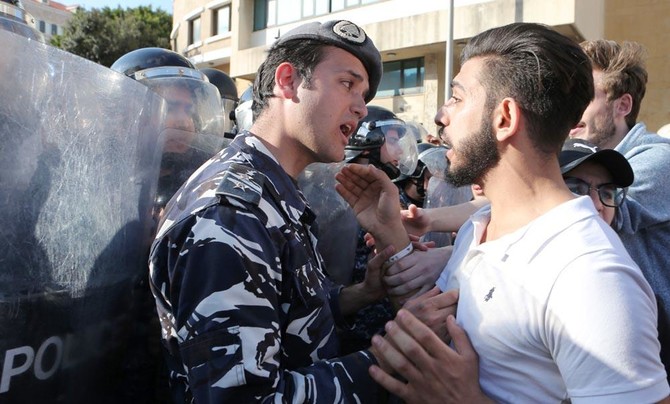
However, the peaceful protests quickly turned violent. Chaos lasted several hours as protesters removed security barriers and got close to security forces. In turn, security forces did not reciprocate and were unaffected by crowd, despite being targeted by water bottles, fireworks and sticks by protesters.
A group of activists also responded to Al-Hariri’s suggestion made on Twitter, calling on protesters to form a committee to allow for calm and positive dialogue. Neemat Badr Al-Din, a protester and activist, said there would be intention to form such a committee before cancelation of the new taxes. He said protests before the government headquarters will continue.


