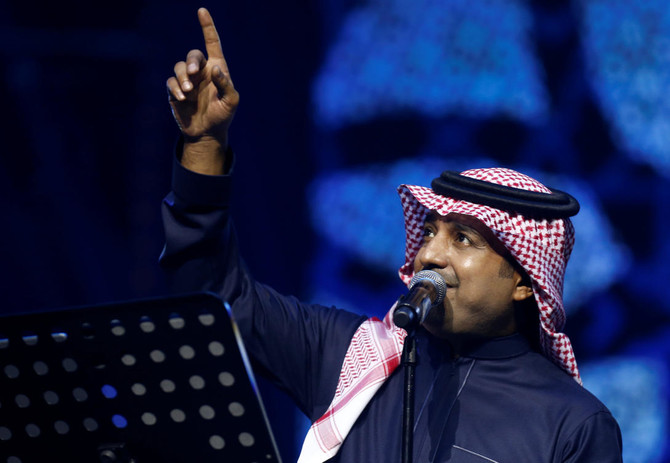
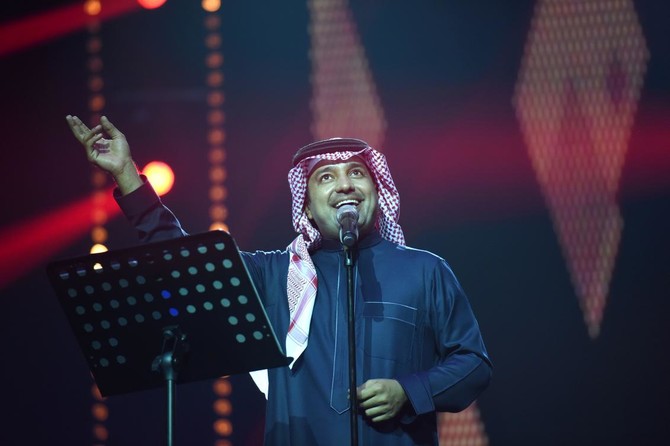
RIYADH: Legendary Arab singer Rashed Al-Majed gave his fans three encores in the Saudi capital Thursday night. Why not? They had waited about three decades for such a show.
Al-Majed opened for Mohammed Abdu as part of what one music lover called a “paradigm shift” in the conservative Islamic Kingdom, which has cautiously begun introducing entertainment despite opposition from Muslim hardliners.
Both singers have Saudi roots and are popular throughout the Arab world, but fans said Abdu had not sung in the Saudi capital since 1988.
Local media reported there had been no other concerts in Riyadh since the early 1990s, after which they were effectively banned, although private musical events did occur.
“We missed them a lot,” Jamal Al-Onzi, a 31-year-old bank worker, said of the singers.
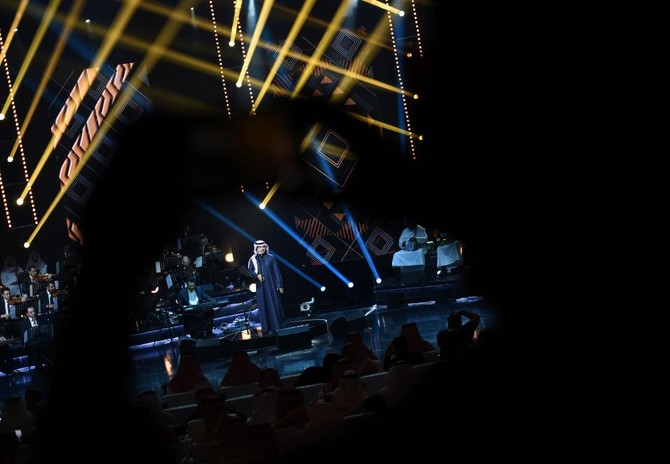
He was among the audience of 2,000 — all men — who paid between 500 and 2,500 riyals ($133-$667) for the performances at King Fahd Cultural Center hall.
“We sold out in 30 minutes,” Habib Rahal, of the organizers Rotana Music, told AFP.
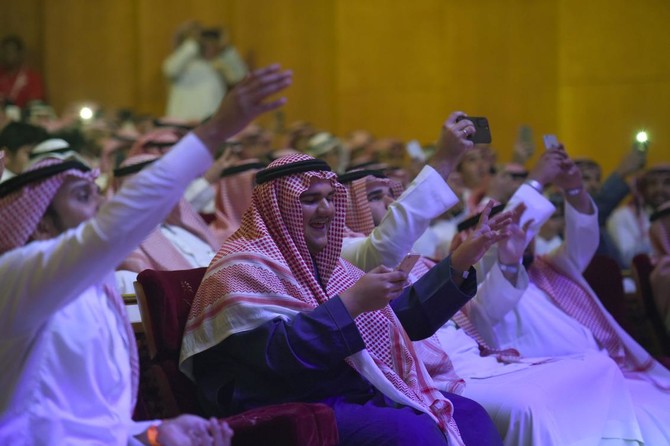
Dressed almost exclusively in traditional white thobes and chequered headgear, the crowd was initially sedate despite the infectious drum beats and melodious strings that accompanied Al-Majed.
In the shadows, one spectator mouthed the words and moved his arms in time to the music. Another tapped his left hand on his thobe.
There was lots of enthusiastic shouting and calls of “Rashed” before the energy peaked, pushing the singer to his three encores.
They swayed in time to the music. Some even stood up to dance.
After more than 90 minutes, it was time to do it all again when Abdu took the stage at around midnight.
Less pop-influenced than Al-Majed, the elder man sings patriotic and traditionally romantic songs.
“I have feelings of happiness and joy and pleasure,” he told reporters before ending his long absence from a Riyadh stage.
Abdu gained fame long before Abdulaziz Al-Shudayyid was born, but the 21-year-old student said the veteran artist “sings for my generation. I know by heart all his songs.”
Although conservatism still runs deep, there is pressure for change in a country where more than half the population is younger than 25 and people are connected to the wider world through the Internet.
They have a champion at the highest levels of power in Deputy Crown Prince Mohammed bin Salman, 31, who is pushing economic diversification and social reform of the oil-dependent Kingdom.
One of the most visible aspects has been entertainment, partly out of an economic motive to get Saudis spending at home rather than elsewhere in the Gulf.
The Kingdom still bans alcohol, public cinemas and theaters. It usually segregates unrelated men and women in restaurants and other public places.
But hundreds of men and women, side by side, clapped to the hip hop beat when New York theatrical group iLuminate performed in October.
That began an entertainment calendar that has so far included WWE wrestling and the Kingdom’s first Comic-Con pop culture festival. The US-based Monster Jam truck competition is scheduled for next week in Riyadh.
There has, however, been resistance. On Thursday, a member of the religious police disrupted a musical performance by a group from Malaysia at a venue hosting Riyadh’s International Book Fair, damaging their sound system.
The Information Ministry called it “an isolated case” by the religious police, whose power has been greatly reduced.
A scheduled show by Abdu last September in Riyadh did not take place, but in January he performed without incident in the Red Sea city of Jeddah, widely considered somewhat more liberal than Riyadh.
Abdulrahman Al-Shaya, 28, a chemical engineer who attended the Riyadh concert, said Saudi Arabia is going through “a paradigm shift” with such events that have proven popular.
“This is towards the good of the country, and I hope they continue,” he said.


Long-awaited concert music to Saudi ears


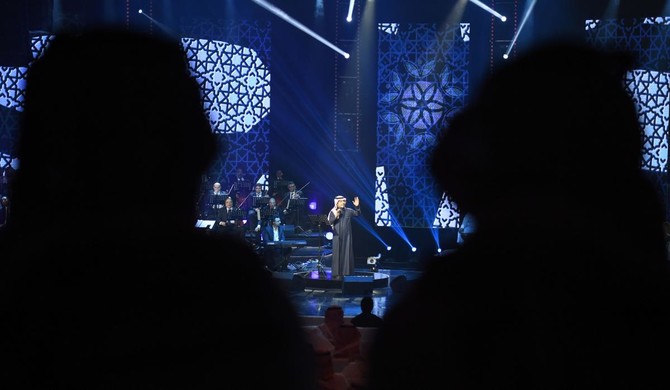
Long-awaited concert music to Saudi ears
Related






Experimental farm in Al-Lith looks into future of Saudi Arabian agriculture
- Research initiative reflects strategic transformation
JEDDAH: An experimental farm in Saudi Arabia’s Al-Lith Governorate is one of the research initiatives reflecting the strategic transformation taking place in the Kingdom’s agricultural sector.
The farm uses highly efficient, sustainable production models that combine scientific research with commercial application, contributing to strengthening the country’s food security system and the sustainability of water resources.
Located in the Ghumaiqa Center on an area of about 10 hectares, the cutting-edge farm is a testing platform for modern agricultural technologies that tackle the challenge of water scarcity.
The farm includes developed open fields and modern greenhouses, supported by smart irrigation encompassing drip and sprinkler irrigation alongside surface and subsurface technologies.
All the systems operate via smart controls that enable the monitoring of water consumption and ensure improved efficiency, thereby achieving a balance between agricultural production and water conservation.
The farm also uses treated and diluted low-salinity seawater.
It aims to diversify agricultural water sources, reduce reliance on freshwater, and open new horizons for agriculture in coastal and semi-arid environments.
The project represents a promising investment opportunity in the field of smart agriculture, enabling the development of commercially scalable production models, particularly for high-value vegetables and fruits, while reducing operational costs associated with water and energy, enhancing the economic feasibility of future agricultural projects.
In addition, the project contributes to transferring and localizing agricultural expertise, supporting local food supply chains, and creating an attractive environment for agricultural investment.
This aligns with Sustainable Development Goals and enhances the efficiency of the private sector in adopting innovative agricultural solutions.
Yahya bin Abdulrahman Al-Mahabi, the director of the Ministry of Environment, Water and Agriculture office in Al-Lith Governorate, told the Saudi Press Agency that the project represented the future of agriculture in the Kingdom.
He explained that the vision was based on investing in technology, enhancing the return on water per unit, and integrating scientific research with investment opportunities.
Al-Mahabi spoke of the experimental farm as a modern, scalable and replicable model applicable in several regions of the Kingdom, particularly in coastal environments.
Al-Mahabi highlighted the Ministry of Environment, Water and Agriculture’s commitment to supporting distinctive projects that contributed to achieving food security while developing rural areas and enhancing agricultural production efficiency, in line with the objectives of the Kingdom’s Vision 2030.


