MOGADISHU, Somalia: Somalia’s prime minister said Saturday that 110 people have died from hunger in the past 48 hours in a single region — the first death toll announced in a severe drought threatening millions of people across the country.
Somalia’s government declared the drought a national disaster on Tuesday. The United Nations estimates that 5 million people in this Horn of Africa nation need aid, amid warnings of a full-blown famine.
Prime Minister Hassan Ali Khaire spoke during a meeting with the Somali National Drought Committee. The death toll he announced is from the Bay region in the southwest part of the country alone.
Somalia was one of four regions singled out by the UN secretary-general last month in a $4.4 billion aid appeal to avert catastrophic hunger and famine, along with northeast Nigeria, South Sudan and Yemen. All are connected by a thread of violent conflict, the UN chief said.
The UN humanitarian coordinator, Stephen O’Brien, was expected to visit Somalia in the next few days.
Thousands have been streaming into Somalia’s capital, Mogadishu, in search of food aid, overwhelming local and international aid agencies. Over 7,000 internally displaced people checked into one feeding center recently.
The drought is the first crisis for Somalia’s newly elected Somali-American leader, President Mohamed Abdullahi Mohamed. Previous droughts and a quarter-century of conflict, including ongoing attacks by extremist group Al-Shabab, have left the country fragile. Mohamed has appealed to the international community and Somalia’s diaspora of 2 million people for help.


![]()
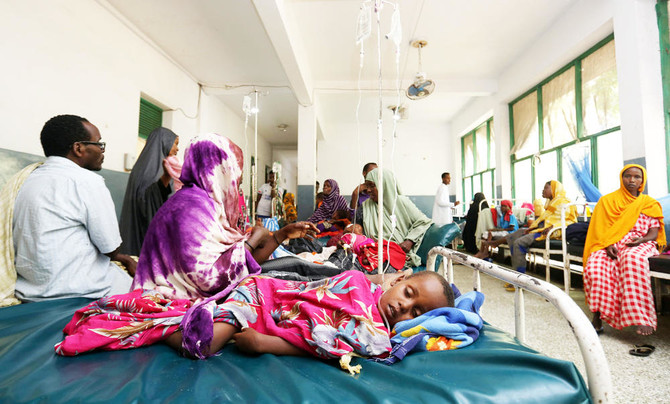
110 dead from hunger in past 48 hours in drought-hit Somalia
110 dead from hunger in past 48 hours in drought-hit Somalia
Latest updates




© 2026 SAUDI RESEARCH & PUBLISHING COMPANY, All Rights Reserved And subject to Terms of Use Agreement.