TUNIS: Returning Tunisian militants will be immediately arrested and judged under anti-terrorism laws, the prime minister said, seeking to calm fears over the homecoming of some of the country’s several thousand militants.
Tunisia is among the countries with the highest per capita number of militant, a problem linked to widespread radicalization among disillusioned youth and a loosening of security controls after Tunisia’s 2011 uprising.
More than 3,000 Tunisians are known to have traveled abroad to wage insurgency, according to the Interior Ministry. Last week, the interior minister said 800 had already come back to Tunisia, without giving details on what had happened after their return.
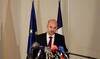
Prime Minister Youssef Chahed said returnees would be dealt with according to a 2015 anti-terrorism law that is designed to ease the arrest and prosecution of suspected militants.
“Those who come back will be arrested immediately after their arrival on Tunisian soil and will be judged under the anit-terrorism law,” Chahed told state TV late on Thursday.
He also said authorities had comprehensive records on militants who had left the country. “We have all the details on them, we know them one by one, and we have taken all the necessary measures,” he said.
The comments by Chahed, a member of the secularist Nidaa Tounes party, came amid a fierce political debate over how to deal with foreign fighters.
Some secularist politicians have called for them to be stripped of their nationality, though the right to citizenship is protected under the constitution.
Politicians from the Ennahda, part of the governing coalition, have said Tunisia is still responsible for returning militants and that the government cannot prevent them from coming back.
The debate intensified after a deadly Christmas market attack in Berlin believed to have been carried out by a Tunisian, Anis Amri, whom Italy and Germany had earlier failed to deport.
It has also been fueled by military setbacks for Daesh in neighboring Libya and in Iraq, with the expectation that Tunisians fighting with the group will start to return in larger numbers.
Tunisia’s anti-terrorism law was passed last year in the wake of two major attacks against foreign tourists by Daesh gunmen, the first at the Bardo museum in Tunis, and the second on a beach in the Tunisian city of Sousse.
The law was criticized by human rights groups concerned about an authoritarian backlash by Tunisian security forces.


![]()

Returning militants to face anti-terror laws in Tunisia
Returning militants to face anti-terror laws in Tunisia
Latest updates



Recommended


© 2026 SAUDI RESEARCH & PUBLISHING COMPANY, All Rights Reserved And subject to Terms of Use Agreement.