‘Dr. Shapiro's Picture Perfect Weight Loss' is one of the most enjoyable diet books I have ever read. The author not only makes you feel good about eating but he is the first to address the question of how to buy the food we eat.
After all, we are what we eat. And what we eat starts with the choices we make when we go to the supermarket.
“During the course of this book, I’ll go shopping with you. As we walk up and down the aisles of beverages, dairy foods, canned soups, condiments, and so on, I’ll provide some overall pointers on what to look for and what to avoid in each food category”.
Dr. Shapiro has developed a weight loss program which is not based on a specific diet. All you need is to be aware of what you are eating, focus on the foods you buy and make choices based on that awareness. And this awareness is guided by five core principles.
First, any reason for eating is okay. Dr. Shapiro advises us to eat when we feel like it: “Don’t deprive yourself of food; it will just make you feel hungrier”.
The second principle is that there are no bad foods. This means there is no reason for guilt and no such thing as cheating.
The third principle is that there are no correct portions. If you cannot fill a craving with one low-calorie frozen fudge bar, have another and as much as you need, explains Dr. Shapiro.
“Hunger, after all, varies from person to person. Further, it can vary from day to day, even hour to hour, within a single person”.
The fourth principle requires an eating plan to suit your tastes and lifestyle. You are able to control the food choices you make according to your food preferences therefore shopping for the right food is a basic need.
And the fifth and final principle is that you are not on a diet. However, you have to make choices at every meal and first of all, when you shop for food. Once you fill your kitchen with tasty and healthy food, you are already on the road to weight loss.
“Eat when you want, and eat as much as you want. But always try to eat the lower-calorie choice among food options. That is the Picture-Perfect Weight Loss program in a nutshell.”
Dr. Shapiro teaches us how to choose between different kinds of food. For example, angel food cake is fat free but it’s high in refined carbohydrates that can easily turn to body fat if the calories are not burned by energetic activity. On the other hand, a bowl with 15 olives is equivalent to 60 calories only; moreover, olives contain monounsaturated fats a very good kind of fat that we need for heart health. Therefore, at fewer calories than a fat-free pretzel and with a far higher nutritional content, a bowl of 15 olives is a far better choice.
Dr. Shapiro focuses also on the importance of reading and understanding food labels. The most useful part of a label is the nutrition label with two crucial numbers: the serving size and the number of servings in the product.
You must also beware of the false slogans printed on the rest of the label. You often see the words “Cholesterol Free Potato” but no vegetables contain cholesterol!
Another misleading term is “reduced fat”. It sounds good until you check the calories. This is the case with peanut butter. Peanut butter is a heart-healthy food, cholesterol free, low in saturated fat and it can help lower the level of triglycerides in your system. However, reduced-fat peanut butter has approximately the same number of calories as regular peanut butter; it also contains more carbohydrates, and can lead you to overeat.
The word “natural” often used in jam products is also misleading. It gives the impression that you are spreading only fruit on our bread. If you look carefully at the calorie count you will notice that many of these so-called, ‘natural’ jams have nearly as many calories as regular jams!
As Dr. Shapiro promised in the very first pages, he takes us shopping and shares with his readers some important tips on how to select the best brands. Regarding the beverages, Dr. Shapiro reminds us that all juices, regular sodas and the growing number of flavored drinks are more often than not full of calories. The basic rule is to drink water or low-calorie beverages and consume calories in food or as the author says: “it is better to chew your calories rather than drink them."
This is particularly true of orange juice; an orange is about 30 calories whereas a moderate glass of orange requires the juice from about four oranges and it won’t fill you at all. When you want the taste of orange, it is wiser to eat an orange or reach for a diet orange beverage.
Coffee and chocolate beverages are a case in point. The “Starbucks Frappuccino” for examples is sold as low fat with only 3 grams of fat per serving but it has in fact 190 calories per serving which does not make a weight-loss choice. And the clear and transparent tonic water that you like is not a low calorie drink because it contains about 80 calories per cup.
In terms of bread, the choice is easy to make. A light toast contains about 40 calories per slice and a regular slice of toast can amount to 70 calories, while biscuits, scones, cornbreads, muffins, have 90 to 100 calories and a bagel amounts to 400 calories. At the top of this list, you will find croissants and brioches with 115 calories per ounce and they have the highest percentage in fat.
Concerning cereals, the author recommends cereals that are whole grain and/or high fiber but he quickly explains that it is not as simple as that. Kellogg’s Special K is not 100 percent whole grain yet they are very healthful, nutritious, and low in calories. Grape-Nuts, the natural wheat cereal is by contrast, fairly high in fiber but loaded with calories therefore it is not a good weight-loss choice. And although bran is an excellent source of fiber, you should look carefully at the calorie counts of certain brands like General Mill’s Rain Nut Bran which boasts 210 calories per cup. On the other hand, the Kellogg’s All-Bran with Extra Fiber contains 50 calories and 15 grams of fiber per ½ cup.
Some cereals add sugar but actually have fewer calories than cereals without sugar. For example, Cheerios has a little brown sugar but has fewer calories than Grape-Nuts, which has no sugar but four times as many calories. There are also a number of lower-calorie whole grain cereals such as Post Selects Great Grains, General Mills Basic 4 but you are easily tempted to snack on from the box and overeat.
Regarding rice and pasta, these are both rich in carbohydrates so the rule you should follow is first to fill your plate and your stomach with vegetables, soup and salad, and follow with some protein and only after that you can include some starchy food.
In the protein category, Dr. Shapiro highlights the importance of consuming beans, soy products, and fish:“For both weight loss and your long-term health, the more your protein comes from legumes, soy, and fish, the better. And the less protein you get from meat, poultry, and dairy, the better.”
Fish are a prime source of the omega-3 fatty acids, essential to general health and as disease-fighters. Imitation crabmeat is perfectly healthy, says Dr. Shapiro: “In terms of nutrition and weight loss, this is a case where the imitation is just about as good as the real thing”.
Before concluding with a list featuring foods commonly found on supermarket shelves, the author cautions us once more against the use of “fat-free”, “sugar-free” or “cholesterol free” products which are not only high in calories but also low in nutrition. Reading food labels warns us against misleading slogans and helps buy the best weight loss products.
This dieter’s Shopper’s Guide is easy to read, comprehensive and it gives some practical advice which anyone willing to go on a diet, should know.
— [email protected]


![]()
![]()

A shopper's guide to supermarket choices for weight loss
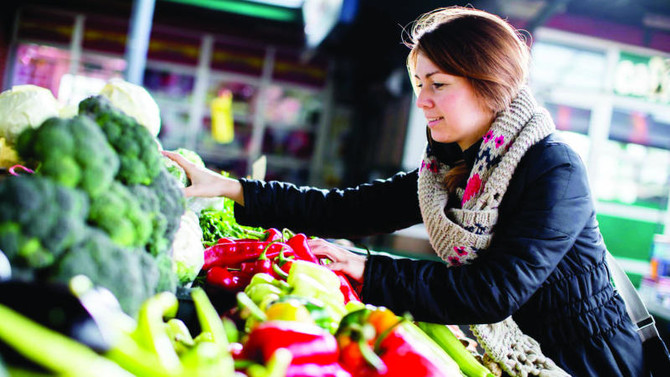
A shopper's guide to supermarket choices for weight loss
Latest updates







© 2026 SAUDI RESEARCH & PUBLISHING COMPANY, All Rights Reserved And subject to Terms of Use Agreement.