The heirs of Saudi women married to foreigners are entitled to the same benefits as all other subscribers under the current rules of the General Organization for Social Insurance (GOSI).
Abd Al-Aziz Al-Habdan, deputy governor of the GOSI, said the regulations do not discriminate against the heirs of a woman Saudi subscriber who was married to a non-Saudi, according to the Saudi Press Agency.
"Whether the Saudi woman is married to a Saudi or non-Saudi, the rights of the heirs will be the same. A husband, whether or not he was a Saudi, together with the children of the Saudi woman, has the right to all the benefits accrued by the system. And vice versa," he said.
"If a Saudi female subscriber dies, whether or not she was married to a Saudi man, her husband and their children will be entitled to receive all the benefits stipulated by the regulations," he said.
He explained that family members of a deceased subscriber, whether or not they are Saudis, are entitled to the whole annuity of the subscriber.
"If they are three or more members, they will get the full annuity. If they are two, they will get 75 percent. If there is only one person, it will be 50 percent. Either way, each family member will receive a minimum monthly sum of SR 396.75. If they are three or more, they will get a minimum of SR 1,983.75."


GOSI: Heirs of Saudi women married to foreigners recognized

GOSI: Heirs of Saudi women married to foreigners recognized

Pioneering electric bus service takes to the road in Makkah
- The bus rapid transit project, a system designed to have higher capacity and reliability than conventional bus services, is said to be the first of its kind in the Kingdom
- The vehicles operate in dedicated bus lanes within a network that includes two main bus stations and 11 stops along the route connecting them
MAKKAH: A pioneering electric bus service took to the road in Makkah this week.
Electromin, the developer and operator of the service in partnership with Umm Al-Qura for Development and Construction, said it is expected to serve more than 125 million passengers over the next 15 years, while cutting carbon dioxide emissions by more than 31,500 tonnes compared with traditional vehicles.
The bus rapid transit project, a system designed to have higher capacity and reliability than conventional bus services, is said to be one of the first of its kind in the Kingdom. It was inaugurated on Wednesday by Amr Al-Dabbagh, chairperson of Al-Dabbagh Group; Samir Nawar, managing director of Petromin; and Yasser Abu Ateeq, CEO of Umm Al-Qura.
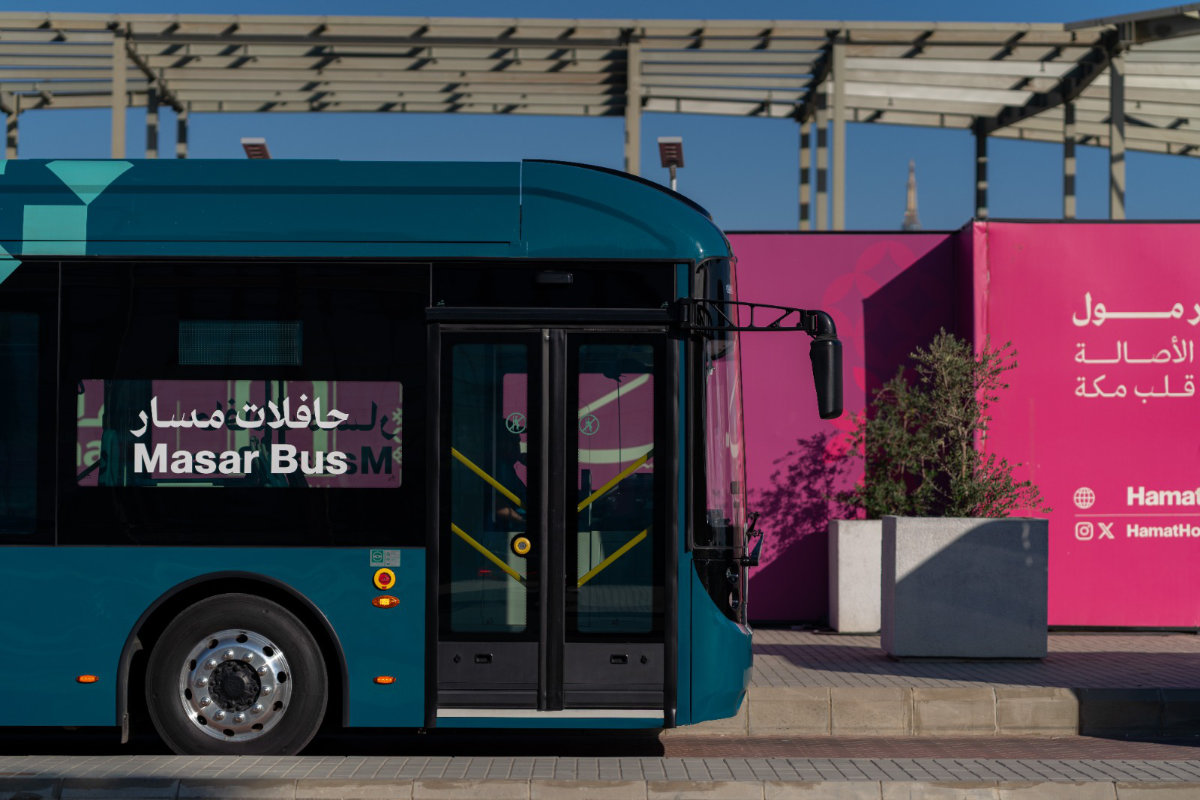
Electromin, a subsidiary of Petromin specializing in energy and mobility solutions, said the new service, which forms part of the Masar Destination mixed-use real estate development project in Makkah, is one the first transport networks of its kind in the country, and represents a significant shift toward a cleaner, more efficient urban transport model.
It operates in dedicated bus lanes, connecting key hubs within Masar and providing safe, reliable and environmentally friendly transportation for residents and visitors, the company added. The network includes two main bus stations and 11 stops along the route connecting them. It has been designed to serve more than 5 million visitors and pilgrims annually, and to be easily accessible to all users.
Operators say the service is designed as a foundation for Makkah’s future transportation system, through its integration with the broader Masar project, which includes pedestrian walkways, more than 5,000 parking spaces, metro services and other urban infrastructure.


