TEHRAN: Iran stepped up rescue efforts yesterday for survivors of a powerful earthquake that killed 37 people and damaged dozens of villages but left its sole nuclear power station unscathed.
More than 90 villages in the southern province of Bushehr were hit hard by Tuesday’s quake, with two completely destroyed, the head of Iran’s Red Crescent rescue corps, Mahmoud Mozafar, told state television.
More than 850 people were injured and some 800 houses razed to the ground.
Mozafar said the priority was to get aid to stricken villages after the search for survivors was wrapped up yesterday morning.
Ali Alipour, who owns a cultural center in the village of Khormoj, some 35 kilometers (20 miles) from the quake’s epicenter, said he had run for cover when it hit and “the sound of death filled the fields.”
“Water and food are being distributed among survivors,” Alipour told AFP by telephone.
Authorities said the relief operation got underway a few hours after the 6.1-magnitude quake struck at 4:22 p.m. on Tuesday.
Some 2,100 tents have been set up in the quake zone, emergency officials said.
The epicenter was barely 90 kilometers (55 miles) southeast of the port city of Bushehr, home to Iran’s only nuclear power plant.
Iran said it had informed the International Atomic Energy Agency that there had been no damage to the plant.
The UN watchdog said its incident and emergency center was “not currently seeking additional information from Iran” following analysis of the “earthquake’s magnitude and other seismic parameters, as well as its location.”
Iran’s atomic energy chief Fereydoon Abbasi Davani said the plant was not operational when the quake struck as it was “under maintenance,” Iranian media reported.
The Russian-built plant was designed to withstand an earthquake of a magnitude greater than 8, Abbasi Davani added.
The plant’s chief engineer, Mahmoud Jafari, said “no operational or security protocols were breached.”
First Vice President Mohammad Reza Rahimi and Interior Minister Mostafa Mohammad Najar traveled to the quake zone to check on relief operations, state television reported.
A resident, who asked not to be identified, said power and water supplies were “gradually being restored.”
The US Geological Survey, which monitors seismic activity worldwide, ranked the quake at a more powerful 6.3 magnitude.
Iran sits astride several major fault lines and is prone to frequent earthquakes, some of which have been devastating.


![]()

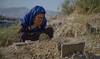
Death toll rises to 37 in Iran deadly quake
Death toll rises to 37 in Iran deadly quake
Latest updates






© 2026 SAUDI RESEARCH & PUBLISHING COMPANY, All Rights Reserved And subject to Terms of Use Agreement.