PARIS: The African spiny mouse, a desert rodent that has become an exotic pet, can shed up to 60 percent of the skin on its back and fully re-grow the lost tissue, scientists reported on Wednesday.
Understanding the trick could one day help burns victims in need of scar-free skin regeneration, they hope.
The spiny mouse (Acomys) is well-known for eluding hunters by shedding its tail skin, rather as lizards jettison their tail.
Exploring this phenomenon, biologists led by Ashley Seifert at the University of Florida in Gainesville found that the skin-shedding is even greater than expected.
When they picked up two wild-caught specimens, Acomys kempi and Acomys percivali, the mice lost up to 60 percent of the skin on their backs when they were grabbed by hand in a normal manner.
Closer inspection showed the skin to be remarkably fragile, requiring 77 less energy to tear than skin from its cousin the house mouse, Seifert’s team reported in the journal Nature.
But how the animal is able to shed such a big area of skin so easily remains a mystery.
The researchers were unable to find any breakage point. The molecular or biomechanical properties are unclear.
Even more impressive are the mouse’s healing properties. Within 30 days of the skin shedding, a double dermal layer had re-grown, with new follicles and no sign of so-called wound-bed tissue, a precursor of scarring.
The regenerative capacity extended to the mouse’s ears, where a small punched hole became completely recovered with healthy tissue, including sebaceous glands and cartilage.
“Mammals may retain a higher capacity for regeneration than was previously believed,” said the study. “Acomys may prove useful in identifying mechanisms to promote regeneration in lieu of fibrosis and scarring.”


Mouse research may help heal scars

Mouse research may help heal scars
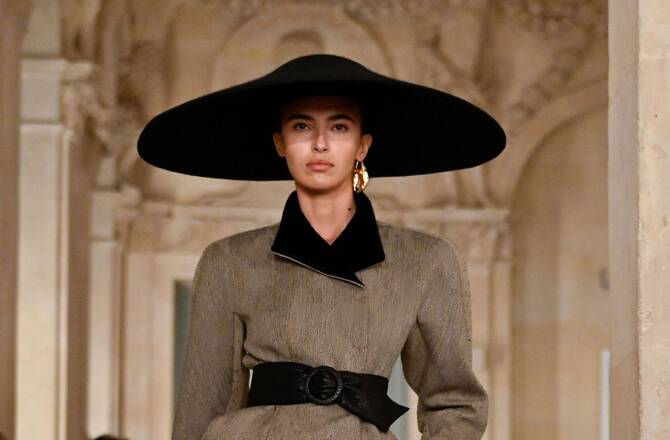
Amira Al-Zuhair begins 2026 with Jacquemus show
DUBAI: Saudi French model Amira Al-Zuhair took to Instagram to celebrate her first show of 2026, as she walked the runway at Jacquemus’ Fall/Winter 2026 “Le Palmier” collection show in Paris on Sunday.
The event, staged at the Musee National Picasso, brought Simon Porte Jacquemus’s latest co-ed collection to life with playful yet sculptural silhouettes, blending mid-century couture references and 1990s’ sensibilities.
“Merci infiniment Simon. It was an honor to be part of this iconic show with such an amazing team, congratulations! Thank you for having me,” posted Al-Zuhair.
The model closed a segment of the show in an ensemble that captured the collection’s nod to both elegant simplicity and bold form. She wore a black midi skirt with a structured blazer top with cutout detail at the back, cinched at the waist with a wide belt. The look was completed with a wide-brimmed hat that added a touch of drama.
The Jacquemus presentation, which also acted as the finale of Paris Men’s Fashion Week, wove together confetti-like motifs, geometric forms and a celebration of joie de vivre, encapsulating Jacquemus’s irreverent yet refined vision ahead of the upcoming couture season. The front row seated the likes of Elton John, Sophie Marceau, Josh Hartnett and Korean girl group Illit.
Meanwhile, Al-Zuhair had a strong 2025, ending the year by joining Italian luxury fashion label Bulgari as a “Friend of the House.”
“I am delighted to announce that I have officially joined the Bulgari family as a Friend of the House. Looking forward to sharing more of our journey together — stay tuned!” Al-Zuhair said on social media, alongside a carousel of images.
In one, taken at a Bulgari party, the model shows off a soft pink gown by Lebanese fashion house Georges Hobeika. The event celebrated the Polychroma High Jewelry Collection, which was launched at May’s Met Gala in New York.
Al-Zuhair, born in Paris to a French mother and Saudi father, has made her mark on the fashion world and appeared on the runway for an array of renowned fashion houses. She has walked for Missoni, Maison Alaia, Brunello Cucinelli, Balmain, Dolce & Gabbana, Giambattista Valli, Giorgio Armani, Elie Saab and more.
In addition to her runway appearances, Al-Zuhair has featured in campaigns for high-profile brands including Prada, Chanel and Carolina Herrera.


