
- More than 100,000 people have fled Houthi advances, many reaching safety with only the clothes on their backs
- Aid workers say further displacement could overwhelm host communities as fighting rages around Bab Al-Mandab
Shortly after the Iran-backed Houthis seized control of parts of Yemen’s Red Sea coast, including Khokha, Abu Salem said his hometown descended into chaos.
He described armed men roaming the streets, detaining residents, raiding and looting homes and carrying out reprisals. Fearing for his life and the safety of his family, the household-goods vendor gathered what he could and fled.
“There was looting, arrests and reprisals. People fled to save their lives,” Abu Salem, who asked to be identified by his nickname, told Arab News in the southern Yemeni city of Al-Mukalla, where he has sought refuge.
He was more fortunate than many others who could not afford to escape. Abu Salem managed to pay for a bus journey lasting more than a day and a half from Khokha to Al-Mukalla, where a relative rented him a small room.
He now shares the cramped space with his wife and two children.
“I have no cooking gas, rice, flour or bedding. The kitchen is empty. We have nothing at all. We need help,” he said.
Before leaving, Abu Salem locked his home and asked neighbors to look after it, although he fears it will be looted like others in the town.
“I know my house will be looted. They looted houses and even stole windows and doors,” he said.
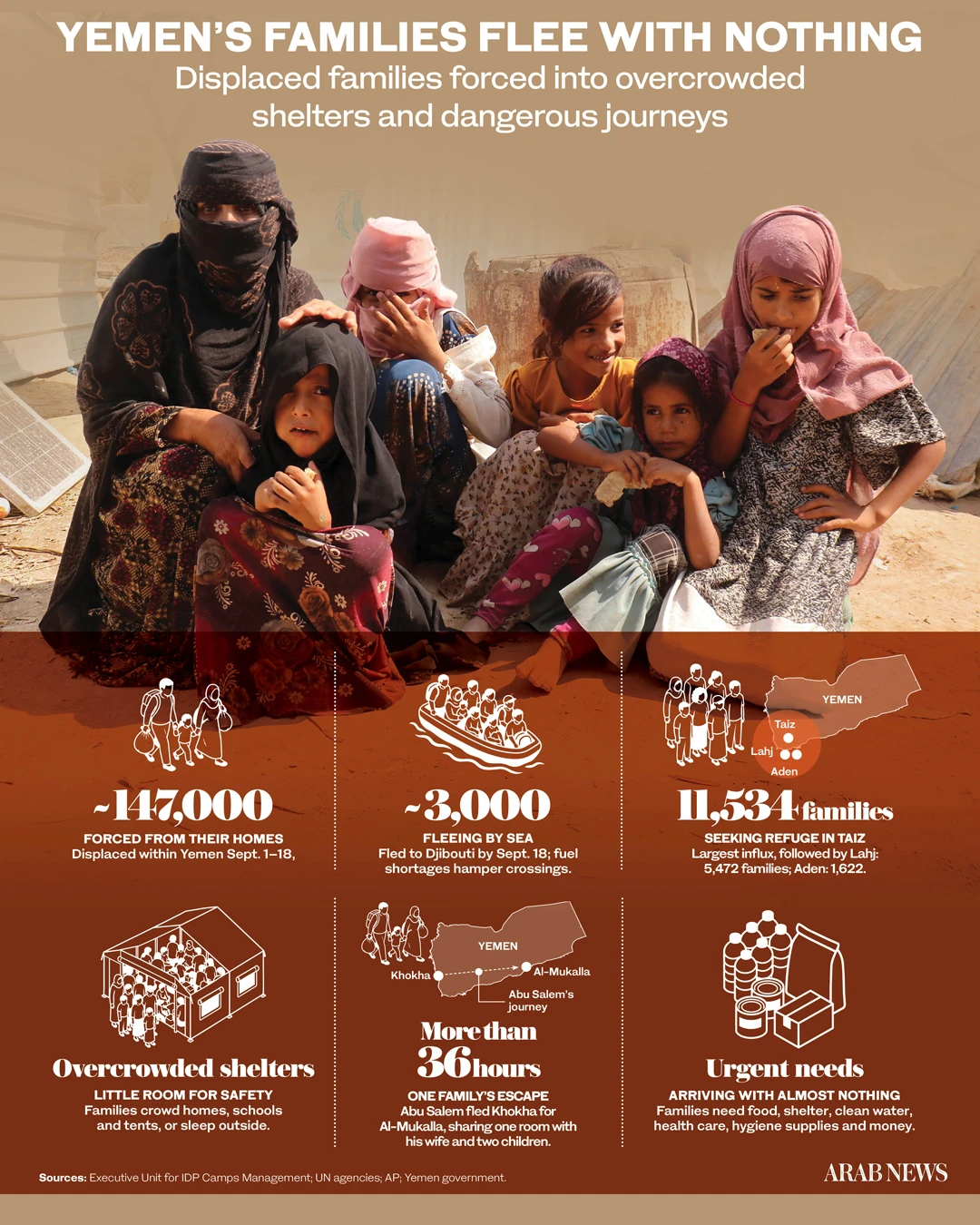
Nearly 147,000 people were internally displaced in Yemen between Sept. 1 and 18 amid escalating fighting, according to figures released on Sept. 20 by the Yemeni government’s Executive Unit for IDP Camps Management.
Separately, UN agencies said on Sept. 18 that at least 112,000 people had been displaced within Yemen over the previous two weeks, while nearly 3,000 had fled by sea to Djibouti.
The Associated Press news agency reported that fuel shortages were obstructing sea crossings to Djibouti.
Those displaced inside Yemen have sought refuge in Taiz, Marib, Shabwa, Aden, Hadramout and other government-controlled areas that were already hosting an estimated 2 million internally displaced people.
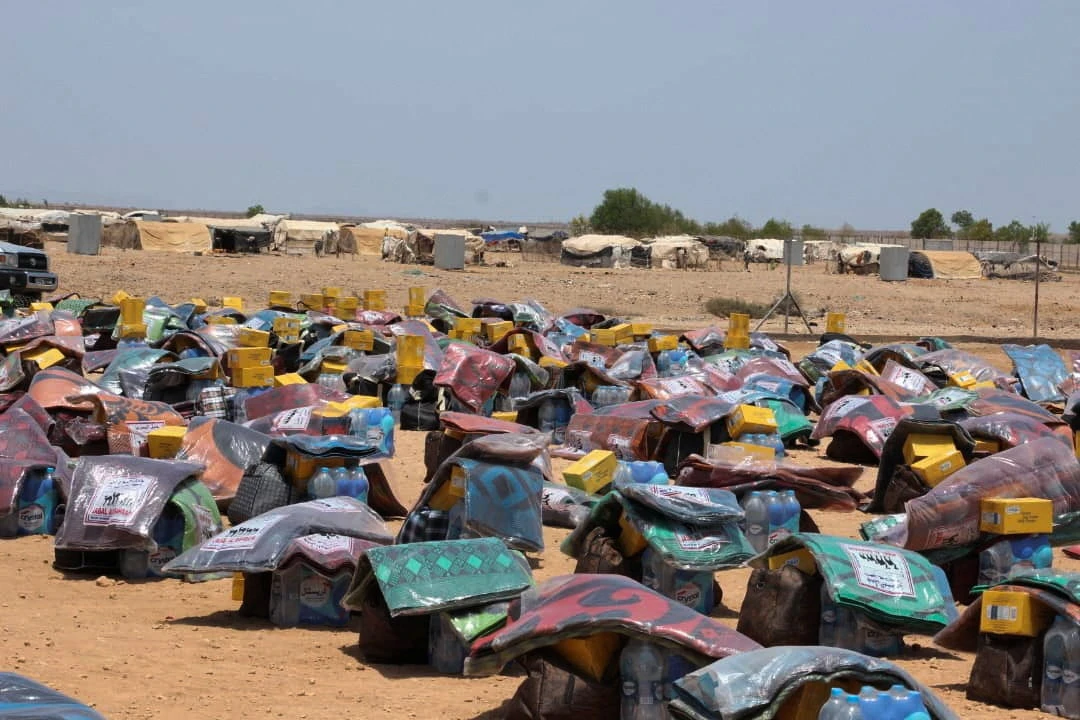
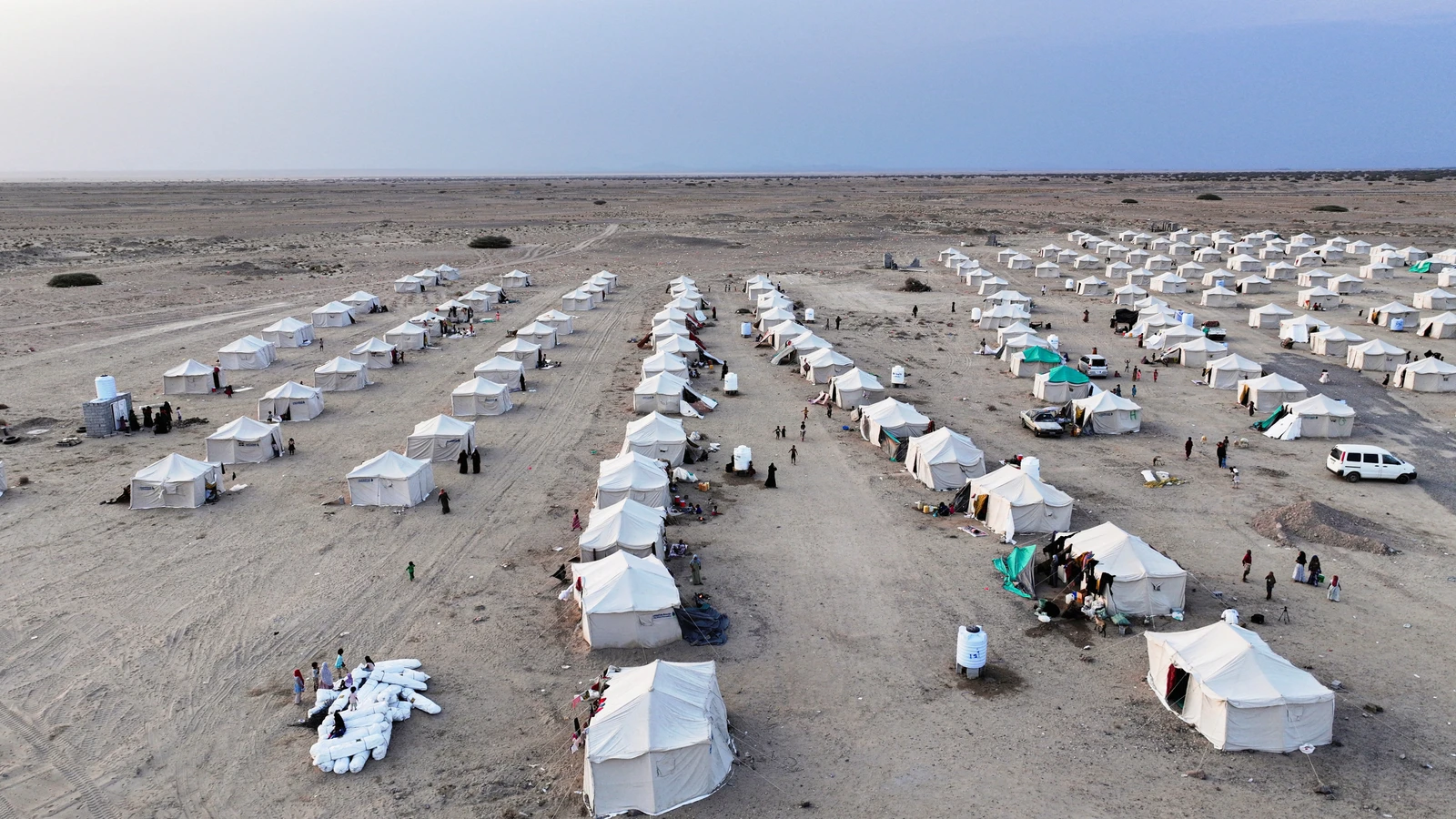
In Al-Mukalla, the capital of Hadramout province, aid workers said dozens of displaced families had begun arriving after traveling for days, with some finding shelter with relatives and others in displacement camps.
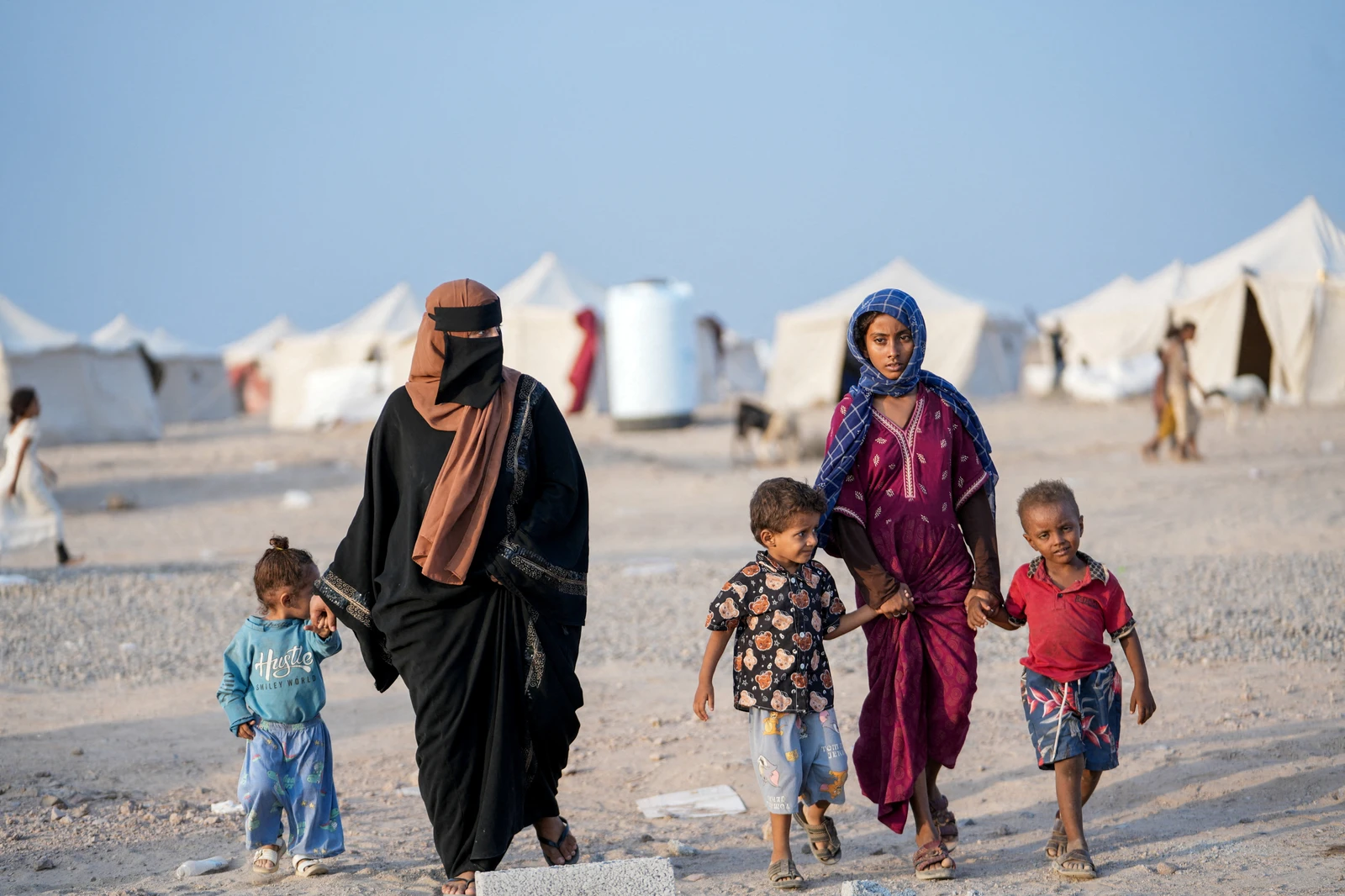
Hameed Mubarak, an aid worker documenting arrivals in Al-Mukalla, told Arab News that most families had reached the city with little more than the clothes they were wearing and were in urgent need of food, shelter, healthcare, hygiene supplies and financial assistance.
“People fled for their lives, leaving almost everything behind,” Mubarak said.
“No one I met said they had managed to take all their belongings. Most fled with only the clothes on their backs. Some even left their gold behind.”
Taiz received 11,534 displaced families, followed by Lahj with 5,472 and Aden with 1,622, the unit said. Other families sought refuge in Abyan, Hodeidah, Hadramout, Al-Mahra and Shabwa.
In Taiz, which has received the largest number of displaced people, local aid workers said families began arriving in government-controlled areas after the Houthis intensified attacks on districts in western Yemen.
Mohammed Radman, an aid worker in Taiz, said he had never witnessed such a sudden influx.
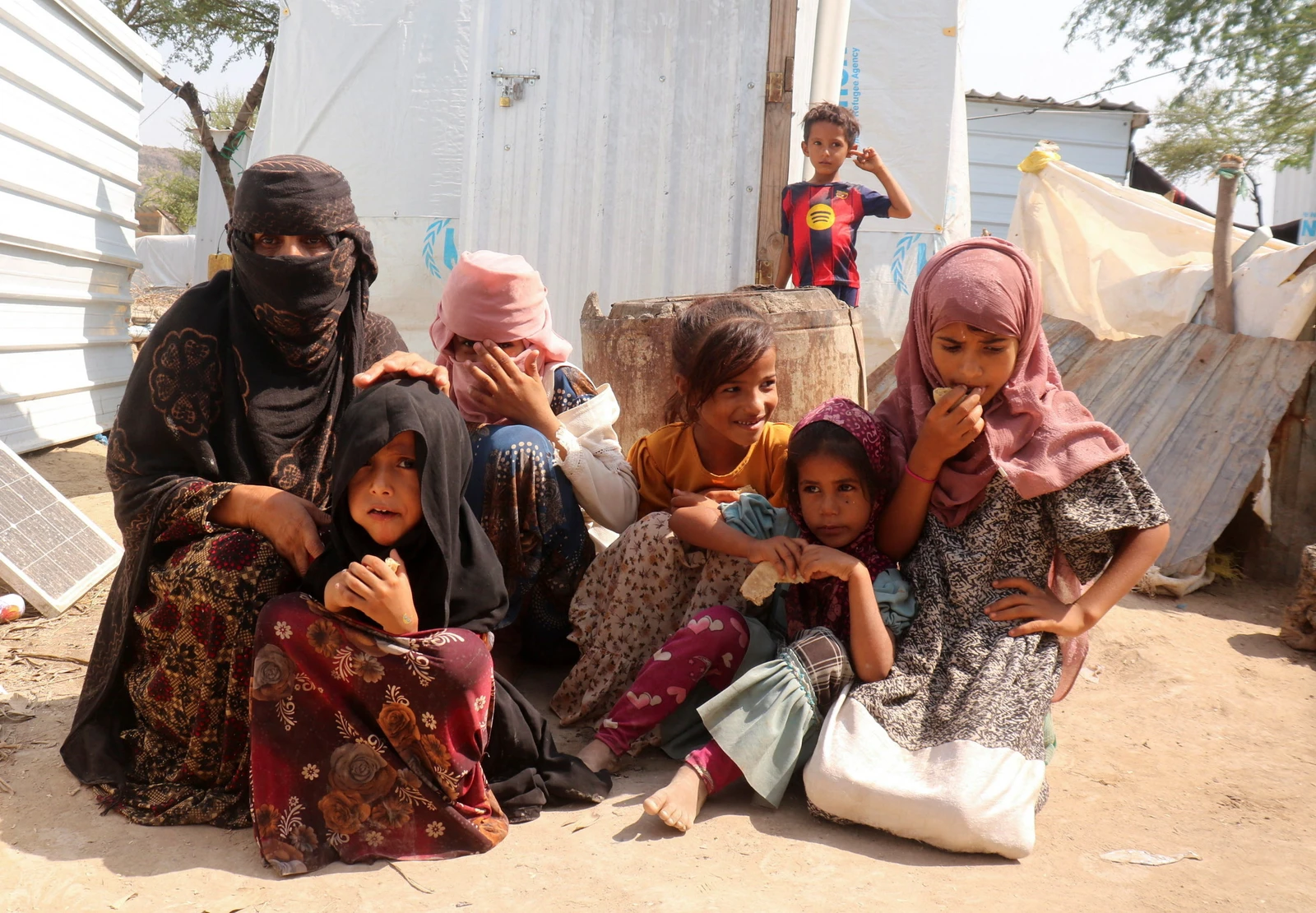
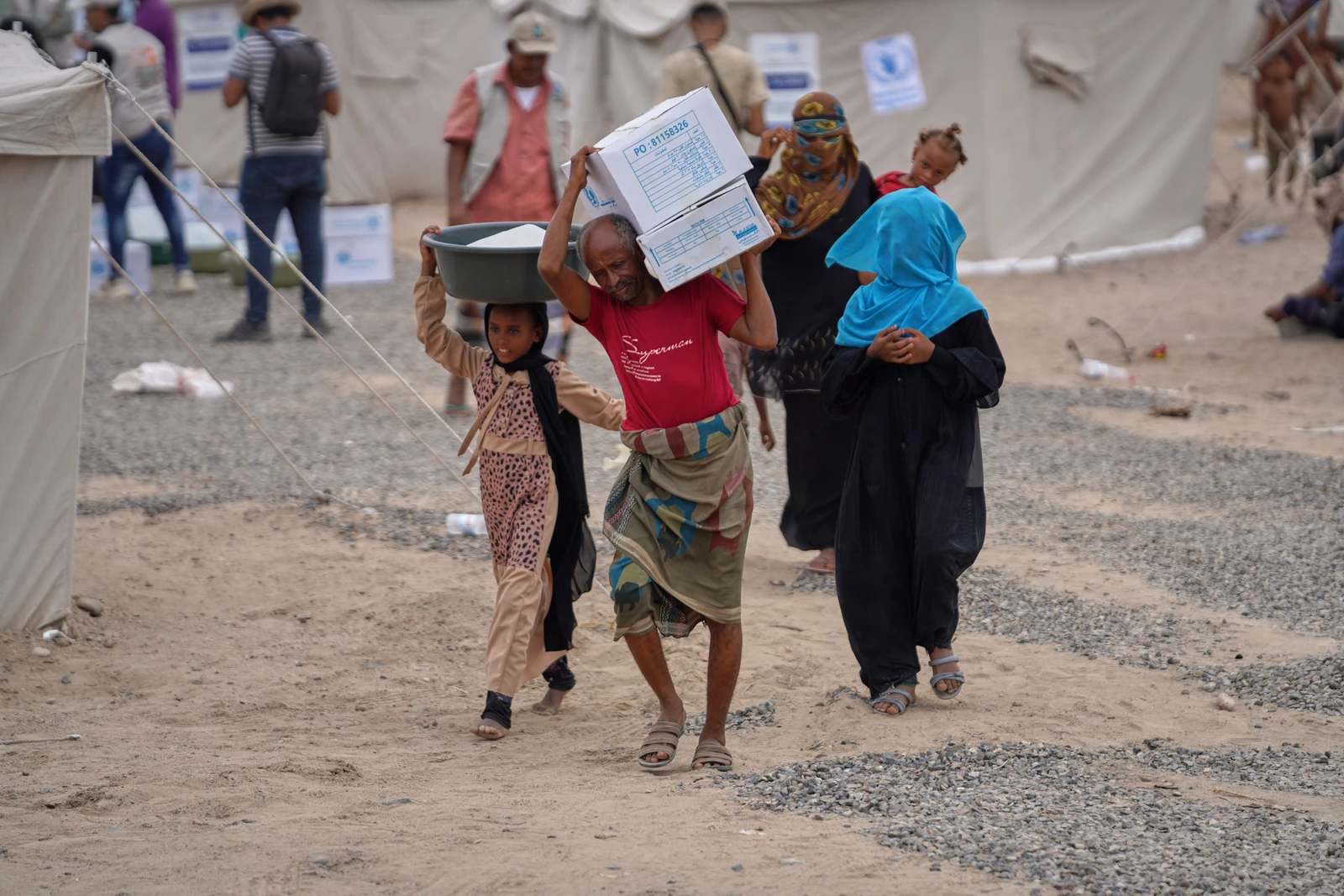
Some families had taken refuge in schools, while others were staying with relatives in small homes or squeezing into already overcrowded tents. Many were sleeping in the open.
“Some have taken shelter in the homes of relatives; you might find four or five families living in a single house consisting of just two or three rooms,” Radman told Arab News.
“They are living in truly awful conditions. Many fled with nothing but the clothes on their backs, while others arrived here with absolutely nothing.”
He said displaced families urgently needed shelter, particularly those staying with relatives or in overcrowded tents, as well as access to clean drinking water.
“This is the first time I have seen so many displaced people arriving all at once,” Radman said.
“The fighting erupted suddenly, catching many families off guard. They had not expected the conflict to reach them so quickly and were forced to flee with little time to prepare.”
The number of displaced people could rise further as the Houthis intensify attacks on government forces across Yemen, including around Marib, which hosts the country’s largest concentration of internally displaced people.
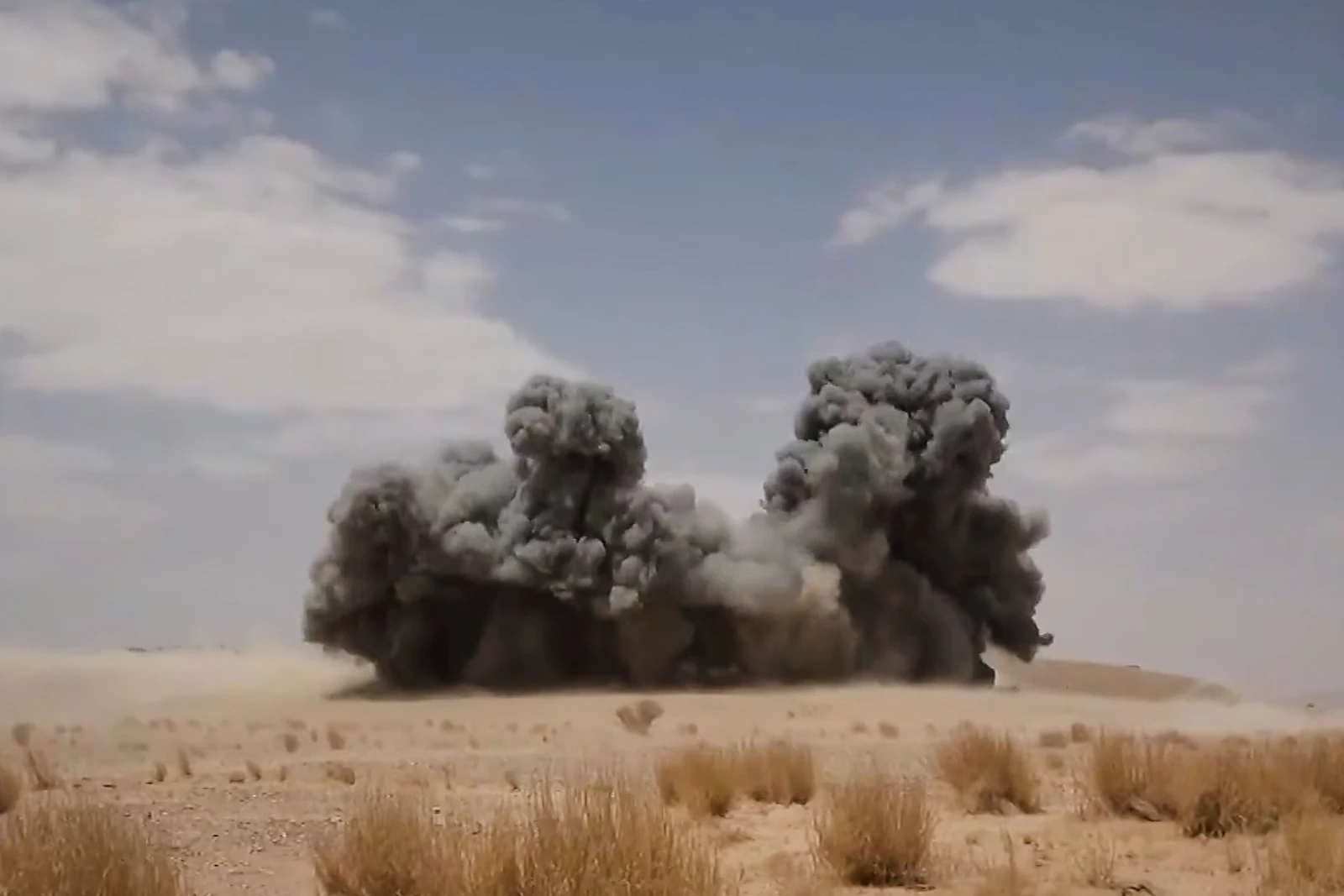
On Saturday, according to reports, fighting intensified between Yemeni government forces and the Houthis around a strategic mountain overlooking the Bab Al-Mandab Strait.
The reports said clashes led to the closure of a road connecting western coastal areas with the southern city of Aden, further complicating movement for civilians attempting to flee.
The disruption also extends to families who remain in coastal towns. In nearby Mokha, residents told AFP that shops had closed, schools stood deserted and fear was keeping people inside their homes following the Houthi takeover.
Abu Salem said he believed he had made the right decision to leave Khokha immediately after the Houthis arrived.
Had he delayed, he said, he would have been forced to take a much longer and more expensive route through several provinces to reach Al-Mukalla.
Now, despite having escaped the fighting, his only wish is to return home.
“We want the war to stop today, not tomorrow,” he said. “We want to return to our hometown.”