- Meeting in French capital focuses on bolstering military, security arrangements after UNIFIL’s withdrawal
- Saudi Arabia, other Arab states present as Lebanese government seeks support to extend state authority
Lebanon sought international backing for an expanded role for its army at talks in Paris on Thursday that focused on the resources needed to extend state authority while Israeli forces remain on Lebanese territory and Hezbollah retains its weapons.
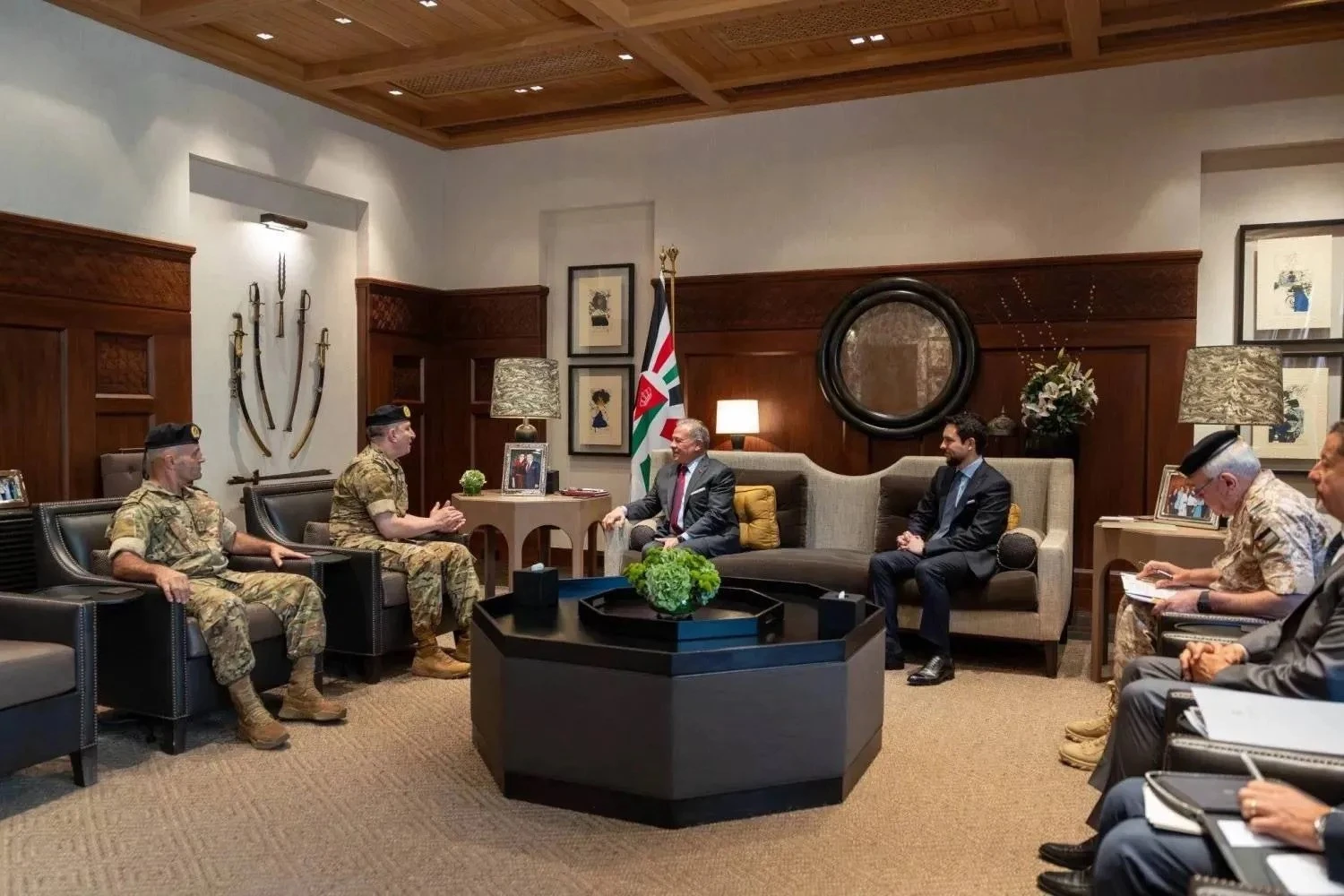
The meeting, convened by France and Jordan, was a preparatory step toward an international conference in support of the Lebanese army and Internal Security Forces. The agenda focused on the resources needed to strengthen security institutions and enable wider military deployment.
Saudi Arabia, Qatar, Kuwait, the UAE, Egypt, the US, Cyprus, Turkiye, UK, Italy, Spain and Germany also took part in the talks.
A Lebanese Army command source told Arab News that the meeting would be “a preparatory stage to determine the needs of the Lebanese military institution, in addition to mobilizing the international support it requires.”
Speaking ahead of the talks, the source said that they were not expected to produce announcements of immediate assistance.
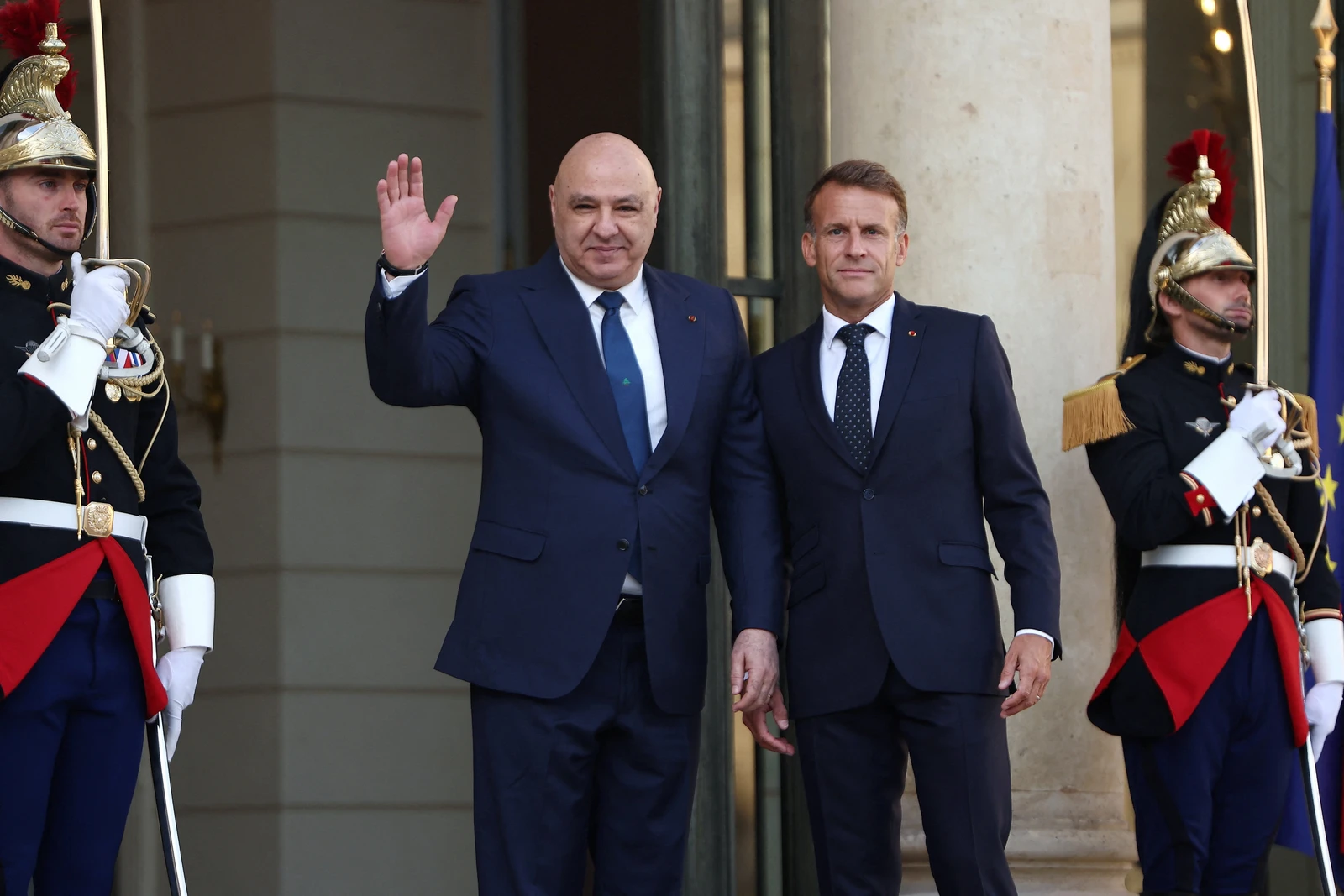
Lebanese President Joseph Aoun met French President Emmanuel Macron at the Elysee Palace on Thursday. The wider Paris gathering also involved Jordan’s King Abdullah II.
The two presidents discussed efforts to end Israeli attacks on Lebanon in the context of Lebanese-US-Israeli negotiations and the framework agreement, according to the Lebanese presidency. Aoun thanked Macron for backing Lebanese sovereignty and the country’s security institutions.
Ahead of the meeting, Aoun discussed the army’s requirements and Lebanon’s priorities with his Defense Minister Michel Menassa.
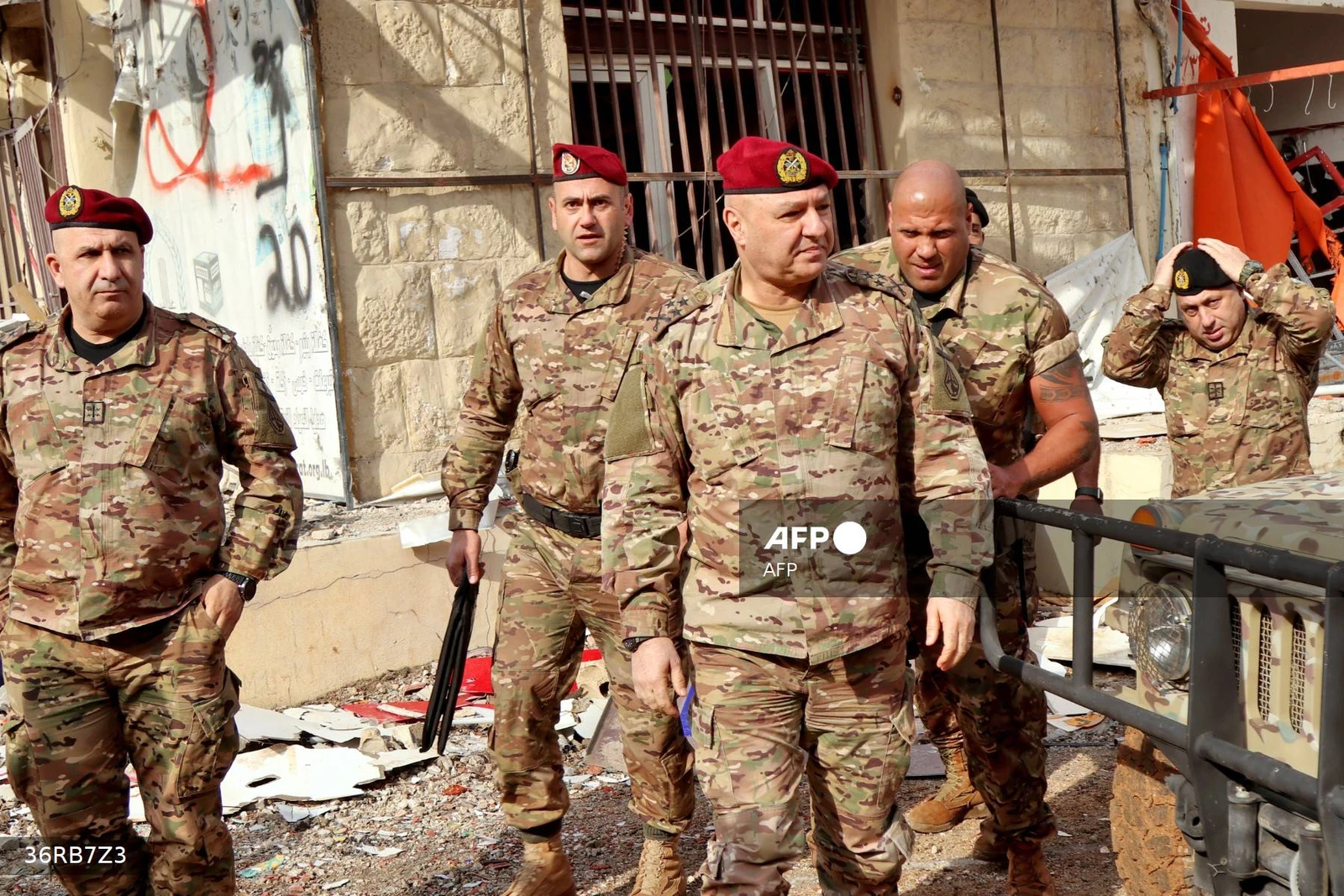
Army commander Gen. Rodolphe Haykal was scheduled to brief the meeting on conditions on the ground and Lebanon’s security challenges.
The Lebanese delegation was also due to outline its strategy for deploying forces in the south, extending state authority nationwide and ensuring that weapons are held exclusively by legitimate state institutions.
The gathering was organized under the Aqaba Process, an initiative launched by King Abdullah in 2015 to strengthen international security and military cooperation, originally with a focus on counterterrorism.
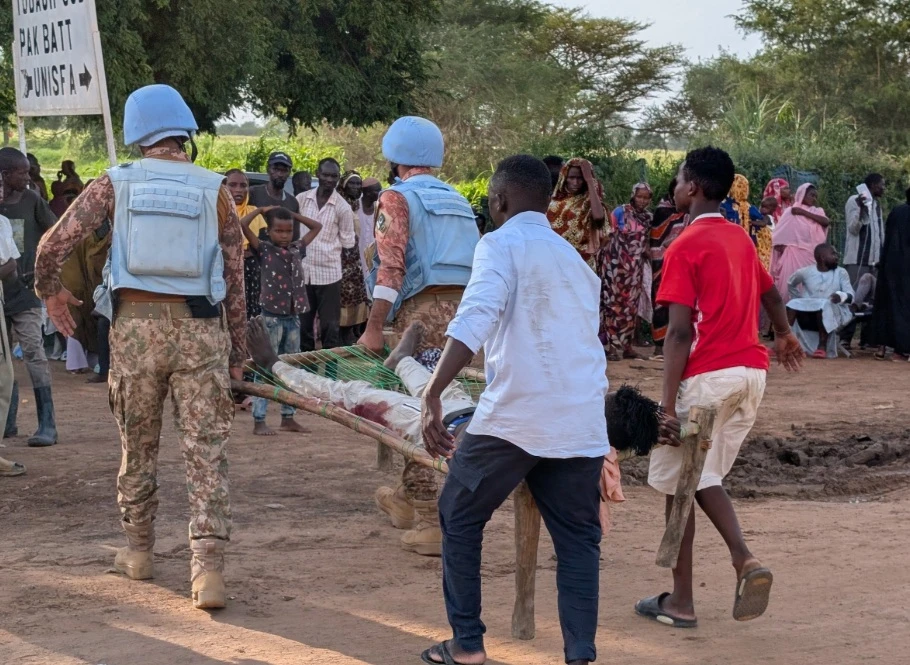
The agenda also included the risk of a security vacuum after the planned withdrawal of the UN Interim Force in Lebanon starting in January. Reuters reported that options under discussion include an international or EU-led mission outside the UN framework, with support for the Lebanese army covering training, equipment, intelligence and mentoring.
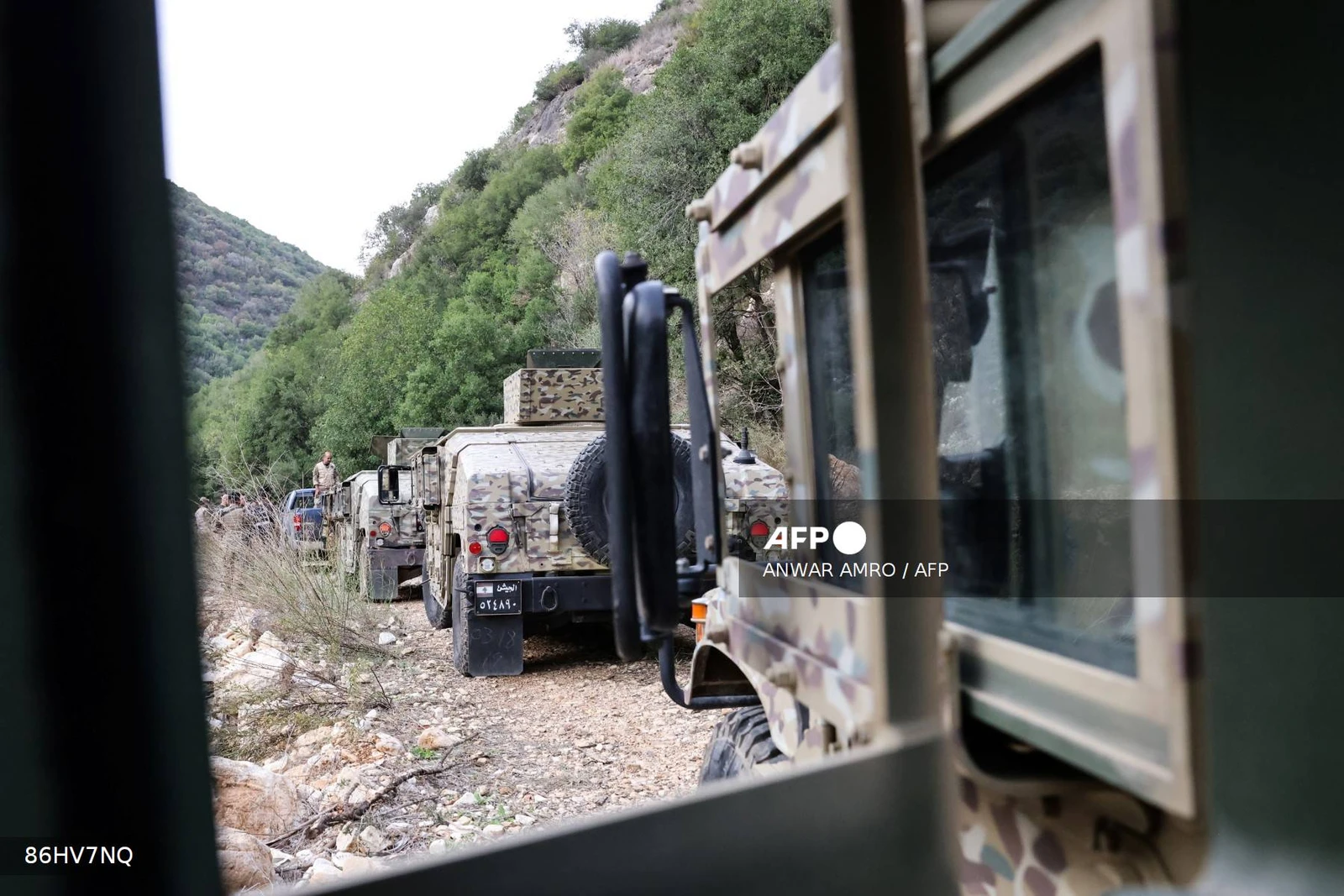
For Lebanon, the immediate challenge is to translate commitments on sovereignty into control on the ground. The army is expected to expand its deployment in the south, take over areas vacated by Israeli forces, secure the country’s borders and implement the government’s decision to place weapons exclusively under state control.
“The army is being asked to meet many conditions in southern Lebanon, some of which are far from insignificant,” the military source said.
The source said that the value of both the preparatory meeting and subsequent support conference would depend on their results and that the international assistance needed for the army’s expanding responsibilities remained subject to unresolved political conditions.
The military is also concerned about how those responsibilities are to be carried out.
According to the source, the army opposes an international monitoring force empowered to dictate its operations and wants to remain under Lebanese state authority.
Aoun, meanwhile, welcomed an initiative by Macron and the Italian prime minister concerning arrangements after UNIFIL’s mandate ends. The details of any future mission remain under discussion.
Above all, the source said, its deployment must not become a trigger for confrontation with another Lebanese party. The priority is to protect the institution from being drawn into a domestic conflict or becoming an instrument for implementing external demands.
Those concerns place the military at the intersection of Lebanon’s internal dispute over Hezbollah’s weapons and negotiations over Israel’s withdrawal.
The diplomatic timetable has also shifted. The next round of US-sponsored Lebanese-Israeli talks in Rome is now expected to take place next month, a US State Department official told Reuters on Sunday.
Separate diplomatic contacts have continued. The Lebanese and Israeli ambassadors to the US began talks in Washington on Tuesday to discuss implementation of the framework agreement reached in June, Anadolu reported, citing a Lebanese official source.
That June 26 framework envisages a phased transfer of security responsibility in areas of southern Lebanon to the Lebanese army, alongside measures to disarm non-state armed groups and an Israeli military redeployment. Its implementation remains contested.
Israel said its continued military presence was necessary to protect northern communities from Hezbollah attacks. Lebanon is demanding a full withdrawal and the restoration of state authority throughout its territory.
The Paris initiative is intended to help equip the institution expected to assume those responsibilities.
Mohieddine Chihimi, a Lebanese academic specializing in international law, told Arab News that the Paris talks formed part of a broader series of conferences addressing Lebanon’s crisis.
International support for its military and security institutions was not new, he said. The US, for example, has provided extensive security assistance since 2006.
Saudi Arabia has also reaffirmed its backing for the Lebanese state. During a phone call with Aoun in July, Crown Prince Mohammed bin Salman reiterated the Kingdom’s “support for Lebanon and for the choices adopted by President Aoun to safeguard Lebanon’s sovereignty, independence and territorial integrity.”
The crown prince also renewed his commitment to provide assistance in line with priorities set by the Lebanese government.
What could distinguish the Paris meeting, in Chihimi’s assessment, was its potential to define more precisely the form of future assistance and the expectations placed on Lebanese state institutions.
He said that support should address requirements for specialized personnel and weapons, while enabling the army to deploy across wider areas where it had previously lacked a presence.
Another priority would be severing links between Lebanese military and security institutions and Hezbollah’s “liaison and coordination apparatus,” he said.
Addressing those alleged links could require a “cold military purge.”
As an example of such a process, Chihimi cited the dismantling of a Lebanese-Syrian cell allegedly involved in cross-border infiltration.
Breaking those links, he said, would be an important indicator of Lebanon’s seriousness about implementing government decisions. It could also help establish a framework for greater international support for the army and other security forces.
Chihimi’s assessment reflects the broader debate over whether Lebanon’s security institutions have both the resources and the independence needed to carry out the missions now expected of them.
Questions remain in the US and Israel about the army’s ability to fulfill those responsibilities, particularly those relating to Hezbollah’s weapons and the government’s decision to place all arms under state control.
Prime Minister Nawaf Salam set out the government’s position during an address to Parliament on Tuesday, describing Lebanon’s situation as “extremely difficult.”
He said that the commitment to place weapons exclusively under state authority was not new.
“Our government committed to it in its ministerial statement and you granted it confidence on that basis,” he told lawmakers.
Salam said that the principle was rooted in the 1989 Taif Agreement and had also been incorporated into the 2024 cessation-of-hostilities agreement negotiated by the previous government.
“The issue is not that someone is asking Lebanon today to make a commitment it has never made before,” he said. “The issue is how we achieve the objectives that we all want.”
Salam defended negotiations as a means of securing Lebanon’s objectives.
“I am not someone who negotiates merely for the sake of negotiating, and I do not believe anyone in the government does,” he said.
“The responsibility of the state is to choose the least costly path for the Lebanese people to achieve its objectives. Negotiation itself is not a concession of rights but a means of restoring them through diplomatic channels.”
He said that neither reconstruction nor institutional reform could be separated from the continuing conflict in the south.
“There can be no security or stability as long as the war in the south continues. Our position is clear and is not open to compromise. We want the war to end,” he said.
“Our objective is Israel’s withdrawal from all Lebanese territory, the release of all our prisoners and the safe and dignified return of our people to their villages and towns, which we want to rebuild.”
He said that sovereignty required both Israel’s withdrawal and the Lebanese state’s control over its own territory.
“Sovereignty requires Israel’s withdrawal from all Lebanese territory. It also requires the state to extend its control through its own forces and to work toward placing weapons exclusively in its hands.”
But restoring state authority and rebuilding damaged communities also require resources that Lebanon cannot provide alone.
Salam pointed to insufficient funding, donor fatigue and changing international priorities, saying that recovery would require substantial Arab and international assistance alongside Lebanese resources.
“The scale of destruction is far greater than the state, with its current resources, can bear alone,” he said.
His argument underscored the stakes of the Paris meeting: Lebanon needs international support to strengthen its institutions, while securing that support depends in part on demonstrating that those institutions can deliver.
“There can be no sustainable reconstruction without financing, no financing without confidence and no confidence without a capable state,” Salam said, adding that building such a state would require reform.
Israeli media reports, meanwhile, have criticized the Lebanese army’s performance, alleging that the pilot process for disarming Hezbollah has failed and that the military is not fulfilling its commitments. Those reports have also accused the army of coordinating its movements with Hezbollah.
Such allegations add to the pressure on an institution being asked to assume a larger security role while maintaining its position as a national force under Lebanese state authority.
The competing demands leave the army in a delicate position: It is expected to become the principal instrument for restoring state authority while avoiding a domestic confrontation, operating amid continued Israeli military pressure and seeking international resources for an expanding list of missions.
The stakes of Thursday’s Paris meeting extend beyond military aid. It could help establish whether Lebanon’s international partners are prepared to provide the army with the resources required for the role they expect it to perform — and under what conditions.