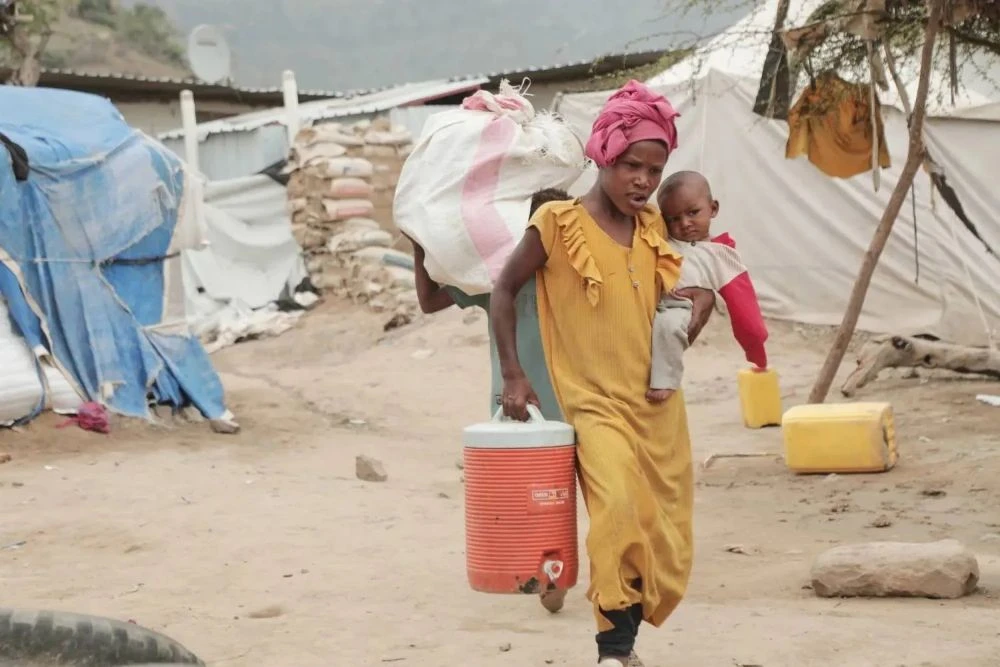
RIYADH: More than 100,000 people have been displaced in Yemen since the beginning of September, most of them heading to the provinces of Taiz and Lahj, the United Nations said.
The pace of displacement has risen sharply since Sept. 3, Laurent Bukera, the UN resident and humanitarian coordinator for Yemen, told Asharq Al-Awsat.
Bukera said the United Nations was prepared to respond to further waves of displacement and an expected increase in humanitarian needs in Yemen as fighting continues along the western coast. More than 60,000 displaced people had received assistance through the Rapid Response Mechanism as of Sept. 15.
The movement of humanitarian workers has been affected in several areas along the western coast, he said, warning that insecurity, movement restrictions and communications outages continue to hamper access to some locations.
Bukera stressed the urgent need to ensure safe and sustained humanitarian access, provide safe passage for those fleeing the fighting, and secure the resources needed for a rapid response as needs continue to grow.
Displacement surges
The latest figures from the International Organization for Migration show that more than 100,000 people have been displaced since the start of September, Bukera said.
The situation remains fluid, with the number of internally displaced people expected to rise.
The United Nations and its humanitarian partners are supporting the most vulnerable people across Yemen, particularly those displaced, wherever security, access and available resources allow.
UNICEF said the fighting displaced more than 57,000 children in just two weeks and cut children off from essential services. It warned that the escalation was deepening a crisis in which 12.2 million children need humanitarian assistance.
Urgent needs, dwindling supplies
The most urgent needs include emergency shelter, household essentials, food, safe water, sanitation, emergency health care, protection and cash assistance, Bukera said.
Many of those displaced were already living in highly vulnerable conditions. Some have been forced to flee more than once.
Humanitarian response capacity is under severe pressure as supplies run low and funding remains scarce, Bukera said. Insecurity and movement restrictions are making it harder to reach people quickly.
Major gaps remain in shelter, water and sanitation, food security, health, nutrition, protection and cash assistance.
The Rapid Response Mechanism is working under a planning scenario designed to address any sharp increase in needs, Bukera said.
Aid workers and warehouses at risk
Asked about the change of control in Mokha, Bukera said the immediate priority was the safety and well-being of civilians, particularly those forced to flee or cut off from essential services and humanitarian aid by the recent fighting.
UN agencies are assessing needs and adapting their response to keep aid flowing, he said.
The safety of humanitarian workers and the security of offices, warehouses and other humanitarian assets remain a “matter of grave concern.”
Humanitarian workers, facilities and assets must be respected and protected at all times, Bukera said. Aid must also be allowed to move safely and without obstruction so life-saving relief can reach those in need.
Taiz and Lahj take in most of the displaced
Humanitarian partners are delivering immediate aid in affected areas and communities receiving displaced people, including Taiz and Lahj, which have taken in the largest numbers.
Registration is continuing as displacement and humanitarian needs rise.
More than 60,000 internally displaced people had received aid through the Rapid Response Mechanism by Sept. 15, in addition to other support for displaced families, Bukera said.
Access remains difficult in some locations because of insecurity, movement restrictions and communications outages.
The UN Office for the Coordination of Humanitarian Affairs remains in contact with the relevant authorities to facilitate aid deliveries and secure safe passage for civilians.
UN prepares for wider crisis
The United Nations is responding to the current crisis while preparing for further waves of displacement and mounting humanitarian needs, Bukera said.
Humanitarian partners are developing planning scenarios covering rapid-response assistance, multipurpose cash aid and multisector support, including food supplies, to meet the needs of large numbers of people.
Bukera called for civilians and civilian infrastructure, including displacement sites, roads, schools and hospitals to be protected at all times.
He renewed calls for safe passage for those fleeing the fighting and for the resources needed to keep pace with the escalating humanitarian needs.
Latest NewsSaudi Arabia
Pakistan military vows to defend Saudi Arabia ‘to any extent’ amid Houthi attacksUN: Yemen Situation Rapidly Evolving as Restrictions Hamper Access to Western Coast