- Barham Salih tells Security Council more than 130,000 Yemenis have been uprooted by renewed hostilities; demands release of UN staff held by Houthis
- He warns that in Sudan, nearly 12m people are caught up in the ‘largest displacement crisis in the world’ and more will flee ‘as long as this war continues’
NEW YORK CITY: Renewed fighting in Yemen in recent weeks has driven more than 130,000 people from their homes and pushed thousands more across the sea to the Horn of Africa, the UN’s refugee chief told the Security Council on Friday.
Barham Salih, the high commissioner for refugees, said more than 3,700 people had fled to Djibouti and elsewhere in Africa in search of safety, “with more crossings reported to be underway,” as he warned that civilians were once again bearing the brunt of a conflict that was causing an already dire humanitarian crisis to get worse.
His agency, UNHCR, has declared an initial “Level 1” emergency covering Yemen, Djibouti and Somalia, a designation that allows it to rapidly mobilize staff and resources, and scale up financial assistance, shelter and protection.
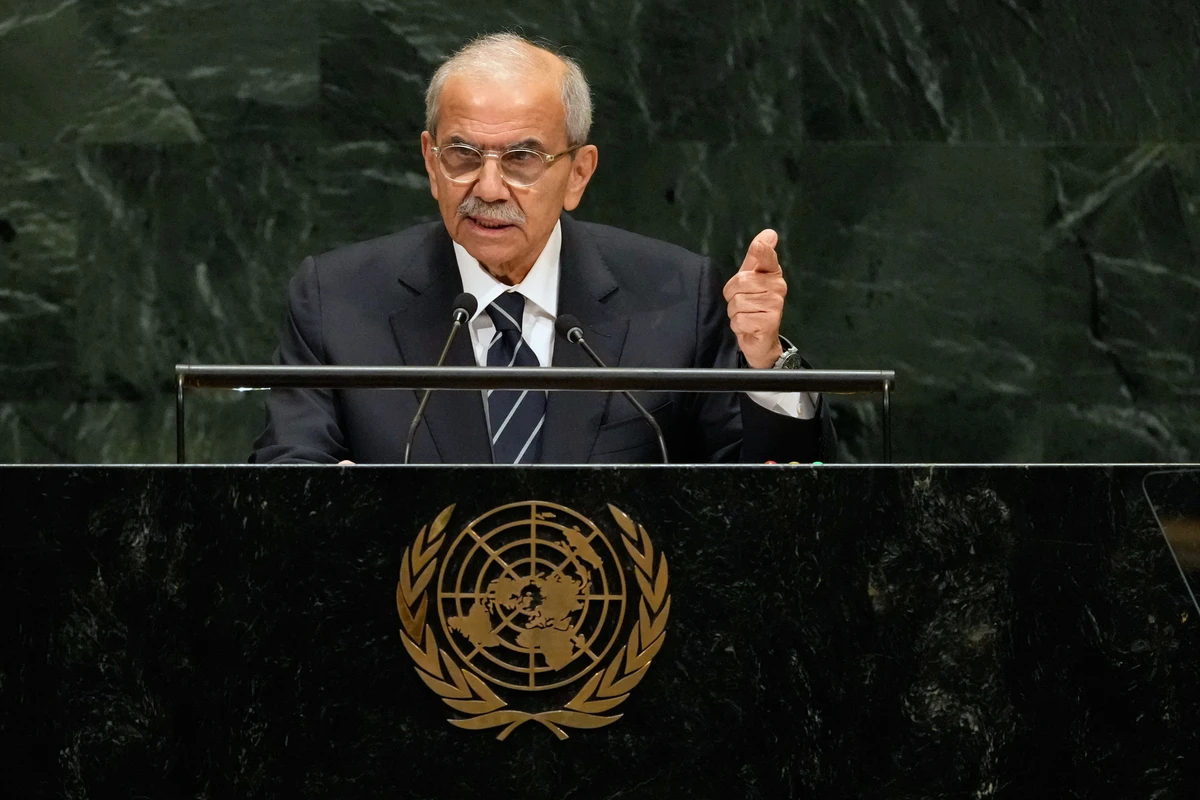
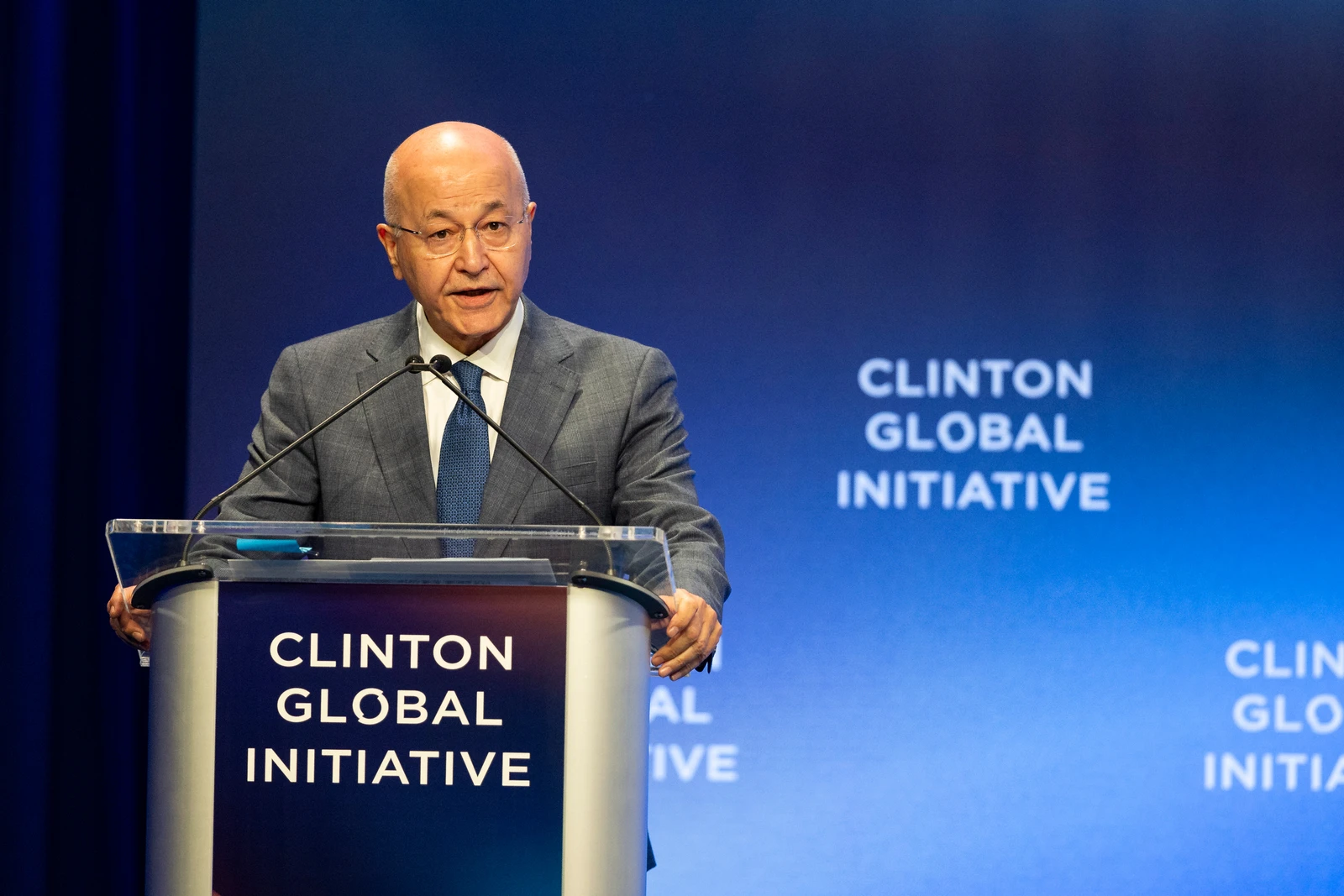
Speaking during a briefing on the sidelines of the high-level week of the UN General Assembly’s 81st session, Salih also called for “the immediate and unconditional release of all UN personnel and other humanitarian workers arbitrarily detained by the Houthi de facto authorities” in Yemen.
It was the former Iraqi president’s first Security Council briefing since the General Assembly elected him to succeed Filippo Grandi in December 2025 and he took office on Jan. 1.
UNHCR said the fighting in Yemen has spread across several front lines this month, with more than 60 percent of the latest displacements taking place in Taiz. More than 5.2 million people were already internally displaced before this escalation.
The agency has warned that the number of additional people displaced inside Yemen by the renewed fighting could increase to more than 230,000, and more than 10,000 could cross the water to Djibouti. Meanwhile, its 2026 operations in Yemen are only 18 percent funded.
Turning to the situation in Sudan, Salih told the council, it “remains the largest displacement crisis in the world,” with nearly 12 million people forcibly displaced inside and outside the country, and about 4.5 million Sudanese refugees sheltering in neighboring states.
Recounting visits to Chad, Kenya, Ethiopia and Egypt during his first few months in office, he said he met refugees who had fled “horrific violence,” and he had witnessed “the extraordinary solidarity” of the countries hosting them. But they “cannot shoulder the consequences of this conflict alone,” he added.
Sudan has been locked since April 2023 in a civil war between the Sudanese Armed Forces and the paramilitary Rapid Support Forces. Civilians inside Sudan must be protected and aid agencies require safe and sustained access, Salih said.
"But none of this changes the fundamental reality,” he added. “As long as this war continues, people will continue to flee. Humanitarian assistance can keep people alive; it cannot give Sudan the peace its people need to return and rebuild. There is no military solution to the conflict in Sudan.”
He urged the warring parties to show political will, support a humanitarian truce and engage in dialogue, including with civilian representatives. He also called on members of the Security Council to use their influence, “collectively and individually,” to help end the war.
Salih also warned the council not to “lose sight of the Rohingya,” more than 1.2 million of whom remain stateless refugees in Bangladesh while conflict and grave protection risks persist in Myanmar.
More than nine years after the mass displacements of 2017, “an entire generation of Rohingya children is growing up in exile,” he added.
The conditions required for voluntary return do not currently exist, he acknowledged, “but that cannot become a reason for accepting the status quo.”
He asked the council to remain actively engaged with efforts to end the conflict and allow Rohingya refugees to eventually return home “voluntarily, safely and with dignity as nationals.”
These crises, he said, formed part of a global picture in which more than 117 million people have been forced to flee their homes by conflict, violence, persecution or other threats.
“Displacement is rapidly outpacing solutions,” Salih said. Conflicts are multiplying and becoming more protracted, political solutions remain elusive, and millions of people who fled what they hoped would be a temporary crisis find themselves displaced for years, “sometimes for generations,” he added.
“This is not only a humanitarian challenge, it is fundamentally a challenge of international peace and security,” he told the council. “And that is why this discussion belongs here.”
Salih called for refugees and returnees to be included in national development plans and systems, for development financing to support host communities and countries of return, and for solutions to be built into recovery and peacebuilding efforts “from the outset — not an afterthought.”
Syria, a country he visited recently, illustrates the point, he said. About 3.8 million Syrians who were displaced abroad or inside the country have returned home since the fall of the former president, Bashar Assad, and his regime, in December 2024.
“Their determination to rebuild is unmistakable but determination alone cannot rebuild a country,” Salih said as he called for sustained international engagement with, and investment in, recovery so that those who return can stay. “Crossing a border back home is not, by itself, a solution,” he added.
The same holds true in Afghanistan, he added, where more than 6 million people have returned in recent years — many in adverse circumstances, amid a severe humanitarian crisis and significant restrictions on the rights of women and girls — to communities already struggling with poverty, limited services and few economic opportunities.
“Return is an event. A solution is what comes after,” Salih said. Returnees need humanitarian aid but also investment in development, livelihoods and functioning national systems, he added.
“And above all, where displacement is caused by conflict, it requires political solutions.”
UNHCR must change, too, Salih said, including reforms to ensure the agency is “leaner, more agile and more focused on the field,” with its resources directed where they can deliver the greatest protection and the most solutions.