- Figures cover operations after Dec. 8, 2024, through June 26, 2026, targeting drug infrastructure left behind by the former regime.
- Authorities conducted dozens of counter-narcotic operations with Iraq, Jordan, Turkiye and Saudi Arabia.
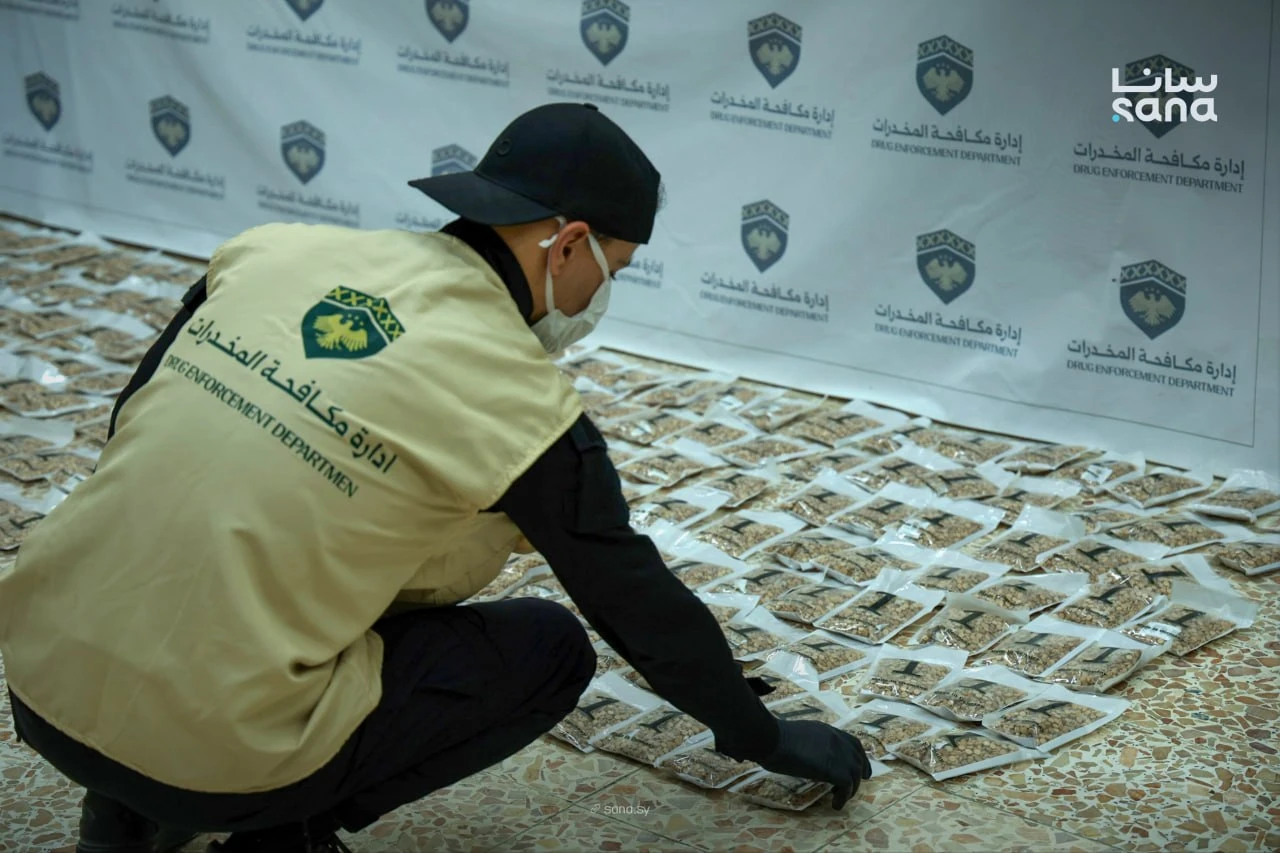
LONDON: Authorities in the Syrian Arab Republic have seized 697 million captagon pills, a synthetic, amphetamine-like drug, since the collapse of the Bashar Assad regime in late 2024.
The official figures cover operations after Dec. 8, 2024, through June 26, 2026, targeting drug infrastructure left behind by the former regime, according to the Syrian Arab News Agency.
Authorities also seized 15 tonnes of hashish, 10 million narcotic pills, 84.5 kg of crystal meth, 180 kg of cocaine, 7 kg of heroin, and 221 tonnes of drug production materials, alongside the captagon pills over the same period, SANA added.
Syria’s Drug Enforcement Department said it dismantled 90 trafficking networks and shut down 17 drug production facilities and 20 warehouses over 18 months, as part of 1,550 counter-narcotics operations.
In the same period, Syria has expanded counter-narcotics cooperation with countries affected by drug trafficking, targeting production sites and supply chains. Authorities conducted 28 joint operations with Iraq, 13 with Jordan, nine with Turkiye, and five with Saudi Arabia. They have also coordinated anti-drug efforts with Kuwait, the UAE and Lebanon, as well as the UN Office on Drugs and Crime.
Syria became a hub for the production and distribution of captagon under former president Assad, who fled to Russia in December 2024 when opposition forces toppled his regime following nearly 14 years of civil war. His government largely ignored neighboring countries’ concerns about the negative effects this had on the region.
The UNODC identified Syria as the country of origin for about 80 percent of regional captagon seizures between January 2019 and November 2025.