- Cotton production inches up, but high input costs leave farmers in limbo
- From field to fabric: Ginneries reopen in bid to reclaim textile heritage
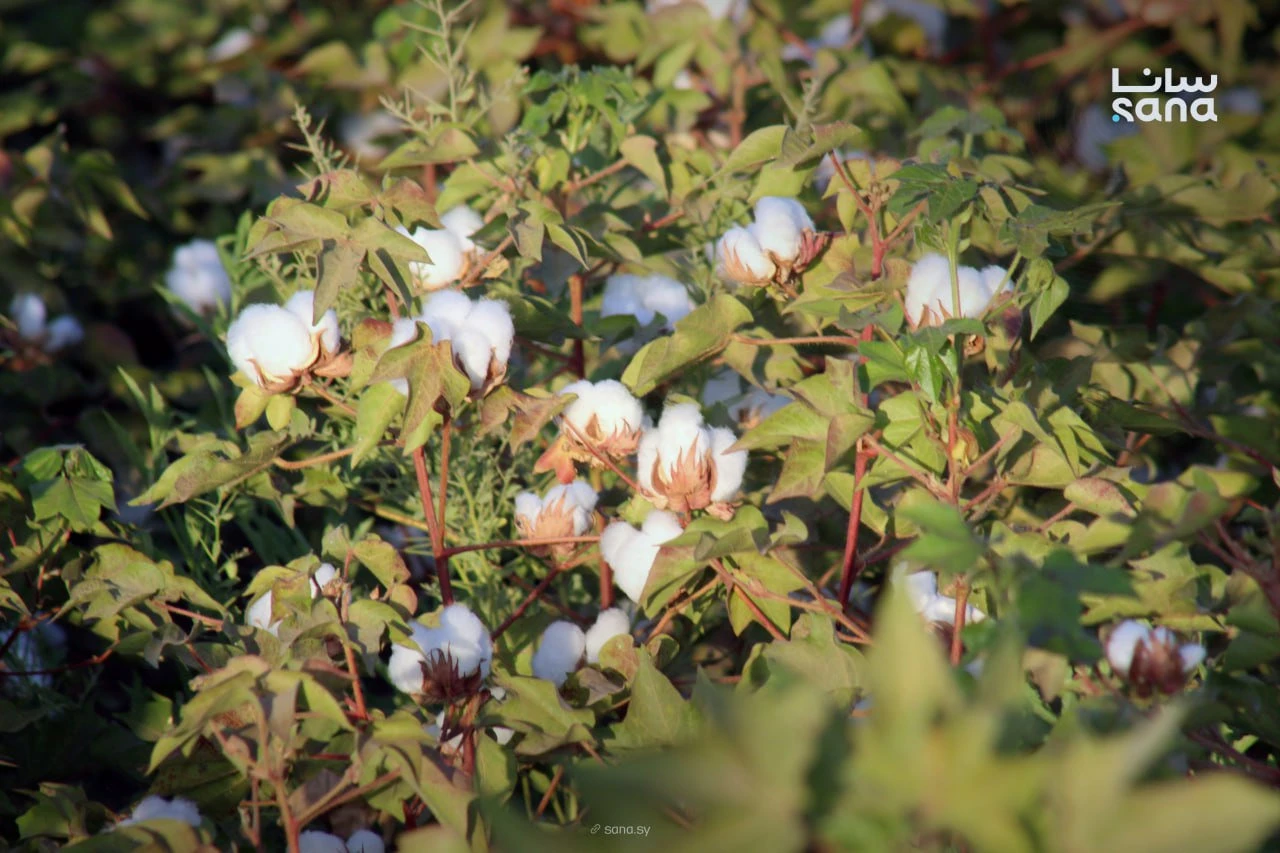
DAMASCUS: Across the agricultural heartlands of Syria, the hum of reopening cotton ginneries is offering a glimmer of hope to a cornerstonnee industry shattered by years of war, economic strain and neglect. Yet, from parched depressions in the west to irrigated riverbeds along the Euphrates, farmers and officials warn that soaring production costs, severe water shortages and the absence of clear pricing threaten to unravel the fragile recovery before it takes root.
On Sept. 30, the Mhardeh cotton ginnery in Hama province resumed operations after four years of idleness, marking a critical step toward mending the processing chain for one of Syria’s primary agricultural crops, according to reports by the Syrian Arab News Agency (SANA). Capable of processing 12 tonnes of raw cotton per shift, the facility joins the operating Al-Assi ginnery in Hama and Tishreen ginnery in Aleppo, while the Al-Fida facility in Hama remains offline.
Nationally, the Agriculture Ministry projects cotton output will reach roughly 79,467 tonnes this season—up from 69,587 tonnes last year. But beneath the modest uptick in production lies an uphill battle for farmers bearing the weight of crushing input expenses.
Soaring costs and squeezed fields
In western Syria’s fertile Ghab depression—a 410-square-kilometer agricultural plain spanning Al-Suqaylabiyah District in Hama governorate—cotton cultivation has dwindled to a fraction of its former scale.
According to SANA, citing the General Authority for the Management and Development of the Ghab, farmers planted only 44,000 square meters this season, falling staggeringly short of the targeted 4.5 million square meters. Production there is expected to yield a mere 12 tonnes.
The downturn marks a dramatic collapse from 2011, when the Ghab yielded more than 22,000 tonnes of cotton across 70 million square meters. By last year, acreage had already shriveled to 90,000 square meters.
"cotton has become increasingly costly to grow, placing a heavy financial burden on farmers and prompting many to switch to crops that require fewer inputs and offer better returns," Talal al-Mawas, director of agricultural affairs and plant protection at the authority, told SANA.
Al-Mawas noted that reliable water supplies and a guaranteed, remunerative purchase price set ahead of planting are essential if growers are to commit to the thirsty crop. Local farmer Mohsen Saqr echoed the concern, emphasizing that government irrigation networks and dams must be urgently rehabilitated to provide stable water access.
A similar contraction has hit eastern provinces such as Deir Ezzor, where cultivation fell sharply after farmers planted around 23 million square meters last season to produce roughly 4,500 tonnes.
Harvesting without a price tag
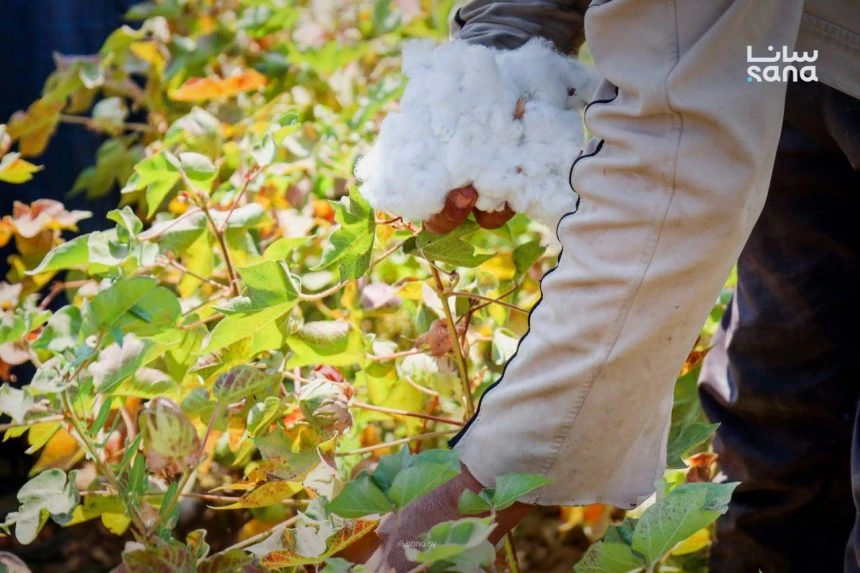
In northern Raqqa province along the Euphrates riverbed, where picking began in mid-September, growers face a parallel predicament: harvesting their fields without knowing what they will earn.
Ahmad Thalji, head of the specialized offices division at the Raqqa Agriculture Directorate, told SANA that harvesting had covered 1,137 hectares — yielding roughly 3,166 tonnes — representing about 8.3% of the 13,700 hectares planted this season.
Thalji estimated production costs at roughly $700 per tonne, driven higher by expenses for fuel, seeds, labor, fertilizers and mechanical maintenance. With no official state purchasing mechanism established as harvesting began, many growers have been left to sell their yields directly to private traders.
Despite immediate strains, the directorate hopes to expand Raqqa’s planted area from 16,000 hectares last season to 24,000 hectares in upcoming seasons by supplying better adapted seed varieties and affordable fertilizers.
Modernization and regional ambitions
Recognizing that ginneries cannot run without steady supplies of quality raw fiber, Damascus is looking outward to modernize its end-to-end textile chain.
In early March, Syria’s Ministry of Economy and Industry inked a memorandum of understanding with Saudi Arabia’s Kingdom Design Company (KDC) to rehabilitate state-owned ginneries, spinning facilities and weaving mills. The pa