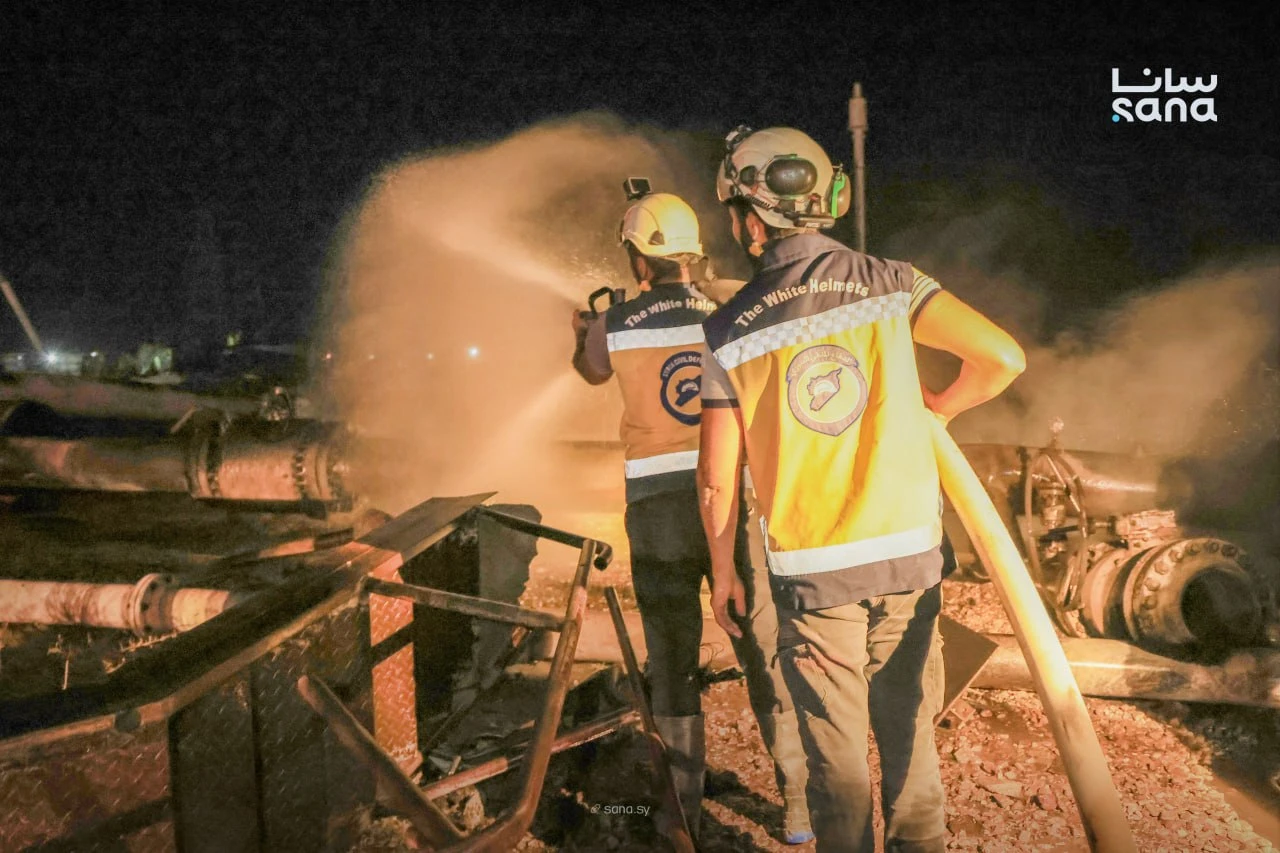
- Syrian authorities began restoring gas supplies to the Deir Ali power plant after an explosion disrupted three generating stations
- Electricity is being restored gradually in Deir Ezzor province, but power allocations remain temporarily reduced until the system stabilizes
LONDON: Syrian authorities began restoring gas supplies on Thursday to the Deir Ali power plant after an explosion at a pipeline serving the Tishreen thermal plant near Damascus forced several generating stations offline and reduced electricity available on the national grid.
Technical crews started gradually repressurizing the Arab Gas Pipeline between Adra and Deir Ali, the Energy Ministry said in a statement, a step intended to allow the Deir Ali plant to resume operations in stages.
The pipeline and surrounding area will remain under technical monitoring during the restart.
The Deir Ali plant supplies the national grid, supporting electricity provision in Damascus and southern Syria, including Rif Dimashq, Daraa, Quneitra and Suweida.
Energy Minister Mohammad Al-Bashir told the state-run agency SANA that the fire at the Tishreen plant had been brought under control. Civil Defense crews were continuing cooling operations, however, before specialists could enter the site to assess the damage and establish what caused the explosion.
Authorities have not determined whether the blast was caused by a technical failure, an intentional attack or sabotage, Al-Bashir said.
“The relevant specialized teams will conduct an on-site inspection after cooling operations are completed to determine the causes and circumstances precisely,” he said.
The explosion struck a pressure-reduction station at the entrance to the Tishreen power plant and damaged two gas lines serving the facility, according to the Syrian Petroleum Co.
The resulting interruption in gas supplies forced Tishreen offline and also shut down the Deir Ali and Nasiriyah plants, cutting available generating capacity on Syria’s electricity grid.
Preliminary assessments indicate that damage at Tishreen appears limited to gas lines and some electrical substations or cables, Al-Bashir said. The plant’s turbines and other core equipment have not yet been inspected.
Abdul Hamid Salat, director of the Energy Ministry’s media department, said teams also would inspect other power stations affected by the gas interruption. The inspections will examine turbines, generating units and other equipment before plants are returned to service according to their technical readiness.
The ministry later confirmed that crews had begun raising pressure on the Adra-Deir Ali section of the Arab Gas Pipeline as part of the phased restoration effort.
Meanwhile, electricity began returning gradually to Deir Ezzor province after the loss of generation capacity. The Syrian Electricity Co. in Deir Ezzor said service was being restored in stages based on available supplies.
Power allocations to the province will remain temporarily reduced until the generating system stabilizes and the affected plants return to operation, the company said in a Facebook post.
Syria’s electricity system is heavily dependent on gas- and oil-fired power plants, but war damage, fuel shortages, aging equipment and a fragile grid have left it unable to reliably meet demand.
Before the 2011 civil war, Syria had roughly 8.5 gigawatts of installed generation capacity, according to the British-American business law firm Norton Rose Fulbright.
Much of that capacity is no longer consistently available. Current estimates vary depending on whether they measure installed, operable or actual output, but recent assessments place available capacity broadly in the 2 to 3 GW range.