NEW YORK CITY: Disruptions to shipping in Bab Al-Mandeb Strait and the Strait of Hormuz are driving up energy and food prices and delaying shipments to Sudan, the World Food Programme’s acting executive director, Carl Skau, told Arab News on Monday.
He warned that in Sudan the effects of the two shipping choke points were compounding one of the world’s largest hunger crises, and doing the same in Yemen.
Sudan imports almost all of its fertilizer from the Gulf, but supplies have been sharply reduced during this planting season because of the shipping disruptions, Skau said.
He added that “very, very little” fertilizer had reached the farmers he spoke with in the country, a shortfall he warned would hit harvests in the coming months.
The WFP’s own shipments have also been delayed, he said, including deliveries of rice from India that now take much longer to arrive.
The situation could worsen as the result of the instability spreading from Hormuz to Bab Al-Mandeb, he warned, given Sudan’s reliance on Red Sea ports. He drew a direct link to the situation in Yemen, which he visited recently, before traveling to Sudan, specifically to highlight the risk of an escalation there.
Yemen imports about 90 percent of the food it requires, he said, and disruptions to its ports were worsening the displacement of the population in a country where the WFP has already been forced to scale back programs, and cannot operate at all in the north under current conditions.
Taking the disruption in Hormuz and Bab Al-Mandeb together with instability in the Black Sea as a result of the war between Russia and Ukraine, he said, the three choke points were “pushing global hunger” in parallel with the effects of conflicts and looming El Nino-linked climate shocks.
Skau’s comments to reporters at the UN headquarters in New York, via video link from Muscat, came after an eight-day visit to Sudan that included stops in Khartoum, El-Obeid and Tawila, as well as his first visit to El-Fasher since the city fell to the paramilitary Rapid Support Forces under a devastating siege last year.
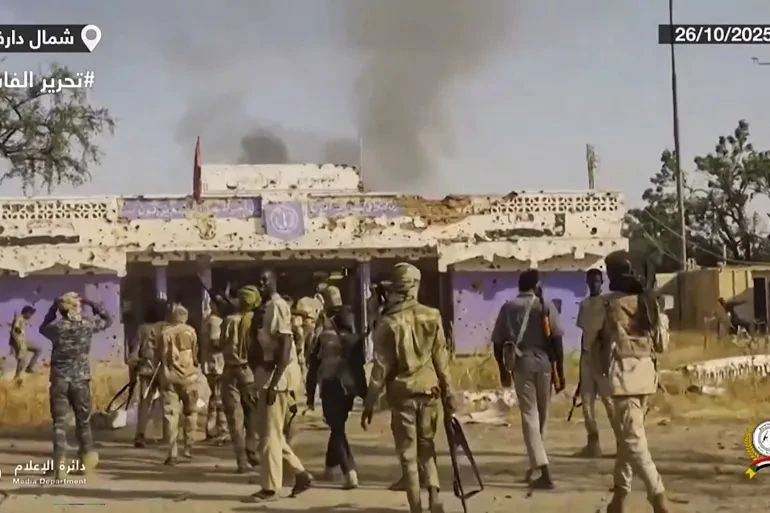
Skau described El-Fasher as a “daunting” and largely emptied city of bullet-scarred homes and burned-out vehicles, once home to a million people but now populated by only a few tens of thousands.
The only crowds he saw there were at WFP food-distribution sites, he said, which now help about 20,000 people and were the sole assistance available to those who remain. The nearby Zamzam camp, once packed with displaced families, was now “a complete ghost town,” he added.
He described the approximately 60-kilometer route from El-Fasher to Tawila, which took his convoy about an hour to navigate, as the same path about 700,000 people fled along less than a year ago, many of them facing atrocities along the way.
The number of people at the displacement site in Tawila had grown to nearly a million, he said, compared with 700,000 during his previous visit in April. While the shelter offered there had improved slightly, the WFP was only able to provide half rations, he added, and many female-led households struggle to stretch the assistance to meet the needs of their families.
Skau described El-Obeid as Sudan’s “Rome,” given the number of displaced people converging there, mirroring the influx to the Italian city during the Second World War. New arrivals were still registering there on the day he visited, some of whom had been walking for four or five days from South Kordofan.
He said the WFP had been forced to prioritize the needs of newly displaced people over those who have been there for years, describing it as a difficult system of triage forced upon the organization by funding shortfalls.
He also highlighted the ongoing drought in Darfur, the worst there since 1984, and warned it could compound the crisis facing farmers already cut off from fertilizer supplies and WFP assistance.
In more stabilized parts of the country, including Kassala and Gezira states, he said the WFP had been supporting the reestablishment of local agriculture, including the procurement of wheat harvested inside parts Sudan last year to feed into emergency operations elsewhere in the country.
Skau said funding for WFP efforts in Sudan was running at about a third of last year’s level, and further cuts were possible within weeks in the absence of new donor commitments.
His appeal, he said, was twofold: political action to end the war ahead of the UN’s high-level week this month and, short of that, sustained humanitarian funding to sustain the 4 million to 5 million people the WFP helps each month.
The civil war in Sudan, which began in April 2023, has displaced an estimated 14 million people and left about 20 million facing acute hunger, Skaum said, including 5 million at emergency levels and 200,000 facing famine conditions.
The conflict, between the Sudanese Armed Forces and the paramilitary Rapid Support Forces, has prompted repeated warnings from UN officials, including Denise Brown, the organization’s resident and humanitarian coordinator in Sudan, who described the crisis as “abandoned” rather than forgotten by the international community.
Latest NewsPakistan
Pakistan approves $271 million fuel subsidy amid US-Iran war energy shockSudan and Yemen starve as shipping turmoil chokes food and fertilizer supplies, says WFP chief