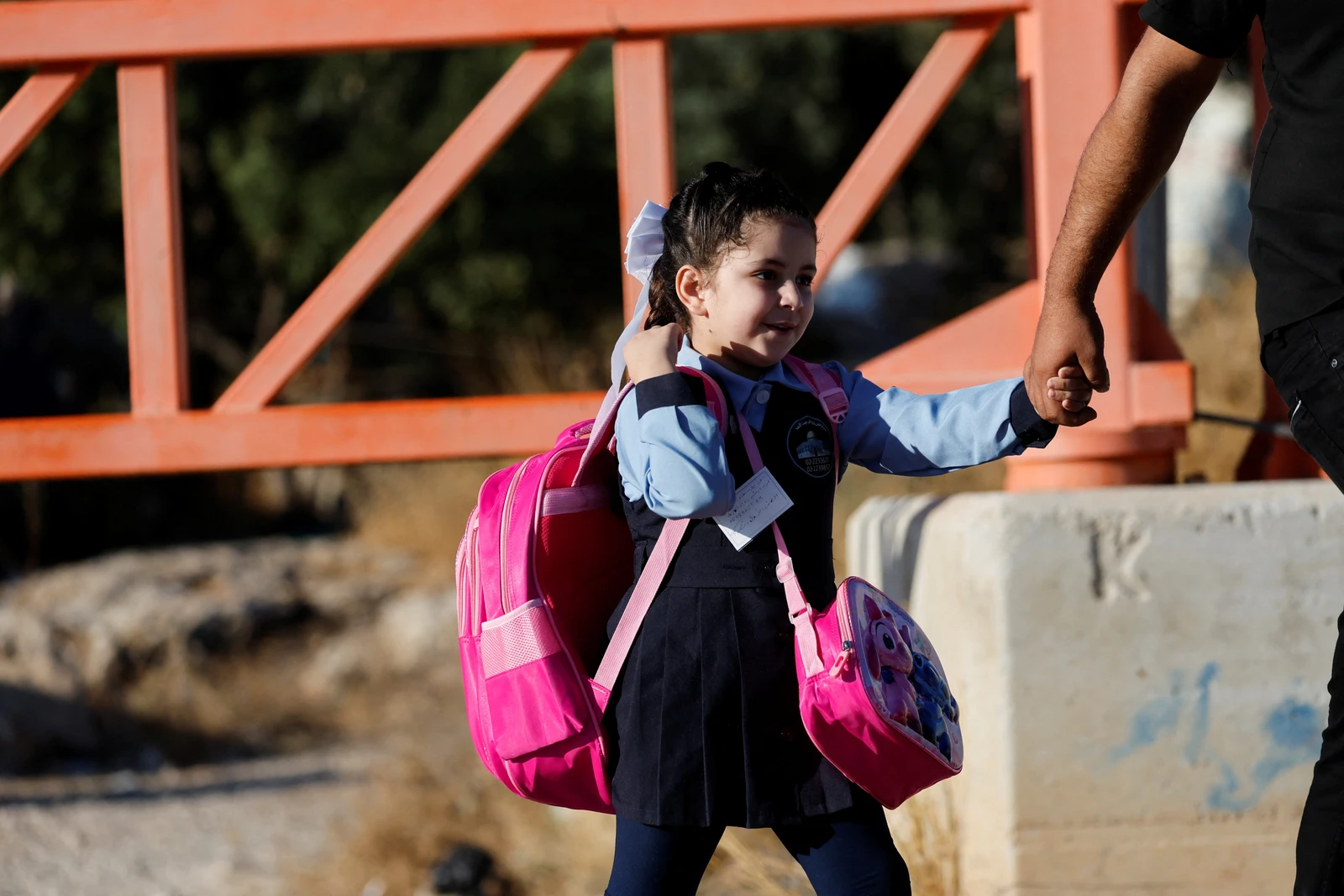
LONDON: More than 600,000 Palestinian public-school students in the occupied West Bank attended in-person classes only twice a week during the 2023-24 school year as financial strain, Israeli movement restrictions and violence disrupted the education system, an Israeli rights group said on Monday.
The Association for Civil Rights in Israel reported that the disruptions have left children behind in basic reading and writing, eroded their motivation to learn and pushed some to take jobs alongside their studies.
“For Palestinian children in the West Bank, whether school happens today can depend on whether a checkpoint happens to be open, whether settlers block the road, or whether a teacher was paid this month,” said ACRI Executive Director Noa Sattath.
The organization’s report, “Education Interrupted: The Violation of Palestinian Children’s Right to Education in the West Bank,” said many schools have not resumed a full five-day schedule and continue to operate three days a week. The crisis affects more than 813,000 students and 50,000 teachers across the West Bank, according to ACRI.
One teacher from Ramallah, quoted in the report, said his daughter completed first grade without adequately learning the Arabic and English alphabets.
School administrators described broader consequences of reduced classroom time. A deputy principal in Ramallah said some 70 percent of students at his school had taken part-time jobs while studying since the school week was shortened.
At the center of the disruption is the Palestinian Authority’s deteriorating financial position, the report said. Israel collects tax revenue on the authority’s behalf, and those funds account for about 60 percent to 70 percent of PA revenue, according to the World Bank.
Since October 2023, Israel has increased monthly deductions from those transfers by more than 50 percent, from about 200 million Israeli shekels, or $66.4 million, to an average of about 460 million shekels, said the report.
Business closures and rising unemployment have compounded the economic downturn, disrupting salaries throughout the public sector. Teachers went months receiving only partial pay, while repeated strikes further interrupted classes.
In January 2026, roughly half of West Bank schools temporarily closed during strikes by teachers who had not been paid. And even when schools are open, reaching them can be difficult; ACRI said 925 movement obstacles had been documented across the West Bank as of April 2026.
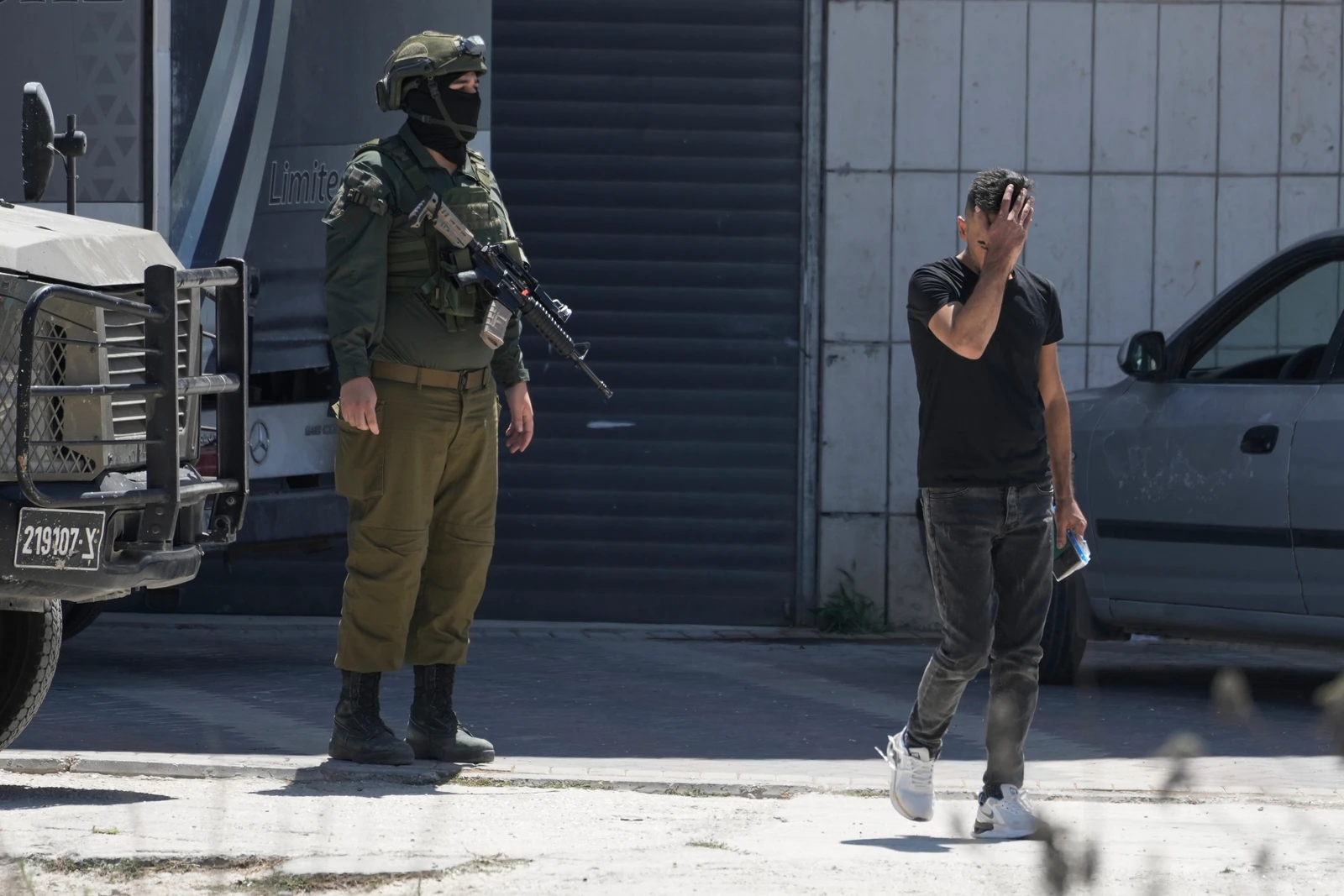
In the Israeli-controlled H2 area of Hebron, Palestinian children who had lived minutes from their school were forced to take a route of more than 3 kilometers and cross a checkpoint after their usual path was blocked, according to the report. Dozens of children in the area subsequently stopped attending school.
Military operations and settler violence have added to the disruption. During the 2024-25 school year, 2,040 military or violent incidents affecting education were documented, affecting 541 schools and 84,749 students.
During Operation Iron Wall, launched by the Israeli military in January last year, 352 schools serving more than 104,000 students shifted to remote learning. Many children were effectively left without schooling because they lacked the equipment or resources to study online.
ACRI also documented attacks on students and teachers, military incursions into schools, blocked access roads and vandalism of educational facilities. In September 2024, settlers entered an elementary school in East Al-Mu’arrajat during school hours and attacked two teachers with clubs.
The group said settlers demolished two schools in the Jordan Valley in 2026 after surrounding communities were forcibly displaced following violence. In April, settlers demolished an elementary school in Hammam Al-Maleh in the northern Jordan Valley that had served about 60 children.
As of August, 84 schools in the West Bank, including East Jerusalem, were under demolition orders. Fifty-four faced complete demolition, threatening the education of around 13,000 students.
ACRI said that although the Palestinian Authority administers the education system, Israel remains responsible under international law as the occupying power.
The group cited the Fourth Geneva Convention, which requires an occupying power to facilitate the functioning of institutions devoted to children’s education and to avoid obstructing Palestinians’ right to schooling.
“Israel bears the responsibility of an occupying power to keep schools running,” Sattath said. “A generation of children is losing years of learning it will never get back.”
She added: “We will keep exposing what is happening in these schools and demanding that Israel meet its legal obligations.”
Palestinian children lose classroom time as West Bank school crisis deepens, says Israeli rights group