- Maysa Yousef and other artists in the territory transform plain, aid-agency backpacks into personalized art for students returning to school after years of disruptions
- About 541,000 students returned to classrooms in Gaza last month, despite challenges posed by destroyed buildings and ongoing insecurity
LONDON: As children in the Gaza Strip return to school after nearly three years of disruption, they are also turning up at artist Maysa Yousef’s door with their plain, light-blue backpacks, distributed by aid agencies, and specific requests for decoration: a rocket ship, perhaps, or a princess, a horse.
When Yousef hands the bags back, transformed with the images they chose, the children leave smiling and hugging them tightly.
“I’m trying to make children happy and make them feel that their schoolbags are beautiful,” Yousef, an artist in central Gaza, told Arab News. “When giving a schoolbag to a child, the least you could do is print a balloon on it.”
The backpacks supplied by aid agencies are plain, however, and so she took it upon herself to add a lot more than balloons. Over the past two weeks, she has decorated nearly 30 backpacks using her own dwindling supply of paint.
Her kind efforts come as students across the embattled Palestinian enclave return to classrooms following years of interrupted or nonexistent in-person learning. Israel’s military campaign in Gaza, which began in October 2023 after Hamas-led attacks on southern Israel, devastated much of the territory’s education system.
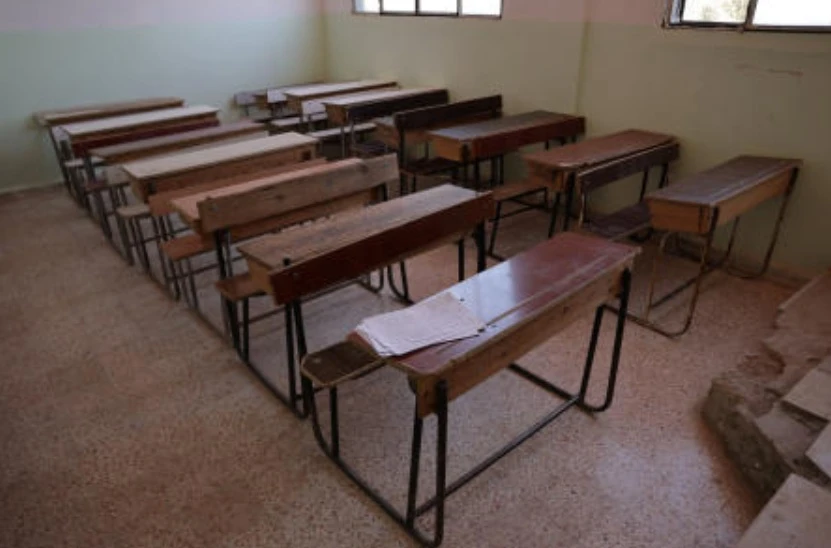
The local education authority said about 541,000 students returned to school last month. But for many children, the return is taking place amid the rubble of destroyed buildings, repeated displacements, and persistent bombardments and insecurity.
Yousef is one of several artists across Gaza who have embraced the small but personal mission of turning the plain, mass-distributed, aid-agency backpacks into something special children can call their own.
In the Sheikh Radwan neighborhood of northern Gaza, 21-year-old Palestinian artist Sara Zakout has also been painting colorful designs on schoolbags. She shares images of her work on Instagram, showing how the standard bags become canvases for bright, individualized images.
The gesture might seem modest, set against the sheer scale of destruction in Gaza. Yet for children carrying bags that are closely associated with the harsh realities of displacement and aid, a painted horse, princess or rocket ship can restore at least a little of their childhood dreams.
Rim Ajjour, a child psychologist in Lebanon, said such personalization of children’s belongings should not be dismissed as a secondary concern in a crisis.
“I think it is very important … because it highlights the importance of identity, agency, creativity and even being able to live a normal childhood,” she told Arab News.
Many people might prioritize food, shelter, household supplies, safety and protection from the winter weather, she added, and those needs are indeed urgent; but children still need opportunities for play, self-expression and a sense of belonging.
“Children are children, after all, even if they live in conflict areas or are going through uncertainty in their lives,” Ajjour said.
Therefore, a bag decorated with a design chosen by the child can offer a sense of ownership at a time when much else has been lost.
“This serves as an essential developmental need, in terms of play, creativity, their ability to express themselves, and their sense of belonging — the feeling that this item belongs to me, and is not just something given to anybody else,” she added.
This sense of ownership is especially meaningful in Gaza, where children have endured widespread loss, separation and displacement. More than 58,000 children in the territory have lost one or both parents during the conflict, according to UN figures. The UN Children’s Fund, UNICEF, estimates that at least 17,000 children are now unaccompanied or separated from their families.
More than 1.9 million Palestinians have been displaced within Gaza, many of them repeatedly, according to UN figures. More than 1.2 million people, over half the population, have lost their homes. Children account for about half of the nearly 2 million people forced to leave their homes and seek shelter elsewhere in the territory, UNICEF says.
Many children are living in unfamiliar neighborhoods, shelters or temporary accommodation, Ajjour said. They might have lost homes, schools, friends, siblings and other relatives.
“So little is left that is their own, that is personal,” she said. “Having something they can call their own, something they can personalize, is extremely important in this particular situation because it may compensate for some of the loss they have experienced.”
The need for such small comforts is unfolding alongside a profound education crisis. Nearly 98 percent of school buildings in Gaza have been damaged since October 2023, according to the UN, and more than 93 percent require major restoration work or complete reconstruction.
About 700,000 children between the ages of 4 and 17 have missed nearly three consecutive years of formal, face-to-face education, and about 420,000 have had no in-person learning at all.
And despite a ceasefire agreement that has been in place since October last year, the Israeli bombing has continued.
The backpack project is a humanitarian effort shaped by shortages as much as by imagination, Yousef noted.
“There are no painting materials in the Gaza Strip, of course,” she said. “Acrylic colors are very poor quality. I used the colors that survived the war in order to carry out this initiative.”
Families bring her bags to decorate when they can. She finishes each one and returns it as quickly as possible so the child can take it to school. The painted bags offer families an alternative to brightly decorated commercial products; while such items are available in local markets, Yousef said, the prices mean they are out of reach for many parents.
“Children ask for a bag with Spider-Man or something else on it,” she said. “There are very nice bags and stationery in the market but everything is expensive, so parents cannot buy them for their children.”
While there have been offers of support for the backpack-decoration project, the scarcity and poor quality of available art supplies remain a challenge, Yousef said. Still, the children’s joy keeps her going.
“Honestly, the children’s reactions were very touching,” she said. “When they saw the bag with the design they loved, they would hug it tightly and leave. It was very beautiful.”
Yousef has also started to host backpack-painting workshops that give children the chance to create their own painted designs.
Before the war, she said, her work focused on bringing art to everyday objects, by painting on items such as T-shirts, bags and mobile phone covers rather than creating works intended only for galleries.
“I wanted to make beautiful things; not only paintings to hang on a wall, but objects people could use in their lives while still being decorated with colors,” she said.
Now, in a place where the very presence of schools themselves has become uncertain, her form of functional art has taken on a different purpose through the backpacks.
“I found that schoolbags were an opportunity to bring back those lovely memories from before,” Yousef added.