- Ibrahim Abu Mutlaq, an engineer with the Saudi Center for Culture and Heritage, which delivers aid in Gaza for KSrelief, said seven or eight of the tents were damaged
GAZA: Ghadir Fleifel was in her tent with her daughter in Gaza City’s Sabra neighborhood on Tuesday when the strikes began.
“I took my daughter and ran. The dust was so thick we couldn’t see each other,” she told Arab News. “Then the F-16 missile hit. God knows how I got out. I never thought I, my daughter or the children would live. We saw death.”
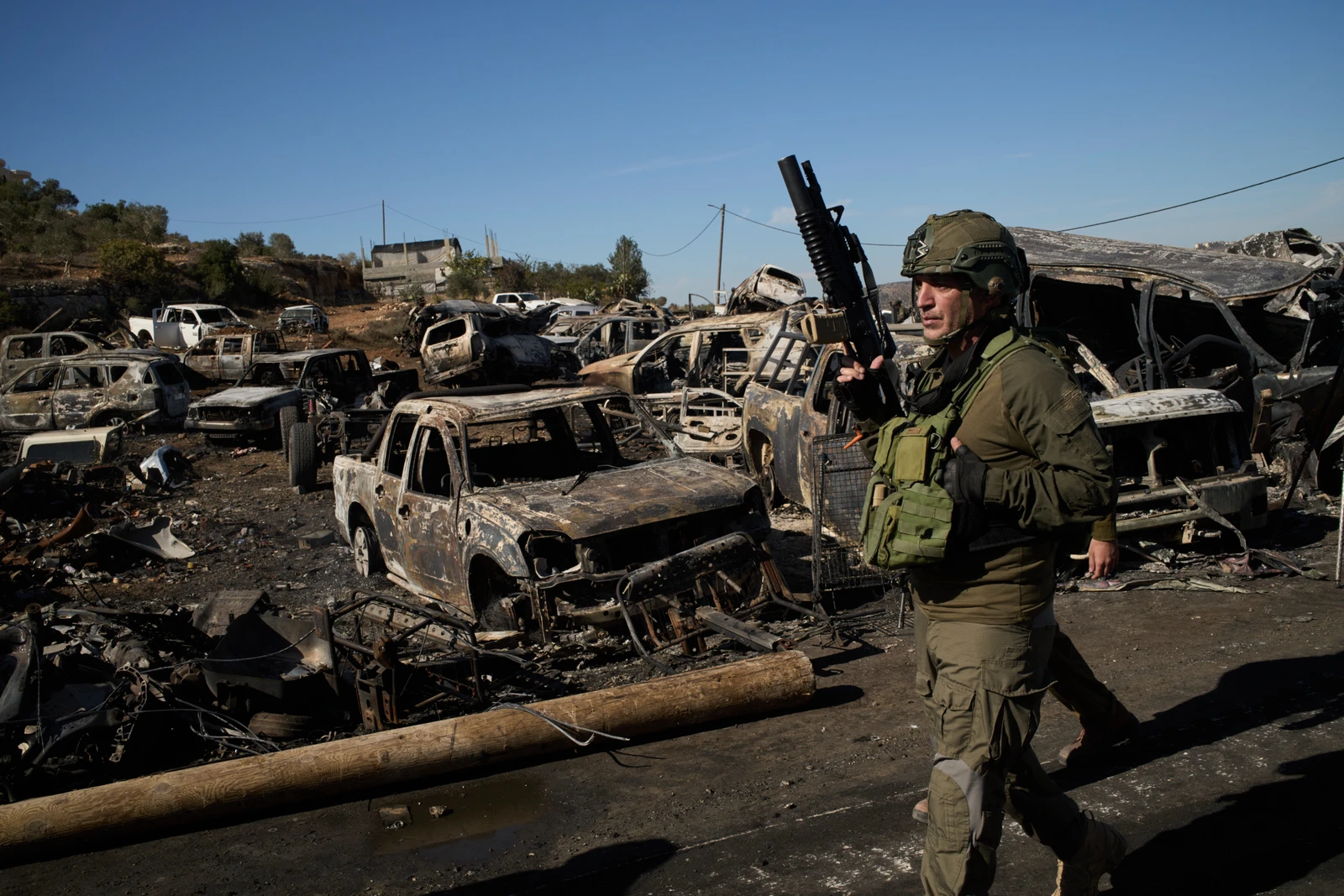
The fire broke out after an Israeli airstrike hit a metal foundry next to the camp. Medics told Reuters the strike killed three people, destroyed the foundry and set nearby tents alight. The Israeli military did not comment on the strike.
The tents had been supplied by Saudi Arabia. Ibrahim Abu Mutlaq, an engineer with the Saudi Center for Culture and Heritage, which delivers aid in Gaza for the King Salman Humanitarian Aid and Relief Centre, said seven or eight of them were damaged.
“As part of the efforts of Saudi Arabia and KSrelief, we came to answer our brothers’ appeals,” he told Arab News. His team returned to the site to hand out replacement tents, food parcels and hygiene kits. “As you can see, there is nothing left in the area,” he said.
Five minutes to leave
Sherine Swairki was sitting in her tent shortly before sunset when two strikes hit the foundry, killing and wounding people nearby. Her family fled and later returned. About two hours afterward, she said, a young man came to the camp with the Israeli army on the phone, ordering everyone to clear the area within five minutes.
“We all ran into the street,” she said. The family took shelter with neighbors on another street. Then came two more blasts, which she described as sparks and fire, “nothing normal.”
She said: “When we came back, my tent was burned to charcoal. We were living in a tent, and even that was too much for us to have.”
It was the second home she had lost. “My house in Al-Tuffah is gone, and here is gone too,” she said. “I left with nothing, and I started from zero. Thank God, we got everything again and managed. Now nothing is left. No clothes, no mattresses, nothing.”
Fleifel had also been displaced before. She had lived near the yellow line, the boundary Israeli troops withdrew behind under the ceasefire, before moving to the camp. She said the same thing had happened to her in Sabra two months ago, and nobody came looking for them.
“I cried from the bottom of my heart, because I was sure no one would come to help us,” she said.
Standing among the remains of her tent, she said she did not know what to salvage first. “The day before yesterday, we were out in the rain. I swear to God, we struggled to find tarps and put them up,” she said. “Her winter clothes, her blankets, her things. I don’t know what to pull out or where to start.
“We are adults; we can bear it. But what did this little one do?”
A deadly two days
The Sabra strike came at the end of a day in which Israeli forces killed at least seven Palestinians across the Gaza Strip, local health officials told Reuters.
Medics said Fadi Rajab and his 13-year-old son Abubakr were killed in Gaza City’s Zeitoun neighborhood when an airstrike hit the roof of a shelter for displaced people. Another Palestinian was killed in a strike near a school in the Daraj neighborhood, and a man was killed by Israeli gunfire in Khan Younis in southern Gaza.
Three more people were killed on Wednesday, Reuters reported. One man died when a strike hit the rooftop of a residential building in Gaza City. In the nearby Sheikh Radwan neighborhood, another strike hit a tent housing displaced people and killed two brothers, Mahmoud and Jamil Al-Absi. The Israeli military said it had targeted militants it described as terrorists in both areas and gave no further details.
Winter adds to the strain
Heavy rain over the weekend flooded tens of thousands of tents across the territory, AFP reported.
On Monday, the Board of Peace, the US-led body overseeing the October 2025 ceasefire, said the situation had become an immediate humanitarian emergency. It said it had warned Israel, which controls all entry into Gaza, to prepare for winter and seasonal flooding. The board acknowledged the steps Israel had taken but called them insufficient and urged Hamas to meet its own obligations under the truce.
Shortly before the board’s statement, the Israeli military said it had allowed more than 8,200 trucks into Gaza, carrying supplies that included 91,000 tents, according to AFP. Israel’s Foreign Ministry said Hamas bore responsibility for conditions in the territory.
A ceasefire under pressure
Strikes have continued almost daily since the truce took effect. Gaza’s health officials say Israeli attacks have killed at least 1,600 Palestinians since the agreement, according to Reuters. Israel says four of its soldiers have been killed in the same period.
The deal envisaged Gaza’s eventual reconstruction, but Reuters reported that little progress has been made. Negotiators remain divided over terms for Hamas to disarm and for Israel to withdraw its troops, which control about two-thirds of the territory. Israel says Hamas is trying to regroup and rebuild its arsenal. Hamas says it remains committed to the ceasefire and accuses Israel of trying to undermine it.
Palestinian authorities say Israel’s offensive has killed more than 74,000 people overall, according to Reuters. The war began on Oct. 7, 2023, when Hamas-led fighters killed about 1,200 people in southern Israel, according to Israeli tallies.
Starting again
For the families in Sabra, many of whom have been displaced several times since the war began, the question on Wednesday was where to sleep as the nights grew colder.
“Everyone is out on the street,” Swairki said. “Where do we go?”