- Iran’s continued support for Hezbollah’s refusal to disarm has sparked outrage across Lebanon
- Lebanon PM says Hezbollah weapons ‘have failed to deter aggression or protect the Lebanese people’
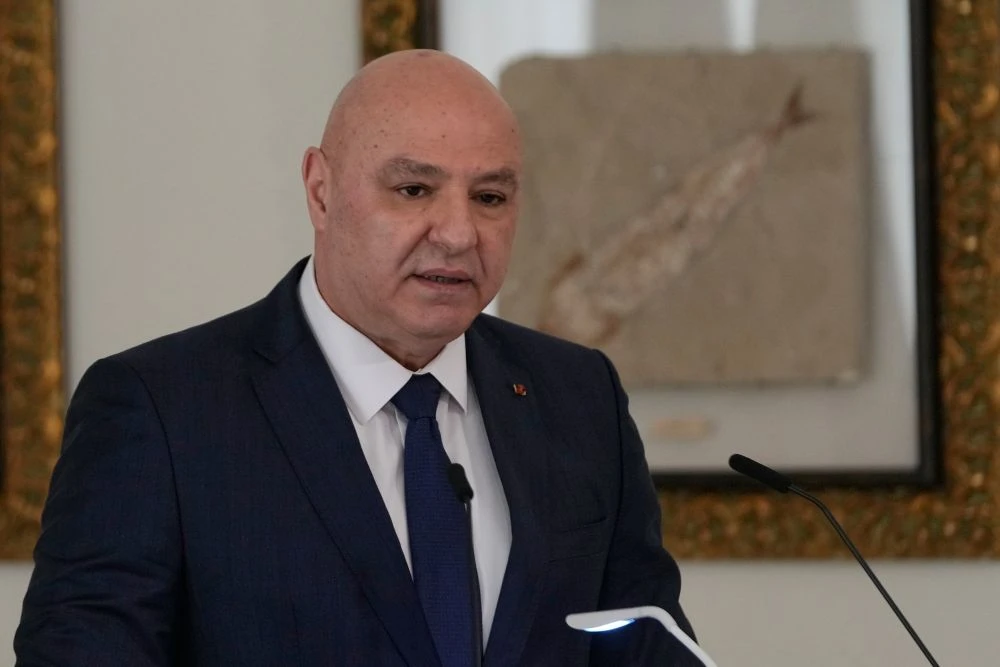
BEIRUT: Lebanese President Joseph Aoun on Thursday dismissed Israeli claims questioning the government’s disarmament efforts, calling them “baseless” and “unsupported by any tangible evidence,” as Israeli airstrikes intensified across southern Lebanon.
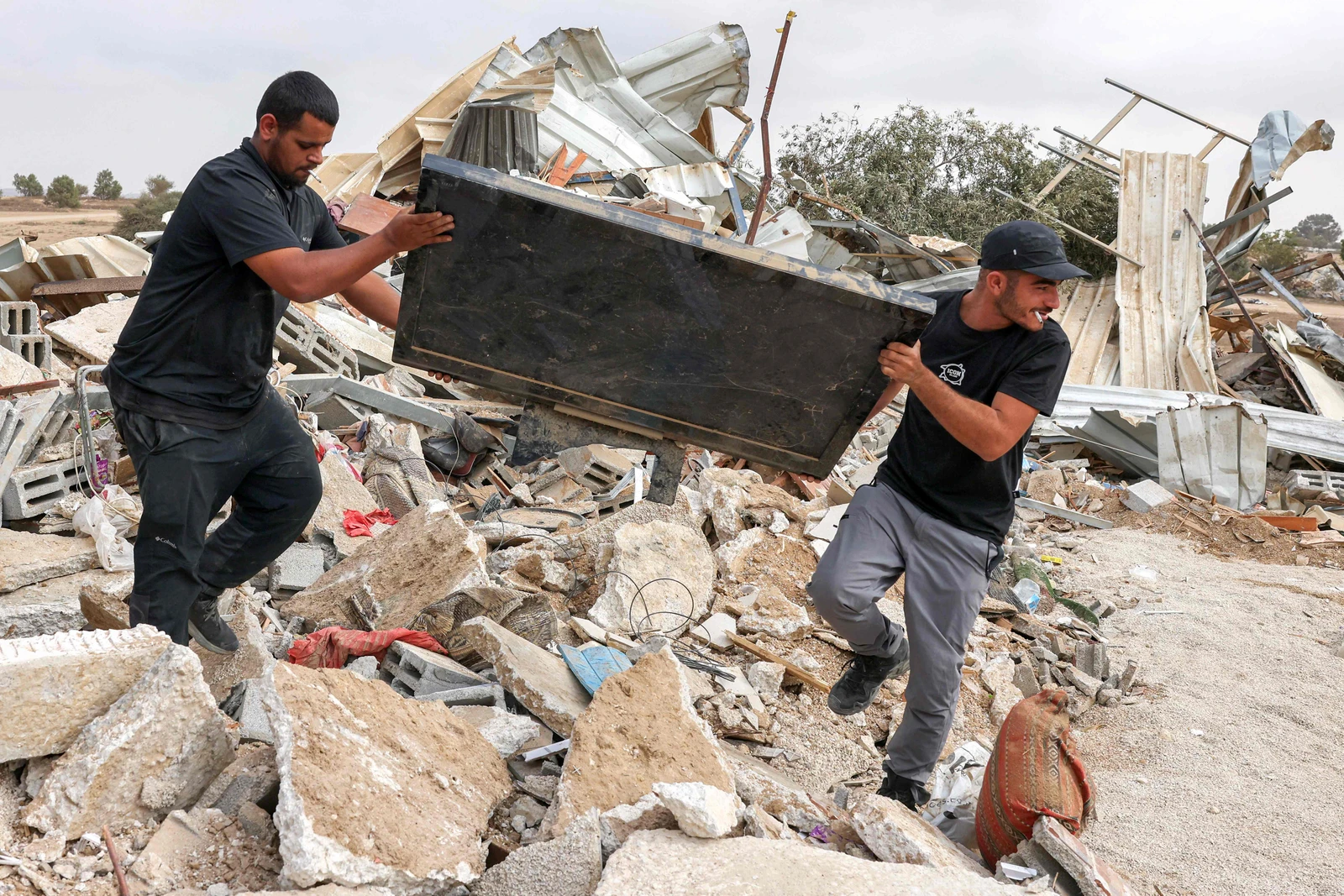
The remarks came just hours after the Israeli military launched a wave of strikes deep inside Lebanese territory, targeting mountainous areas and valleys in the Jezzine district and Iqlim Al-Tuffah, north of the Litani River, in a significant escalation.
According to the Israeli Broadcasting Authority, the attacks struck the vicinity of Al-Jarmaq, Al-Mahmoudieh, and Nabaa et Tasse, and were described as the most extensive assault since the assassination of Haytham Ali Tabatabai, a senior Hezbollah military commander.
During the 12 months since the US-brokered ceasefire agreement between Lebanon and Israel came into effect, Israel has continued to carry out near-daily violations, including airstrikes, drone surveillance, and targeted assassinations of Hezbollah operatives across southern Lebanon, the Bekaa Valley, and extending to Beirut’s southern suburbs.
In a meeting with Khaled Khiari, the UN assistant secretary-general for the Middle East, Asia, and the Pacific, Aoun said that Lebanon welcomes international support aimed at stabilizing the south and halting Israel’s ongoing attacks on civilians and southern villages and towns.
During the meeting at the Presidential Palace, Aoun reiterated that the Lebanese army has “fully carried out its duties” in its area of deployment south of the Litani River since the ceasefire agreement was announced last year.
He rejected what he called “Israeli attempts to undermine the army’s role and cast doubt on its field work,” saying that such claims are contradicted by the work of the Mechanism Committee, which has officially documented the army’s past and present efforts to curb armed activity, seize weapons and ammunition, and uncover tunnels in the region.
The Israeli strikes came a day after Egyptian Foreign Minister Badr Abdelatty held talks in Beirut with Lebanese officials, during which he affirmed Cairo’s “intensive efforts to shield Lebanon from any threats to its security and stability.”
Abdelatty voiced Egypt’s full support for the Lebanese government’s commitment to ensuring that only legitimate state institutions hold weapons.
“The arrogance of force will not bring security or stability to Israel or anyone else,” he said, adding: “We advocate for diplomatic solutions.”
Meanwhile, Prime Minister Nawaf Salam said on Thursday that Lebanon is in a “one-sided war of attrition that is escalating.”
He reiterated that the government established deadlines for monopoly over weapons, noting that the first phase is to be completed by the end of this year and includes the area south of the Litani River where weapons and military infrastructure will be removed.
“As for area north of the Litani River, the principle of containing weapons must be applied at this stage, that is preventing their transfer and use, with subsequent phases of monopoly over weapons in various areas to follow,” he added.
Salam criticized Hezbollah’s stance on retaining its weapons, questioning the effectiveness of its deterrence claims. “The party says its weapons prevent attacks, yet Israel continues to strike. These weapons have failed to deter aggression or protect either Hezbollah’s leaders or the Lebanese people, and the dozens of destroyed villages are proof of that,” he said.
He further asked: “Are Hezbollah’s weapons currently capable of repelling Israel’s ongoing attacks? These weapons neither deterred, nor protected, nor brought victory to Gaza. We did not implement Resolution 1701 in 2006, and as a reminder, the preamble to the ceasefire agreement clearly states that only six official entities, namely the Lebanese military and security agencies, are entitled to bear arms.”
Israel has continued to exert pressure on Lebanon by threatening to launch a new military confrontation soon if Hezbollah does not hand over its weapons to the state. This comes amid multiple reports claiming that Hezbollah is rebuilding its military capabilities, while the Lebanese government has yet to take any concrete steps to address the issue.
Iran’s escalating stance, which supports Hezbollah in refusing to hand over its weapons, has met with widespread condemnation in Lebanon.
Former Progressive Socialist Party leader Walid Jumblatt condemned a statement made by the Iranian adviser to the Leader of the Islamic Revolution, Ali Akbar Velayati.
Velayati had said on Wednesday that “Hezbollah’s presence in Lebanon has become more vital than daily bread.”
In a post, Jumblatt described the Iranian stance as a violation of Lebanon and “an attempt to turn it into a mailbox in the American dialogue.”
Jumblatt also condemned the presence of a large number of former Syrian regime officers in Lebanon “under the protection of partisan and official groups,” adding that “they pose a threat to internal stability.”
He commended Iraq’s leading Shiite cleric, Sayyid Ali Al-Sistani, for the message he delivered last week to the Iranian leadership on the danger of leaving the Lebanese Shiite community under the threat of a new war.
In a statement to Iran’s Tasnim News Agency, Velayati said that Tehran will not give up its support for Hezbollah.
He added: “The Israeli enemy’s aggression showed everyone the disastrous consequences of disarming Hezbollah in Lebanon.”
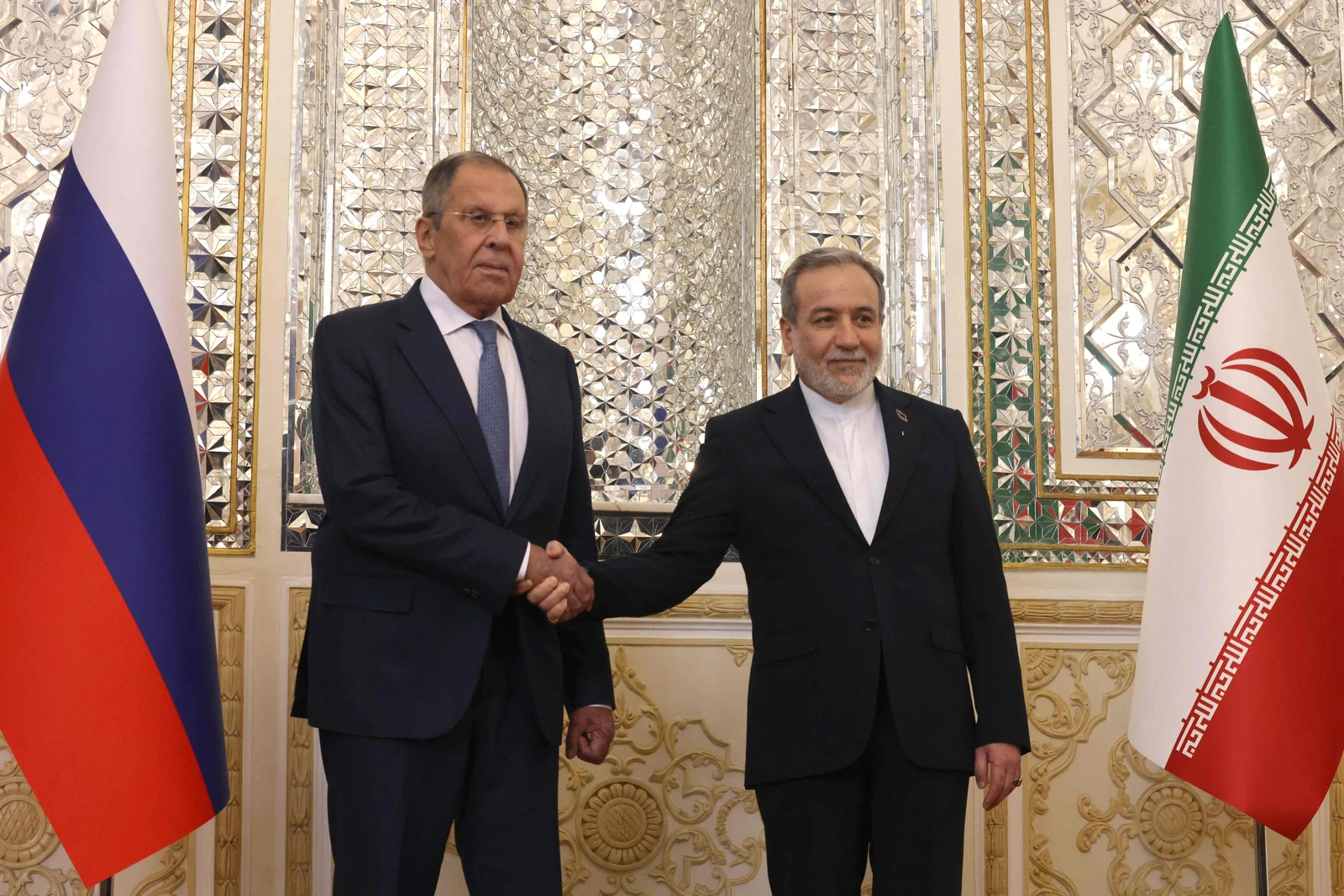
Lebanese Foreign Minister Youssef Raggi responded to Velayati’s statement, accusing him of “interfering in Lebanon’s internal affairs.”
In a post on X addressing his Iranian counterpart Seyed Abbas Araghchi, Raggi said: “I wanted to believe what you said that Iran does not interfere in Lebanon’s internal affairs, until your Supreme Leader’s adviser (Velayati) came out today to guide us on what is truly important in Lebanon and warned us of the consequences of disarming Hezbollah.”
He added: “What is more important to us than water and bread is our sovereignty, our freedom, and the independence of our internal decision-making, free from ideological slogans and transborder regional agendas that have devastated our country and continue to drag us further into ruin.”
Former Justice Minister Gen. Ashraf Rifi called on Velayati to “take care of the Iranian people crushed under the authoritarian grip, instead of lecturing the Lebanese.”
He added: “Your blatant interference in Lebanon’s affairs is the root of all the tragedies we are living through, and it’s shameful that you consider yourselves the guardians of a free country. The game is over, and Lebanon will reclaim its national decision no matter how hard you try to impose your influence.”
Lebanese Independent MP Michel Moawad described Velayati’s statement as “provocative and rude.”
He said: “Lebanon is not a stage for the ambitions of the Iranian project, but a country guarded by an independent state.”