RAS JRABAH: Plans to expand Israel’s desert city of Dimona, known as the cradle of the national nuclear program, are stoking fears among nearby Bedouin villagers for their traditional way of life.
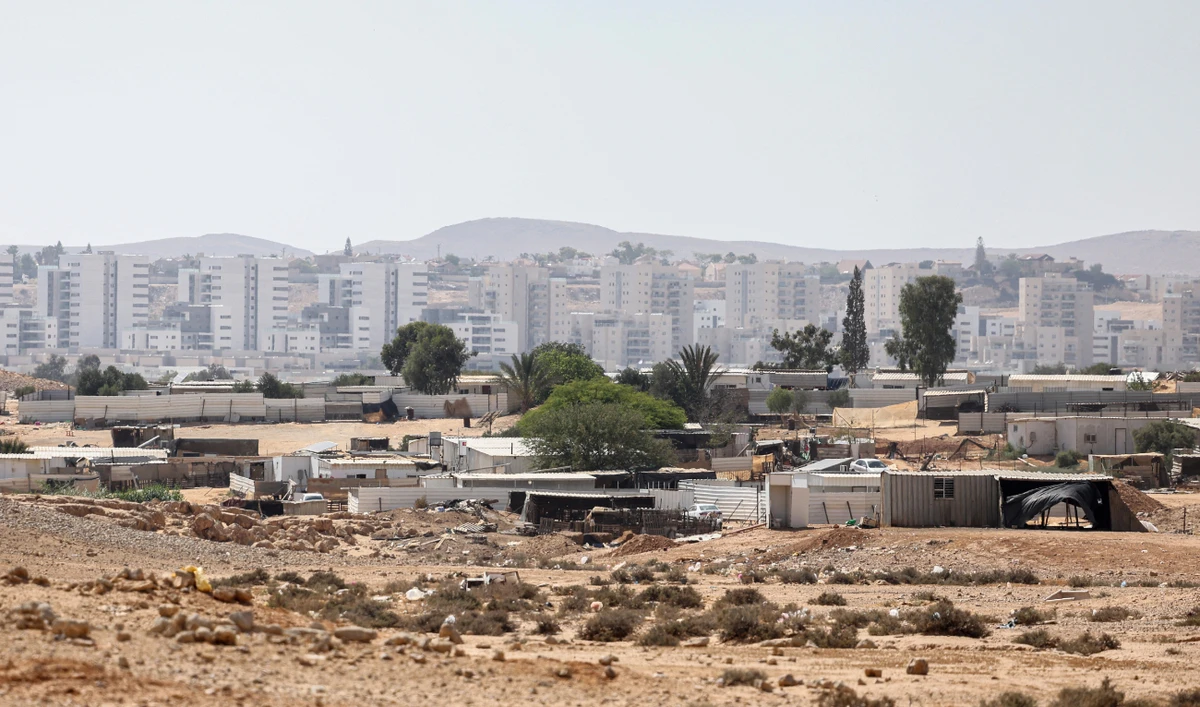
When Hassan Hawashla looks out his window, he sees rows of identical modern apartment blocks, and construction cranes building more, as Dimona spreads into the surrounding Negev desert.
“Every day when I look at this city, it’s getting closer and closer to us,” said Hawashla, 40, who himself is among the construction laborers working in Dimona.
His own Bedouin village of Ras Jrabah is an informal settlement of tin-roofed houses and a few concrete buildings, crisscrossed by dusty dirt roads and home to about 500 people.
Any new construction there gets promptly torn down by Israeli authorities who object to any permanent structures being built and want to move the entire village, Hawashla said.
Dimona, located 80 km south of Jerusalem and with a population of about 36,000, meanwhile has ambitious plans to nearly double in size, local government documents show.
Israel’s Bedouin, a nomadic Arab ethnic group, see it as yet another threat after long living on the margins of Israeli society, often in poverty and with few opportunities.
About 30 percent of the Bedouin population live in dozens of similar villages in the Negev desert, which is known as Naqab in Arabic, says the Israeli nonprofit group Bimkom.
Another Bedouin village, Wadi Al-Khalil, was wiped off the map last month after Israeli authorities ordered its demolition to clear space for a highway expansion.