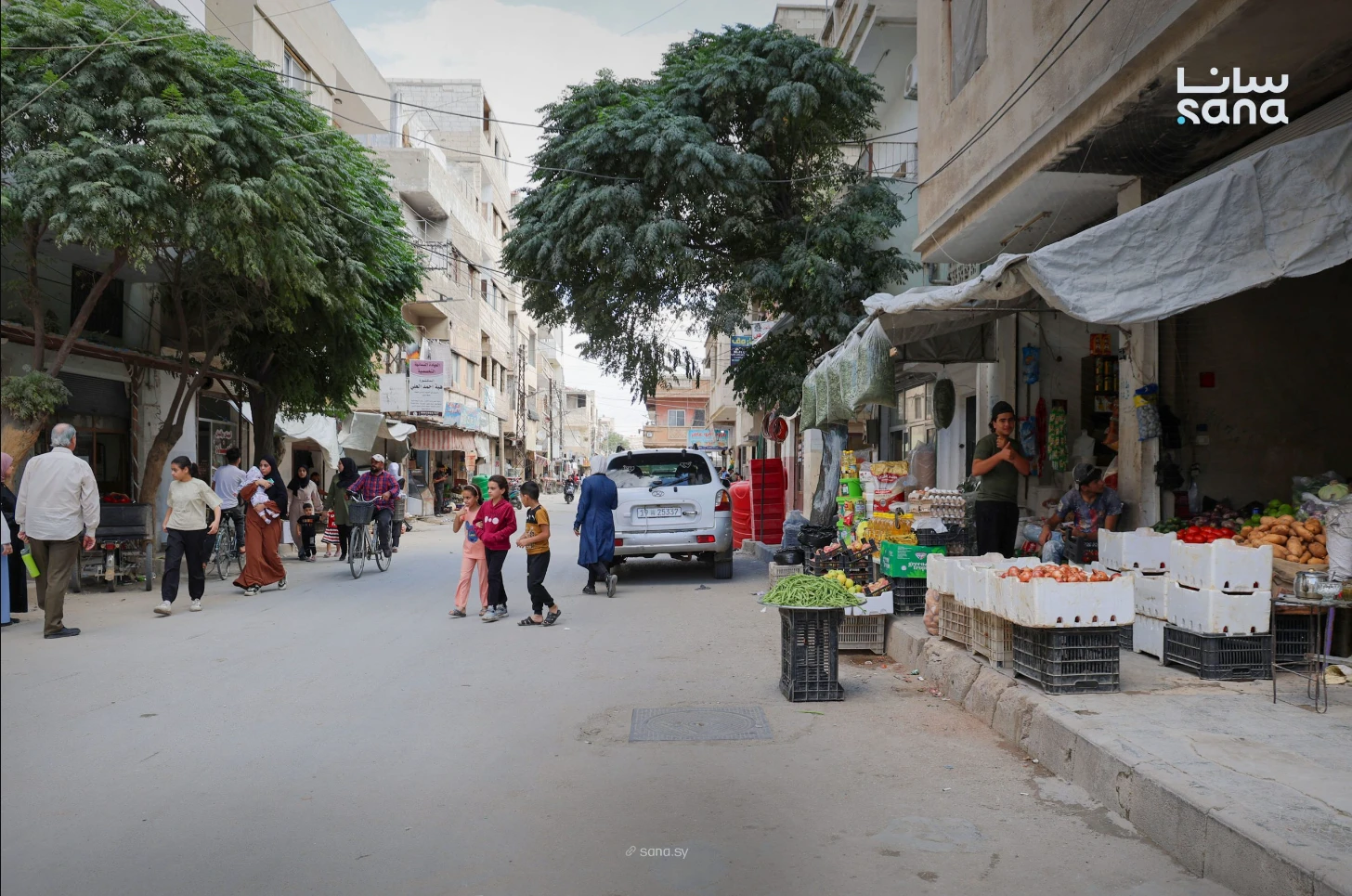
- Residents said basic goods and necessities, including food, cleaning supplies and bread, are more readily available than a year ago
HOMS: Commercial activity in Homs’ Al-Bayada neighborhood is picking up as most residents return and an estimated 80 percent to 90 percent of shops reopen, helped by improvements in electricity, water and other basic services, residents and local officials said.
Particularly in Al-Zeer Street, more shops are operating and more shoppers are present than a year ago, while commercial activities have become more diverse. Demand for shops and apartments has also increased.
Real estate agent Maher Kanaan said demand for buying and renting shops and apartments had risen over the past year as residents returned and several buildings were rehabilitated, boosting purchasing, consumption and commercial activity.
Mohammad Al-Qabbani, who runs a shop selling spices and food products, said commercial activity had been limited a year ago because of the smaller population. It has since improved as residents returned and more shops and apartments became occupied.
Demand for food products and legumes has increased, he said, although prices have also risen. Higher rents for shops and homes are creating additional pressure for low-income households, he added.
Residents said basic goods and necessities, including food, cleaning supplies and bread, are more readily available than a year ago.
Nidal Al-Homsi, a resident in the area, said conditions had improved over the past year as most services and basic necessities returned.
Shaman Al-Salman said the return of residents had increased population density and commercial activity, while some people from outside the area had also settled there.
Karim Kanaan, from the nearby Deir Baalbeh area, said a large proportion of shops had resumed operations during the past year after many had been damaged or closed, alongside the reconstruction of homes and the return of residents.
Durri Abdul-Mateen Al-Bunni, a resident, estimated that 80 percent to 90 percent of shops had returned to operation over the past year, after a large proportion had previously remained closed.
The return of electricity, water and other basic services helped residents return and encouraged shop owners to reopen, while a range of commercial and professional activities, including car offices, carpentry and metalworking, resumed, Al-Bunni said.
He added that some challenges remain, particularly electricity and water supplies, and the need to pave several roads. Homs City Council and Homs Governorate have paved several main streets and installed electrical transformers, while work continues to improve the networks, he said.
The Al-Bayada area suffered extensive damage from shelling by the deposed regime during the years of the Syrian revolution. Rehabilitation of infrastructure and services has included the reopening of an automated bakery and the drilling of a new water well, alongside the return of most residents.