- The joint EU-GCC statement highlights energy security and diversification of energy sources as essential for economic stability and sustainable development
- Participants called for stronger Gulf-European cooperation to ensure reliable and sustainable energy supplies
RIYADH: A joint European-Gulf statement emphasized the importance of energy security and diversifying energy sources in consolidating economic stability and supporting sustainable development paths, calling for strengthening Gulf-European cooperation to ensure the reliability and sustainability of energy supplies, developing infrastructure and interconnection, and expanding partnerships in modern technologies of common interest.
The joint statement issued today in Brussels by the second conference of heads of legislative councils of the European Parliament and the Gulf Cooperation Council stressed that energy security represents a common strategic interest between the two sides, in light of the challenges facing energy markets and the disruptions affecting their supplies, and the repercussions they impose on economic sectors, especially industry, as well as their impact on societies and living standards.
The participants called on the upcoming summit between the Gulf Cooperation Council and the European Union to give greater political momentum to cooperation in the field of energy, and to explore opportunities to provide reliable, diversified and sustainable supplies, thereby enhancing long-term energy security and supporting mutual interests.
Maritime coordination to protect shipping lanes and energy supplies
In a related context, the participants welcomed calls to strengthen Operation Aspidis of the European Union Naval Force, and encouraged closer coordination between the Saudi-led multinational maritime defense alliance and EU operations within the framework of the Common Security and Defence Policy, in order to protect common maritime routes and ensure the flow of energy supplies.
The statement expressed concern about developments in the Red Sea and the threat they pose to this vital corridor linking Europe and Asia, praising the contributions of the EU Naval Force’s Operations Aspidis and Atalanta.
The participants stressed the importance of strengthening cooperation in maritime security, protecting critical infrastructure, and cybersecurity, as well as combating terrorism, preventing violent extremism, and enhancing civil protection and resilience, while emphasizing the need to respect freedom of navigation and the right of transit passage in the Strait of Hormuz and Bab Al-Mandab.
Navigation disruptions reinforce the importance of Gulf-European connectivity.
The statement noted that the disruptions to shipping routes in the Strait of Hormuz and the Red Sea, which it attributed to Iranian attacks and attacks by its proxies, highlighted the close link between the security and prosperity of the Arabian Gulf and Europe, and the need to strengthen maritime, land, air and digital connectivity networks to serve trade, energy, investment and security.
The participants called for developing the strategic partnership between the two sides and enhancing its ability to cope with crises, through a secure and sustainable infrastructure, more resilient supply chains, and a stable and predictable economic framework, in order to support common interests and enhance resilience to regional and international turmoil.
They also urged the upcoming summit to give a clear political signal to resume negotiations on a comprehensive free trade agreement between the GCC and the EU, which would enhance trade and investment relations and broaden the prospects for economic cooperation.
Condemnation of Iranian attacks and emphasis on regional security
On the security front, the participants condemned the Iranian missile and drone attacks against the Gulf Cooperation Council (GCC) countries, whether carried out directly or through proxies, including the targeting of civilian, economic, and vital facilities, airports, service facilities, and infrastructure.
They expressed their solidarity with the GCC countries and their peoples, affirming the right to self-defense under Article 51 of the UN Charter, and calling on Iran and its proxies to immediately and unconditionally cease attacks and comply with Security Council Resolution 2817 of 2026.
The statement stressed that dialogue, diplomacy and international law are the basis for restoring stability and reaching lasting solutions that address regional threats, in a way that preserves the security of the region and safeguards freedom of navigation in vital sea lanes.
A strategic partnership that goes beyond energy and security
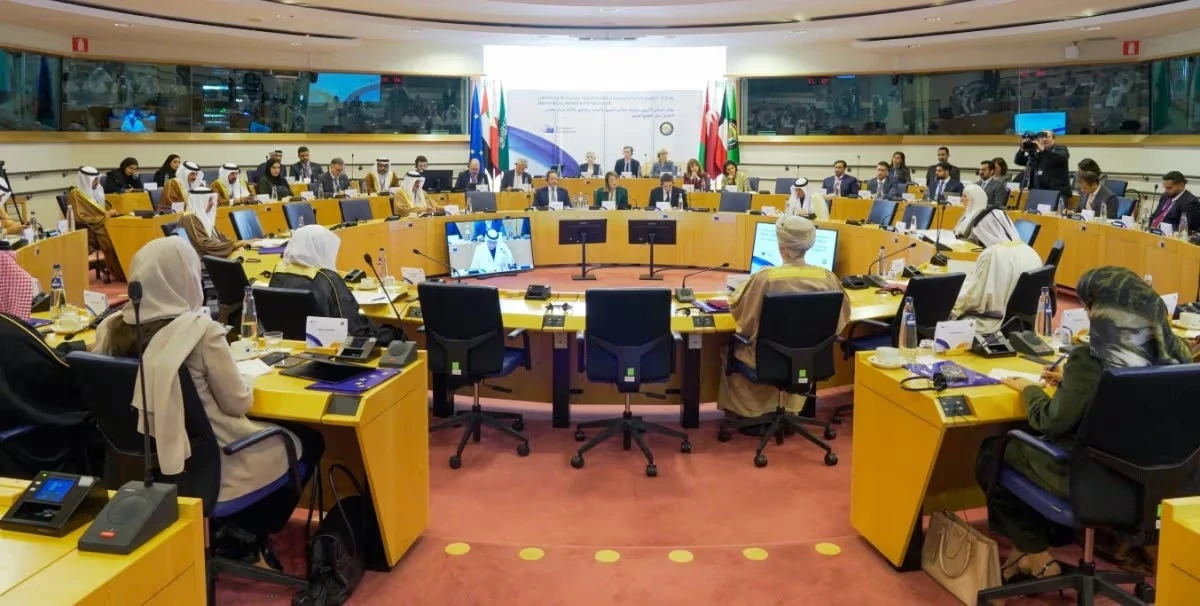
The statement came at the conclusion of the second conference of the heads of legislative councils of the European Parliament and the Cooperation Council for the Arab States of the Gulf, which was held in Brussels with the participation of the President of the European Parliament and the heads of legislative councils of the member states of the Cooperation Council, as a continuation of the outcomes of the meeting held in Abu Dhabi on June 23, 2025, and building on the results of the first summit between the two sides in Brussels on October 16, 2024.
The participants stressed the importance of developing the Gulf-European partnership towards deeper strategic cooperation that includes a parliamentary dimension, in addition to enhancing communication between peoples, cultural, educational and tourism exchange, and moving towards mutually beneficial arrangements for visa-free travel with the remaining five GCC countries.
The statement reflects a trend towards linking energy security with the stability of maritime routes, the resilience of supply chains, and economic integration, making Gulf-European cooperation in these areas a pillar for enhancing regional stability and supporting long-term sustainable development.